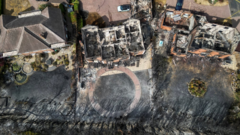
Nineteen homes turned to ash in a matter of hours. Entire livelihoods vanished into thick black smoke. When catastrophic wildfires tear through a community like they did in Stourbridge, people naturally demand answers.
West Midlands Fire Service finally put the rumors to rest. Investigators confirmed that the twin blazes which devastated nearly twenty houses and damaged a stretch of local railway were entirely accidental. There was no arson. There was no malicious intent.
Instead, the trigger was everyday heavy machinery operating under brutal weather conditions.
What Actually Triggered the Blazes
The timeline traces back to an exceptionally hot afternoon on Thursday, August 13. Crews rushed to a rapidly moving grass fire near Racecourse Lane around 1:27 pm. Before they could get a handle on it, a second emergency call came through for a parallel fire burning near Quarry Park Road and Worcester Lane.
Specialist fire investigators teamed up with West Midlands Police to comb through the charred debris. Their conclusion points directly to agricultural machinery working in the fields immediately before the flames erupted.
You might wonder how a tractor or farm tool causes a wildfire. During a severe heatwave, dry vegetation acts like gunpowder. A single mechanical spark, friction from metal hitting a hidden stone, or the intense heat of an exhaust pipe touching dry stubble is enough to ignite a field instantly. The dry winds do the rest, turning a tiny ember into a wall of fire within seconds.
The Scale of the Devastation
Chief Fire Officer Simon Tuhill acknowledged the crushing reality facing local residents. Nineteen properties were completely destroyed. Another eighteen suffered varying degrees of structural damage.
Families returned from evacuations to find bare brick walls and melted belongings. Some victims even reported opportunistic thefts from the remains of their ruined properties, adding a cruel layer of trauma to an already unmanageable situation.
The heatwave created a national emergency. Parts of England and Wales felt like a tinderbox, prompting rare government emergency alerts urging citizens to avoid lighting fires in open spaces. Yet, the Stourbridge tragedy stands out because it wasn't caused by a stray barbecue or a discarded cigarette. It came from the machinery used to work the land.
Moving Forward After the Smoke Clears
Knowing a fire was accidental doesn't rebuild a roof. It doesn't bring back family heirlooms or insurance paperwork. But official clarity stops wild conspiracy theories from spreading through local WhatsApp groups and town halls.
Investigations into the precise mechanical failures or field conditions are still ongoing. Farming associations and local authorities now face tough questions about seasonal harvesting restrictions during extreme weather spikes. When the ground is bone-dry, routine agricultural work carries high risks.
If you live near open fields or rural boundaries, stay alert during heatwaves. Keep garden hoses ready, report smoke immediately, and respect fire safety bans. Recovery in Stourbridge will take years, but understanding the root cause is the first step toward preventing another disaster.