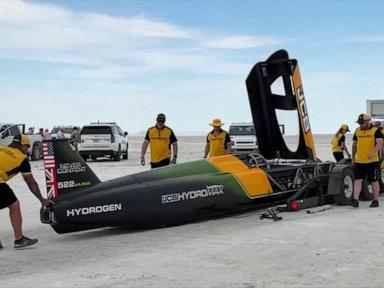
You do not expect heavy equipment manufacturers to chase supersonic milestones. Yet, British construction giant JCB did just that when their custom streamliner smashed records at the Utah salt flats. Driven by retired Royal Air Force pilot Wing Commander Andy Green, the hydrogen-powered JCB Hydromax averaged an astonishing 406.320 mph.
If you think hydrogen is limited to slow passenger buses or quiet fuel cell commuter cars, this machine shatters that illusion completely. If you liked this post, you should check out: this related article.
The Machine Behind the Speed
The Hydromax is not your typical electric-driven prototype. Instead of using a complex fuel cell stack to generate electricity, this 32-foot rocket relies on internal combustion.
The vehicle houses two modified industrial engines pulled straight from the company's heavy-duty excavator production lines. Each engine pumps out roughly 800 horsepower, combining for a total output of 1,600 horsepower. They burn pressurized hydrogen gas directly inside standard piston cylinders. For another perspective on this story, refer to the latest coverage from The Verge.
It sounds loud. It sounds aggressive. It operates on principles mechanics have understood for over a century, just altered to digest a cleaner fuel source.
Breaking Down the Record Runs
Speed records on the Bonneville Salt Flats require precision. You cannot just make one fast pass and claim a trophy.
The Fédération Internationale de l'Automobile requires two separate runs in opposite directions within a strict time window. This process neutralizes the advantage of tailwinds.
- First run: Green piloted the streamliner to a blistering average of 400.623 mph.
- Return run: Pushing hard against the course, the car clocked 412.135 mph.
The math yielded an official average of 406.320 mph. That performance obliterates previous benchmarks for hydrogen-powered vehicles, which previously sat well below the 200 mph threshold. It even beats the iconic diesel record set twenty years prior by the same manufacturer.
Andy Green and the Need for Speed
Green is no stranger to extreme velocity. Back in 1997, he strapped himself into the jet-powered ThrustSSC and hit 763.035 mph, becoming the first and only person to break the sound barrier on land.
When asked about the Hydromax run, Green noted how stable the platform felt. Building a car that stays planted on slippery salt crust while accelerating past 400 mph takes exceptional aerodynamic engineering. The narrow carbon-composite shell cuts through the desert air while keeping downforce predictable.
Why Hydrogen Combustion Matters Now
Most automotive conversations focus heavily on battery packs. Heavy machinery, however, presents a different engineering nightmare. Excavators and construction rigs require immense energy density and fast refueling. Batteries add too much weight and take hours to recharge on remote job sites.
Hydrogen combustion offers a practical alternative. It keeps the roar of an internal combustion engine alive while producing zero tailpipe carbon emissions.
Projects like the Hydromax prove that alternative fuels can survive the harshest environments on Earth. When you can push production-derived engine blocks past 400 mph without catastrophic failure, everyday durability tests look a lot easier.
The salt flats have fallen silent once again, but the blueprint for zero-emission heavy horsepower has officially changed.