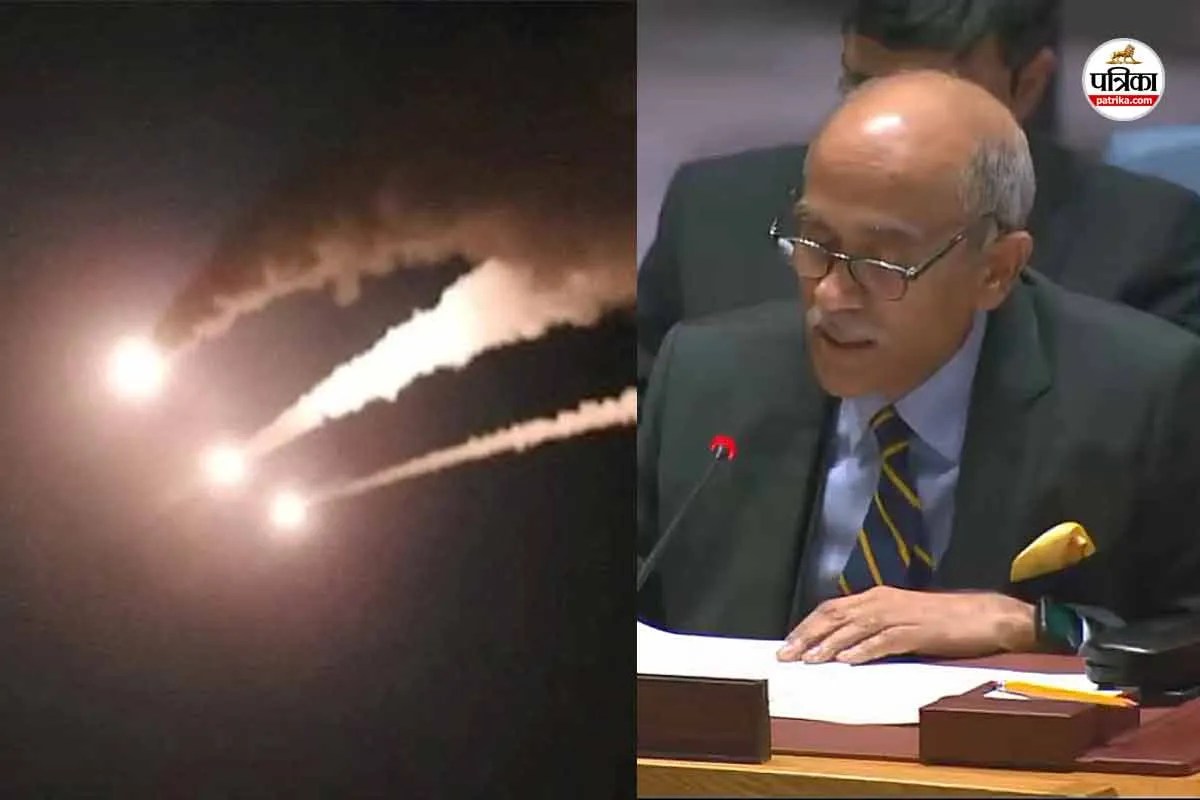
Foreign policy doctrines are rarely dictated by sudden emotional shifts; instead, they are shaped by long-term cost functions, structural limitations, and calculated risk assessments. Recent statements from American leadership regarding military restraint toward Iran, specifically avoiding a large-scale nuclear strike or ground invasion, require a rigorous deconstruction. Evaluating state behavior through the lens of strategic efficiency reveals why conventional large-scale invasions are systematically off the table, and how deterrence operates under severe asymmetric constraints.
The Structural Limits of Ground Invasions in the Middle East
A ground invasion of Iran is not merely an escalation; it represents an exponential multiplication of logistical friction and strategic exposure. Iran possesses a geographic profile characterized by rugged terrain, mountain ranges, and a vast expanse exceeding one million six hundred thousand square kilometers, populated by nearly ninety million citizens.
To execute a successful conventional invasion and occupation, military science dictates force ratios that modern defense budgets and political tolerances cannot sustain. Historical precedents from the past two decades demonstrate that occupying regional adversaries creates protracted insurgencies, severe economic drains, and prolonged operational vulnerabilities.
- Logistical Friction: Supplying an invading force across contested maritime and land borders introduces severe supply chain vulnerabilities.
- Asymmetric Defense: Iran has spent decades developing asymmetric defense doctrines, including subterranean missile depots, heavily fortified nuclear facilities, and proxy networks designed to bog down conventional forces in urban and mountainous terrain.
- Opportunity Cost: Committing hundreds of thousands of troops to an Iranian theater would completely deplete American readiness in other critical geopolitical domains, most notably the Indo-Pacific.
Consequently, the refusal to put boots on the ground is not an act of political timidity; it is a rational acknowledgment of negative return on investment. The cost of occupation vastly exceeds any conceivable strategic gain.
The Deterrence Matrix and Nuclear Thresholds
The question of a nuclear strike against Iranian infrastructure invokes the most extreme tier of strategic calculus. Modern nuclear doctrine relies on mutually assured destruction and the principle of proportional deterrence. Utilizing strategic nuclear weapons against a non-nuclear state violates established international norms, triggers catastrophic global economic retaliation, and shatters diplomatic coalitions.
Nuclear weapons are strategic assets designed for existential deterrence against peer competitors. Employing them against regional actors destroys the moral high ground, alienates allied nations whose support is vital for economic sanctions, and risks radioactive fallout that destabilizes global energy markets.
Instead of absolute military eradication, the United States relies on a multi-layered economic and kinetic containment strategy:
- Economic Asymmetry: Severe financial sanctions systematically restrict the adversary's capacity to fund regional proxy groups, forcing them to operate within tighter resource constraints.
- Precision Counter-Proliferation: Targeted intelligence operations, cyber warfare, and localized kinetic strikes disrupt specific nodes of a military program without necessitating total war.
- Coalition Containment: Building regional security architectures that integrate local allies to share the defense burden prevents the United States from bearing the entire cost of regional stability.
The Economic Impact Function of Regional Escalation
Any major military engagement involving Iran immediately alters global macroeconomic indicators. The Strait of Hormuz handles a significant percentage of the world's petroleum transit. Disruptions to this maritime bottleneck trigger immediate spikes in crude oil prices, generating inflationary pressures across Western economies.
When political leaders weigh intervention, they calculate the secondary and tertiary economic shocks. A high-intensity conflict would cause energy prices to surge, supply chains to fracture, and global markets to contract. Therefore, the strategic calculus prioritizes sub-threshold competition—operations that maintain pressure without crossing the line into systemic economic disruption.
Strategic Realignment and Future Posture
The strategic reality governing relations between the United States and Iran is defined by a permanent state of managed friction. Direct confrontation is bounded by the catastrophic costs of full-scale war, while diplomatic normalization remains blocked by fundamental security divergences.
Future stability depends on maintaining this equilibrium through credible deterrence, precise intelligence application, and economic pressure, ensuring that regional actors recognize the prohibitive costs of crossing established red lines without requiring the deployment of unsustainable ground forces.