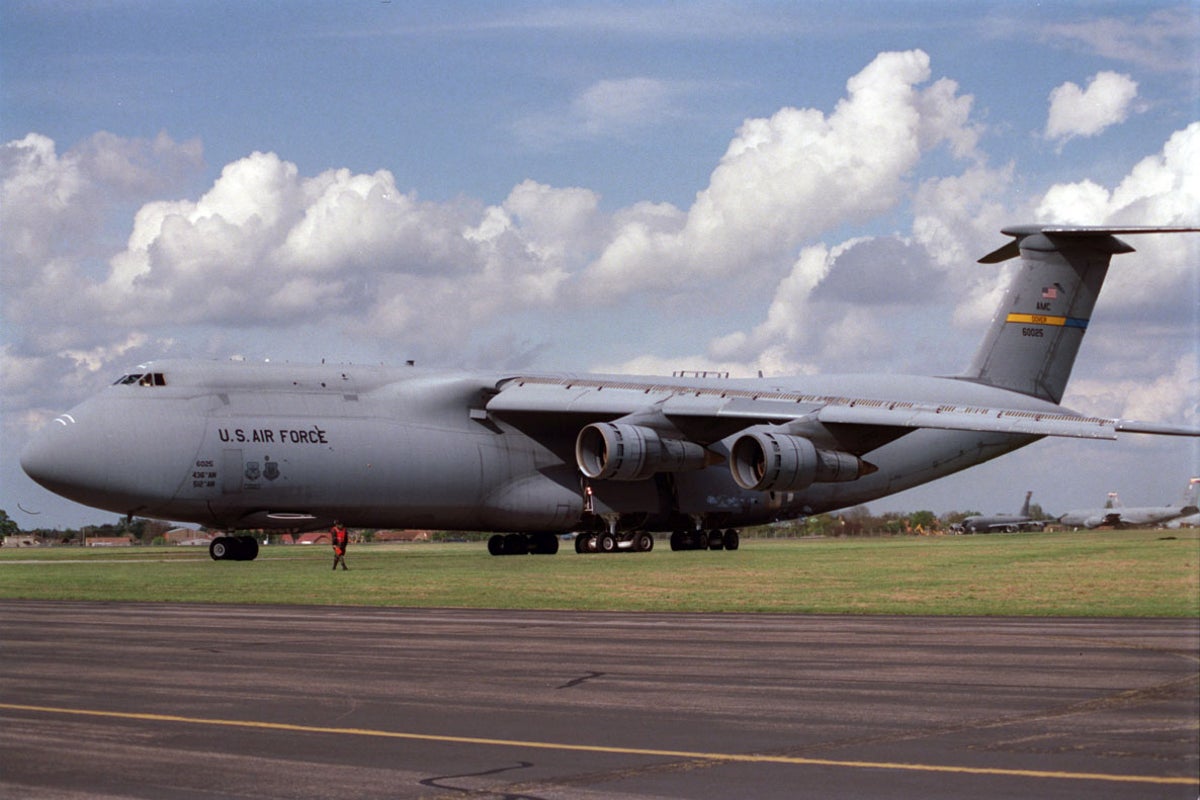
Deploying strategic airlift assets like the C-5M Super Galaxy for domestic contraband destruction highlights a fundamental tension between operational efficiency and mission readiness training. On the surface, utilizing the largest transport aircraft in the United States military inventory to move five million dollars worth of seized narcotics appears economically disproportionate. A detailed logistical audit reveals how military operational budgets, flight-hour requirements, and security protocol requirements alter this economic calculation.
The Cost Structure of Strategic Airlift Operations
Evaluating military logistics through a commercial freight lens creates false equivalencies. Commercial carriers price transport based on weight, volume, fuel burn, and profit margins. Military airlift units operate under a fixed flight-hour mandate designed to maintain crew qualification and operational readiness.
Flight Hour Economics and Mandatory Readiness Operations
Pilots and loadmasters assigned to heavy transport aircraft require a fixed number of annual flight hours to maintain active deployment status. The Air Force must fly these aircraft regardless of whether the cargo holds carry humanitarian supplies, military hardware, or seized illicit substances.
- Base Operating Costs: Fixed overhead including airframe maintenance, base infrastructure, and permanent personnel salaries remain static regardless of specific cargo payloads.
- Variable Operating Costs: Fuel consumption and wear-and-tear scale with flight duration and payload weight. A C-5M carrying a light physical load of narcotics incurs significantly lower fuel burn compared to a flight loaded to maximum payload capacity.
- Training Allocation Offset: When a transport mission doubles as a required training sortie, the incremental cost of carrying contraband approaches zero. The flight hour expenditure is already allocated within the annual operational budget.
Security Protocols and Risk Mitigation Frameworks
Moving multi-million-dollar illicit drug inventories introduces extreme security liabilities. The choice of transport mode directly dictates the risk profile and required security footprint.
- Ground Transport Vulnerabilities: Overland transit requires armed escorts, multiple jurisdictional coordinations, and continuous satellite tracking, creating prolonged exposure windows across public infrastructure.
- Airborne Secure Transit: Fixed-wing military transport isolates high-value contraband within controlled air bases and secure airspace, effectively reducing the risk surface to takeoff and landing windows.
Operational Friction in Contraband Chain of Custody
The chain of custody for high-value narcotics requires strict legal and physical integrity from initial seizure to final destruction. Inter-agency transfers introduce friction points that increase administrative and operational costs.
Jurisdictional Hand-offs and Liability Transfer
When federal law enforcement agencies coordinate with the Department of Defense, custody transfer protocols dictate strict verification steps.
[Seizing Agency Inventory] -> [Joint Base Security Protocols] -> [Airlift Transit] -> [Approved Incineration Facility]
Each transition point requires full physical inventory audits, chain-of-custody documentation, and physical security presence. Utilizing a single large capacity airframe reduces the number of required operational legs, consolidating multiple smaller transfers into a single high-security transit event.
Incineration Infrastructure Limitations
Specialized high-temperature incineration facilities capable of destroying bulk narcotics without violating environmental emission regulations are limited nationwide. The physical distribution of these facilities creates geographical mismatches between point-of-seizure and point-of-disposal.
The bottleneck resides not in the transport capacity, but in the availability of compliant processing infrastructure. Flying bulk payloads directly to military-adjacent disposal sites bypasses regional bottlenecks and reduces time-in-transit metrics.
Resource Allocation and Policy Optimization
Optimizing cross-agency asset utilization requires evaluating joint-service capabilities against operational metrics rather than media perception.
- Logistical Synergy: Utilizing existing transport channels for inter-agency support maximizes the utility of mandatory training flights.
- Risk Minimization: High-capacity transport minimizes total exposure time for high-value seizures.
- Budget Realism: Reallocating existing flight hours for specialized cargo creates higher net utility than funding standalone commercial or ground transport arrangements.
Future policy frameworks must explicitly integrate training-flight availability matrices with federal law enforcement disposal schedules. Matching routine readiness flights with agency logistics pipelines eliminates redundant transport expenditures while maintaining required operational training standards.