The mainstream foreign policy press is having a collective aneurysm over the latest headlines out of the Persian Gulf. On one hand, you have reports of targeted kinetic strikes hitting infrastructure on Iran’s Qeshm Island. On the other, you have Vice President JD Vance stepping up to a microphone to express genuine optimism about reaching a diplomatic deal with Tehran.
To the standard cable news pundit, this looks like sheer incompetence. They call it mixed messaging. They call it the left hand not knowing what the right hand is doing. They frame it as a chaotic administration stumbling blindly between escalation and appeasement.
That lazy consensus is completely wrong.
If you actually understand how high-stakes coercive diplomacy works, you realize that bombing an asset while simultaneously offering an off-ramp isn't a contradiction. It is the textbook definition of compellence. The press is asking why Washington can't pick a lane between war and peace. They are asking the wrong question entirely. In the Middle East, kinetic pressure isn't the opposite of diplomacy—it is the prerequisite for it.
The Myth of "Good Faith" De-escalation
For decades, Western diplomatic orthodoxy operated on a polite, academic fantasy: to get an adversary to the negotiating table, you must first lower the temperature. You offer goodwill gestures. You pause exercises. You unfreeze a few billion dollars in assets to build trust.
I’ve watched administrations burn through years of strategic capital and billions of dollars following this exact playbook, only to end up with an emboldened adversary and zero enforceable concessions. Why? Because when you remove pressure before securing an agreement, you eliminate the adversary's primary incentive to compromise. If the pain stops before the ink is dry, Tehran has every reason to drag out talks indefinitely, pocket your goodwill gestures, and continue enriching uranium or arming regional proxies while you politely wait for their next counter-proposal.
Thomas Schelling, the Nobel Prize-winning economist who literally wrote the book on nuclear strategy and bargaining, drew a sharp distinction between deterrence and compellence. Deterrence is passive; it tells an adversary, "Don't cross this line, or else." Compellence is active; it forces an adversary to change their current behavior through the immediate, painful application of force, paired with a credible promise that the pain will stop the moment they comply.
When Vance voices optimism about a deal right after Qeshm Island takes a hit, he isn't contradicting the Pentagon. He is completing the circuit. Without the strike, the optimism looks like weakness. Without the optimism, the strike looks like the opening salvo of a regime-change war, which leaves Tehran no choice but to fight to the death. Together, they create a narrow, brightly lit exit ramp from a burning building.
Why Qeshm Island Matters More Than You Think
To grasp the precision of this move, you have to look at a map of the Strait of Hormuz. Pundits treat every strike in the region as interchangeable, as if hitting a radar site in the desert is the same as hitting a ballistic missile factory. It isn't.
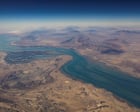
Qeshm Island is the largest island in the Persian Gulf. It sits right at the choke point of the Strait of Hormuz, through which roughly a fifth of the world's petroleum liquids pass. For years, the Islamic Revolutionary Guard Corps (IRGC) has turned Qeshm into an unsinkable aircraft carrier—a fortified hub for fast-attack craft, coastal defense cruise missiles, drone launchpads, and subterranean storage facilities. It is the primary lever Tehran uses to hold the global economy hostage whenever sanctions tighten.
By striking assets on Qeshm Island specifically, Washington sent a surgical message that completely bypasses the usual diplomatic theater:
- It neutralizes the hostage-taker's gun: Tehran’s primary deterrence model relies on threatening to close the Strait of Hormuz. Hitting Qeshm demonstrates that the infrastructure required to execute that blockade can be dismantled before a single tanker is mined.
- It avoids the civilian trap: Unlike striking facilities inside mainland urban centers like Tehran or Isfahan, hitting military infrastructure on an island minimizes civilian casualties, depriving the regime of the domestic martyrdom propaganda it needs to rally a exhausted population.
- It targets the IRGC's wallet and pride: Qeshm isn't just a military outpost; it is a designated free-trade zone deeply intertwined with the IRGC’s smuggling networks and shadow economy. Disrupting operations there hits the regime's elite enforcers directly in their operational hub.
You don't hit Qeshm by accident, and you don't hit it if you are trying to start World War III. You hit it to strip away the exact asymmetric leverage the Iranian negotiators were planning to bring to the table.
Dismantling the "Escalation Spiral" Fallacy
Whenever the U.S. uses force in the Gulf, the immediate reaction from think-tank row is panic over an "uncontrollable escalation spiral." The conventional wisdom assumes that every kinetic action triggers an equal and opposite reaction, inevitably dragging the United States into another multi-trillion-dollar ground war.
Let’s look at the actual track record instead of the fearmongering.
- The Tanker War (1987–1988): During Operation Praying Mantis, the U.S. Navy destroyed half of Iran’s operational fleet in a single day after a U.S. frigate struck an Iranian mine. Did it trigger an endless war? No. Within months, Ayatollah Khomeini drank the "poisoned chalice" and accepted a ceasefire with Iraq.
- The Soleimani Strike (2020): Washington eliminated Qasem Soleimani, the architect of Iran's regional proxy network. Analysts predicted the immediate collapse of the Middle East into total war. Instead, Iran telegraphed a face-saving ballistic missile strike on an empty section of Al Asad Airbase, explicitly ensuring zero Americans were killed so the cycle would stop.
- The Red Sea Campaign: When deterrence was merely rhetorical, Houthi militants shut down global shipping lanes with impunity. They only began recalculating when their launch sites and radar arrays started disappearing in real time.
Authoritarian regimes like the Islamic Republic are ruthless, ideological, and deeply entrenched, but they are not suicidal. Their absolute highest priority—above nuclear weapons, above regional hegemony, above ideological purity—is regime survival.
When Washington projects hesitation and begs for talks, Tehran reads it as an invitation to push harder. When Washington demonstrates overwhelming kinetic dominance while simultaneously holding the door open for a face-saving diplomatic exit, Tehran’s survival instinct kicks in. Vance’s public optimism gives Iranian diplomats the political cover they need back home to argue that talking to Washington isn't surrender—it's smart statecraft.
The Real Risks of the "Talk and Strike" Playbook
To pretend this strategy is foolproof would be dishonest. Walking the tightrope between coercive force and diplomatic engagement is one of the hardest maneuvers in statecraft, and it comes with massive operational risks.
First, the miscalculation margin is razor-thin. If a strike on Qeshm accidentally hits a sensitive civilian target, or if an overzealous IRGC local commander decides to fire a barrage of missiles without authorization from Tehran and kills American personnel, the diplomatic off-ramp vanishes overnight. Domestic political pressure in Washington would force massive retaliation, locking both sides into the exact conflict Vance is trying to avoid.
Second, internal Iranian factionalism can sabotage the signal. Tehran is not a monolith. The pragmatic wing of the foreign ministry might hear Vance's optimism and want to take the deal, while hardliners in the IRGC view the Qeshm strike as an unforgivable humiliation that demands blood. If the hardliners win the internal power struggle, no amount of diplomatic sweet talk from Washington will prevent a retaliatory strike.
Third, credibility degrades fast if the talks stall. You can only play the "strike and smile" card a few times before the adversary realizes you are bluffing about the scale of your willingness to escalate. If Tehran drags out negotiations for six months while rebuilding Qeshm’s defenses, the initial shock value of the strike evaporates.
How to Actually Read Foreign Policy Signals
If you want to understand what is really happening between Washington and Tehran—or in any major geopolitical standoff—stop listening to the outrage merchants who treat every headline as an isolated event.
Start looking at the synthesis between kinetic actions and diplomatic rhetoric. When an administration bombs an adversary's strategic choke point on a Tuesday and talks about a promising peace framework on a Wednesday, they aren't confused. They are setting the price of admission for the negotiating table.
Imagine a scenario where Vance expressed optimism without the strike on Qeshm. Tehran would immediately demand the lifting of all oil sanctions, the release of frozen billions, and the withdrawal of U.S. troops from the region just to show up for preliminary talks. Now, reverse it. Because Qeshm is smoking, the baseline of the negotiation has fundamentally shifted. Tehran is no longer negotiating from a position of regional dominance; they are negotiating to stop further degradation of their strategic assets.
The press wants a simple narrative: either we are at war, or we are making peace. Reality doesn't care about tidy headlines. Force and diplomacy are not separate tools stored in different boxes. They are two halves of the exact same lever, and for the first time in years, Washington is pulling both at the exact same time.