The matchmaking architecture of UFC 331 at the Crypto.com Arena in Los Angeles on September 19 presents a clear operational test of divisional hierarchies. At the apex of the card, flyweight champion Joshua Van defends his title against former holder Alexandre Pantoja, addressing the unresolved variables of their abbreviated initial encounter at UFC 323. Simultaneously, the co-main event pairs lightweight contender Arman Tsarukyan against Mauricio Ruffy in a five-round eliminator framework. Evaluating this card requires stripping away promotional narratives to examine the structural incentives, stylistic matchups, and risk management strategies governing the elite tier of mixed martial arts.
The Flyweight Championship Rematch Variables
The primary match parameters are defined by the abrupt conclusion of the first bout, where Pantoja suffered a structural elbow injury twenty-six seconds into the opening round, ceding the championship belt to Van. Analytical evaluation of that brief sample size yielded zero tactical conclusions regarding sustained grappling exchanges or striking distributions.
Van subsequently validated his championship status through a high-volume, late-stage technical knockout victory over Tatsuro Taira at UFC 328. That defense highlighted Van's primary asset: sustained metabolic output across extended championship rounds. In contrast, Pantoja enters at age thirty-six, attempting to join the historical cohort of flyweights who successfully reclaimed lost titles, a list currently restricted to Brandon Moreno and Deiveson Figueiredo.
The tactical bottleneck for Pantoja centers on early defensive liability versus grappling efficiency. Pantoja historically relies on high-risk submission hunting and back-control transitions that demand maximal energy expenditure. If Van neutralizes the initial grappling sequences, the probability curve shifts heavily toward the champion, whose age-related endurance curve and recent activity index present a stark operational advantage.
Lightweight Contender Dynamics and Divisional Bottlenecks
The co-main event between Arman Tsarukyan and Mauricio Ruffy functions as a direct filter for the lightweight championship tier currently occupied by Justin Gaethje. Tsarukyan was initially positioned for a rematch against Charles Oliveira but was structurally pivoted by promotion matchmakers to face Ruffy.
Tsarukyan brings a five-fight winning streak predicated on elite chain wrestling, positional control, and transitional grappling derived from a classical freestyle background. His cost function is minimization of striking distance; he neutralizes opponents by converting open-space exchanges into closed-quarter mat returns.
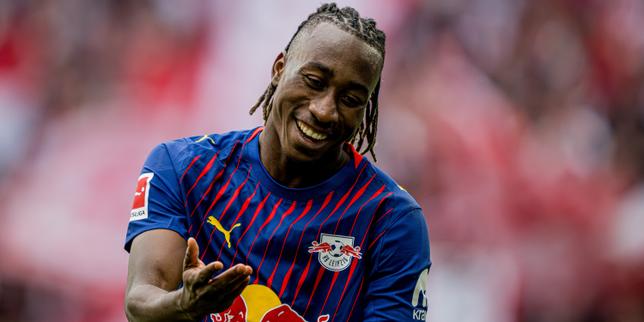
Mauricio Ruffy represents the counter-profile. Coming off consecutive knockout victories over Rafael Fiziev and Michael Chandler, Ruffy operates as a distance-management striker who capitalizes on opponents' entry errors.
The intersection of these two stylistic profiles creates a binary outcome space:
- If Tsarukyan successfully secures single-leg entries within the first four minutes, Ruffy's output degrades beneath the cumulative weight of top control.
- If Ruffy dictates lateral movement and forces Tsarukyan to initiate from poor angles, the knockout threat expands exponentially into the championship rounds.
Undercard Architecture and Promotional Risk Management
Beyond the championship and co-main structures, the undercard displays specific match-making philosophies designed to test prospect ceilings and rehabilitate veteran value.
The insertion of Gable Steveson against Sean Sharaf in the heavyweight division highlights the promotion's strategy of fast-tracking elite amateur wrestling credentials into marketable assets. Steveson's transition relies on minimizing complex striking exchanges while maximizing the conversion rate of open-mat takedowns. Facing Sharaf, whose promotional record sits at zero wins and two losses, provides a controlled environment to measure progress since Steveson's July debut.
Simultaneously, the featherweight-to-lightweight conversion of Brian Ortega against Renato Carneiro creates a historical feedback loop. Having fought nearly a decade ago at featherweight, both athletes now operate under altered physical architectures. Ortega's move to 155 pounds attempts to mitigate the severe weight-cutting degradation that historically impacted his late-round durability, while Carneiro enters following a submission win over Chris Duncan. This bout serves as a litmus test for veteran adaptation to modern divisional size standards.
Strategic Operational Play
Matchmakers have engineered a card where every high-profile slot tests an established hypothesis regarding aging champions, surging strikers, and transitional prospects. For stakeholders evaluating divisional movement, monitor the precise timing of Van's entry footwork in the opening two minutes against Pantoja; if Van dictates the spatial range without resorting to reckless entries, the title retention probability reaches its maximum threshold.