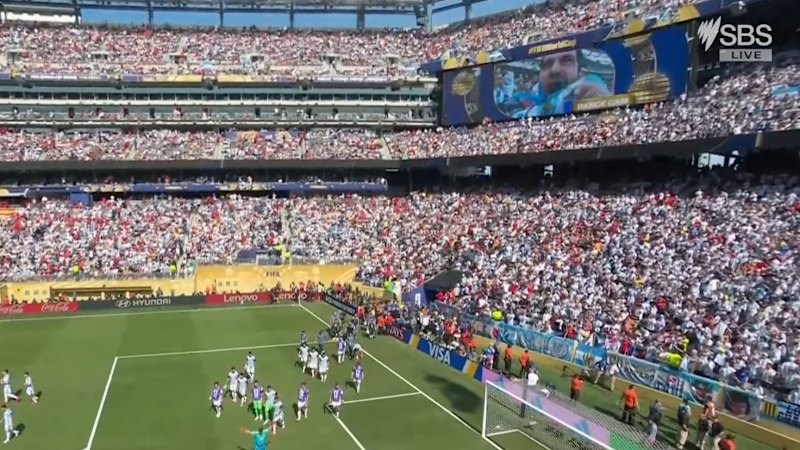
Modern international sports governance operates under a structural tension between public utility and private accumulation. The Fédération Internationale de Football Association manages a global monopoly over football assets, yet its operational architecture resembles a decentralized confederation ill-equipped for efficient capital allocation. The ongoing discourse surrounding a potential FIFA privatization bid points to a deeper institutional necessity: the separation of regulatory oversight from commercial exploitation. Understanding this shift requires examining the mechanics of sports asset monetization, the cost functions of mega-events, and the governance failures inherent in non-profit sports federations operating at multi-billion-dollar scales.
The Dual Mandate Failure Mode
Global athletic governing bodies suffer from an inherent institutional contradiction. They function as regulatory authorities setting the rules of play, while simultaneously operating as commercial enterprises extracting rents from media rights, sponsorships, and tournament staging.
[Regulatory Oversight] <---> [Governing Body] <---> [Commercial Exploitation]
          (Conflict of Interest / Misallocated Capital)
This dual mandate creates a misallocation of capital. Non-profit legal statuses shield these organizations from shareholder accountability, dampening the urgency for rigorous balance-sheet optimization.
When capital is generated through monopolistic control of premier tournaments like the World Cup, the surplus is funneled back through development grants to national associations. This mechanism ensures political survival for incumbent leadership rather than maximizing return on invested capital or funding grassroots infrastructure efficiently.
Private equity firms and institutional investors view this dynamic as an inefficiency. By introducing private capital structures, an entity can decouple the commercial revenue-generating apparatus from the bureaucratic governance body. The theoretical result is a more aggressive asset-stripping of underutilized media rights, digitized fan engagement ecosystems, and venue-level sponsorships.
However, transferring ownership rights of a public good—such as the World Cup brand—to private shareholders introduces a stark principal-agent problem. Private investors optimize for risk-adjusted financial returns, whereas a global federation must theoretically optimize for geographic expansion and cultural preservation of the sport. Introducing external capital without a strict regulatory firewall risks pricing out traditional fan bases and hyper-financializing sporting integrity.
The Cost Function of Mega-Events
Evaluating a privatization or corporate restructuring bid of a tournament asset demands an analysis of the underlying cost function. The World Cup exhibits extreme fixed costs coupled with volatile variable revenues dependent on geopolitical stability and broadcast market health.
The cost function can be expressed through three primary vectors:
- Infrastructure Capital Expenditure: Stadium construction, transport networks, and hospitality upgrades historically absorbed by host governments.
- Operational Execution Costs: Security, officiating, temporary broadcasting infrastructure, and logistical coordination managed directly or indirectly by the governing body.
- Opportunity Cost of Capital: Foregone returns on billions of dollars locked into multi-year preparatory cycles.
Private sector involvement alters this cost function by transferring financial risk away from public treasuries and toward institutional balance sheets. Under a privatized structure, tournament delivery relies on project finance principles. Stadiums and associated infrastructure must generate yield, forcing a shift from white-elephant public constructions to modular, multi-use commercial hubs.
Yet, private capital demands predictability. The unpredictable nature of national team qualification cycles—where a major market like Italy or the United States failing to qualify depresses regional broadcast values—presents a severe volatility risk for investors. Private equity models mitigate this by shifting revenue streams away from ad-hoc tournament cycles toward subscription-based, year-round digital platforms and franchise-style league formats.
The Monopoly Rent Extraction Model
FIFA maintains its economic dominance through exclusive ownership of intellectual property rights associated with international association football. The primary revenue driver remains the quadrennial men's World Cup cycle, supplemented by club competitions and secondary tournaments.
The economic rent extraction mechanism relies on scarce supply and inelastic global demand. Broadcasters and corporate sponsors bid aggressively for exclusivity because alternative sports assets cannot replicate the unified global audience footprint of the World Cup.
[Inelastic Global Demand] ---> [Scarce IP: The World Cup] ---> [High-Yield Monopoly Rents]
Privatizing this commercial engine changes the distribution of economic rents. In the current non-profit governance model, revenues are distributed across 211 member associations through development programs, serving as political currency for election cycles. A privatized corporate structure would prioritize dividend distributions, share buybacks, or aggressive reinvestment into technological infrastructure over political patronage disbursements.
This restructuring creates distinct operational friction. National associations reliant on FIFA financial transfers would resist any dilution of their funding streams. Consequently, any credible privatization initiative must construct a dual-tier financial model: one ring-fencing the commercial equity for investors, and another maintaining statutory solidarity payments to preserve the global pyramid of the sport.
Regulatory Capture and Governance Disconnect
The governance framework of international sport features high barriers to entry and low competitive pressure on leadership. This environment fosters regulatory capture, where the regulated entities effectively control the regulatory body.
Introducing institutional investors into this ecosystem alters the accountability metrics. Financial markets enforce discipline through debt covenants, credit ratings, and equity valuations. If management fails to optimize digital monetization or mishandles broadcast negotiations, market pressure forces leadership changes far more rapidly than internal political maneuvers within a sports congress.
At the same time, financializing a cultural asset introduces systemic vulnerabilities. Private investors operate on shorter time horizons than century-old sporting institutions. The pressure to meet quarterly or annual yield targets can encourage extractive short-term strategies, such as over-expanding tournament formats, diluting fixture quality through excessive matches, or pricing tickets beyond the reach of local working-class demographics.
The structural challenge lies in designing governance covenants that insulate the sporting rules, refereeing standards, and anti-doping protocols from commercial interference while allowing professionalized management of the financial assets.
Strategic Asset Reallocation
To execute a successful structural transformation of global football assets, the governing entity must decouple its balance sheet into distinct operational segments:
- The Regulatory Core: Retains authority over competition rules, disciplinary procedures, calendar harmonization, and international player release mandates. This entity remains a non-profit association.
- The Commercial Enterprise: Houses media rights, digital streaming infrastructure, sponsorship sales, and licensing. This entity operates as a for-profit corporate vehicle capable of issuing equity or accepting private equity investments.
This structural separation aligns financial incentives with operational execution. The commercial enterprise focuses strictly on maximizing enterprise value through data analytics, direct-to-consumer digital monetization, and strategic brand extensions. Meanwhile, the regulatory core protects the integrity of the competition and distributes solidarity funding to maintain the global talent pipeline.
Failure to enforce this institutional firewall risks collapsing public trust in the fairness of the competition. If commercial stakeholders exert direct influence over tournament draws, referee appointments, or host selection criteria to maximize immediate financial yields, the perceived legitimacy of the sport erodes. Once sports integrity is compromised, the underlying intellectual property value collapses alongside it.
Execution Blueprint for Capital Restructuring
- Asset Valuation and Segmentation: Conduct a comprehensive audit of all commercial, media, and licensing assets to establish a standalone valuation baseline independent of regulatory operations.
- Legal Firewall Construction: Establish a statutory holding structure that legally separates regulatory jurisdiction from commercial equity holders, ensuring voting control on sporting matters remains with traditional stakeholders.
- Syndication and Debt Structuring: Issue asset-backed securities or private equity tranches tied specifically to the commercial enterprise's cash flows, ring-fencing tournament liabilities from the governing body's core reserves.
- Digital Ecosystem Monetization: Transition from traditional broadcast licensing models toward direct-to-consumer proprietary platforms, capturing first-party data to optimize global sponsorship yields.
- Solidarity Mechanism Entrenchment: Codify mandatory revenue-sharing percentages into the corporate charter to guarantee ongoing funding for global grassroots development, neutralizing political opposition from smaller national associations.


