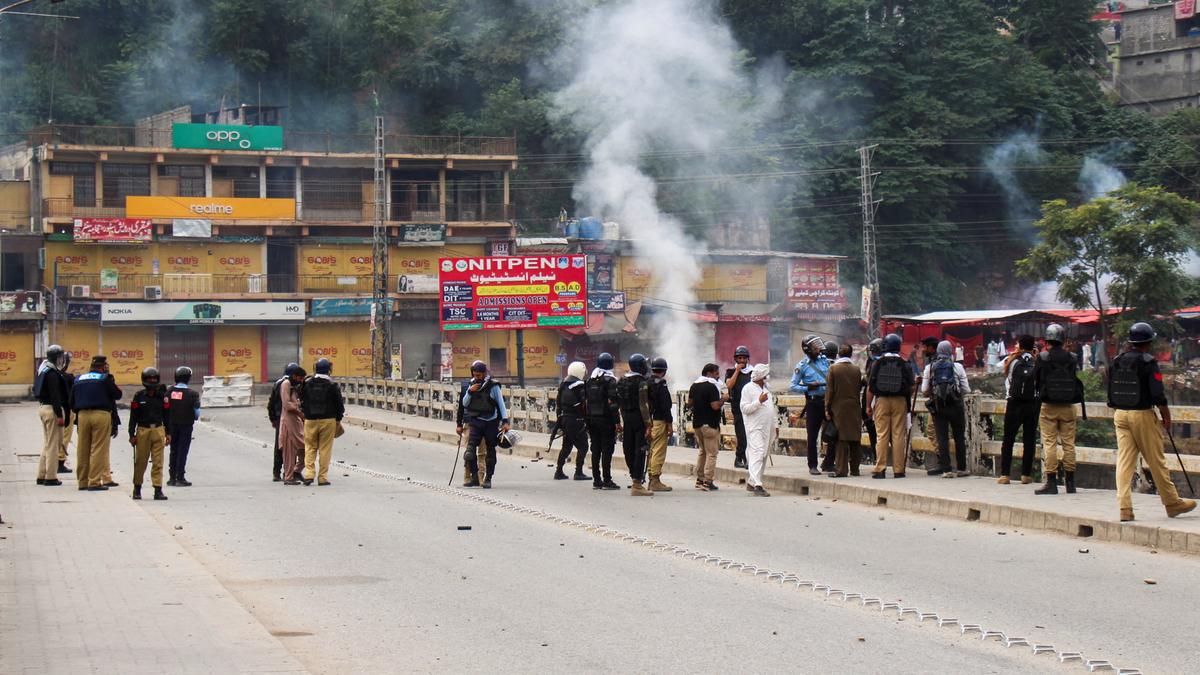
The friction points that transform regional economic grievances into widespread street mobilization follow strict political and financial mechanics. When structural subsidies contract while administrative expenditure remains high, public systems fail to absorb the resulting pressure. The spring uprisings in Pakistan administered Kashmir offer a distinct case study in how resource allocation, fiscal centralization, and elite privilege collide with civilian survival thresholds.
Understanding these dynamics requires moving past surface narratives of sudden outrage. Street mobilization in this region operates on predictable triggers, specifically the cost of basic caloric intake, electricity tariffs, and the visible disparity between state-funded bureaucratic luxury and public austerity.
The Fiscal Architecture of Discontent
The economic baseline of the region depends on a structural transfer model from the federal center, complicated by hydro-electric resource generation. While local rivers generate massive amounts of power for the national grid, the pricing structure and distribution quotas do not benefit the local population proportionally.
The Subsidy Dependency Trap
For decades, the social contract relied on subsidized wheat and subsidized electricity. This approach created an artificial cost of living that insulated citizens from raw market realities. However, fiscal deficits at the federal level forced an abrupt restructuring. When authorities attempted to rationalize tariffs and remove flour subsidies, they executed a shock without a transitional cushion.
- Price Elasticity Failures: Basic goods like flour and electricity have near-zero elasticity under median wage conditions. A sudden upward price adjustment does not reduce consumption; it eliminates discretionary spending entirely, pushing households into acute insolvency.
- Revenue Leakage: Public funds frequently trace a path toward administrative upkeep, luxury vehicle fleets, and elite allowances rather than infrastructure reinforcement or industrial diversification.
The colloquial reference to Pajero culture captures this friction. It denotes the stark visual contrast between administrative elites operating high-end, tax-exempt utility vehicles and citizens grappling with compounding inflation. This visual signaling accelerates public alienation, turning economic hardship into a direct challenge against institutional legitimacy.
Mechanics of the Joint Awami Action Committee
Grassroots mobilization rarely occurs in a vacuum. It requires a coordinating apparatus capable of synchronizing disparate economic sectors—transport operators, traders, and labor unions—into a cohesive bargaining unit. The Joint Awami Action Committee filled this structural vacuum by deploying a decentralized network of local councils.
Synchronization of Grievances
The action committee bypassed traditional political party structures by anchoring its platform to non-negotiable material demands rather than abstract constitutional reform. This tactical pivot achieved two distinct outcomes:
- Broad Coalition Building: By focusing on electricity pricing and wheat subsidies, the movement united merchants who faced high operational overhead with daily wage earners facing starvation risks.
- State Response Friction: Traditional containment strategies, which rely on co-opting localized political elites, failed because the action committee lacked conventional political hierarchies susceptible to standard patronage incentives.
When the administration responded with restrictive containment measures and communication blackouts, it triggered network effects. Information vacuums amplified distrust, converting localized sit-ins into regional work stoppages. The economic cost of shutting down transport and commerce networks quickly surpassed the fiscal savings the government sought to gain through tariff adjustments.
The Security Dilemma and Escalation Pathways
State response mechanisms in contested administrative zones frequently rely on coercive deterrence. This approach assumes that increasing the cost of participation via curfews, arrests, and riot control will suppress mobilization. In practice, under conditions of extreme economic duress, coercive deterrence often inverts its intended effect.
- The Threshold of Indifference: When citizens calculate that the status quo guarantees financial ruin or starvation, the perceived cost of state confrontation drops to zero. Standard deterrents lose efficacy.
- Decentralized Resilience: Heavy-handed policing against peaceful demonstrators transforms economic grievances into martyrdom narratives, hardening public resolve and drawing international focus to structural deficits.
The institutional reflex to frame economic dissent as a law-and-order challenge misdiagnoses the root pathology. Policing cannot resolve a deficit driven by macroeconomic mismanagement and energy pricing imbalances.
Strategic Trajectory
Resolving systemic instability in Pakistan administered Kashmir requires abandoning short-term containment in favor of structural economic recalibration. Authorities face a binary operational choice.
The first path involves sustaining coercive management, which demands escalating security expenditures, continuous digital suppression, and permanent political friction. This path guarantees ongoing capital flight, deteriorating infrastructure, and periodic explosions of civil unrest that compound economic decay.
The second path requires a complete audit of the fiscal transfer mechanism. This entails granting the region direct financial equity in hydro-electric generation revenues, rationalizing administrative overhead to eliminate conspicuous elite consumption, and designing targeted safety nets that absorb inflationary shocks without relying on blunt, broad-spectrum subsidies.
Until administrative priorities shift from resource extraction and bureaucratic self-preservation to sustainable regional development, the structural prerequisites for street mobilization will remain fully intact.


