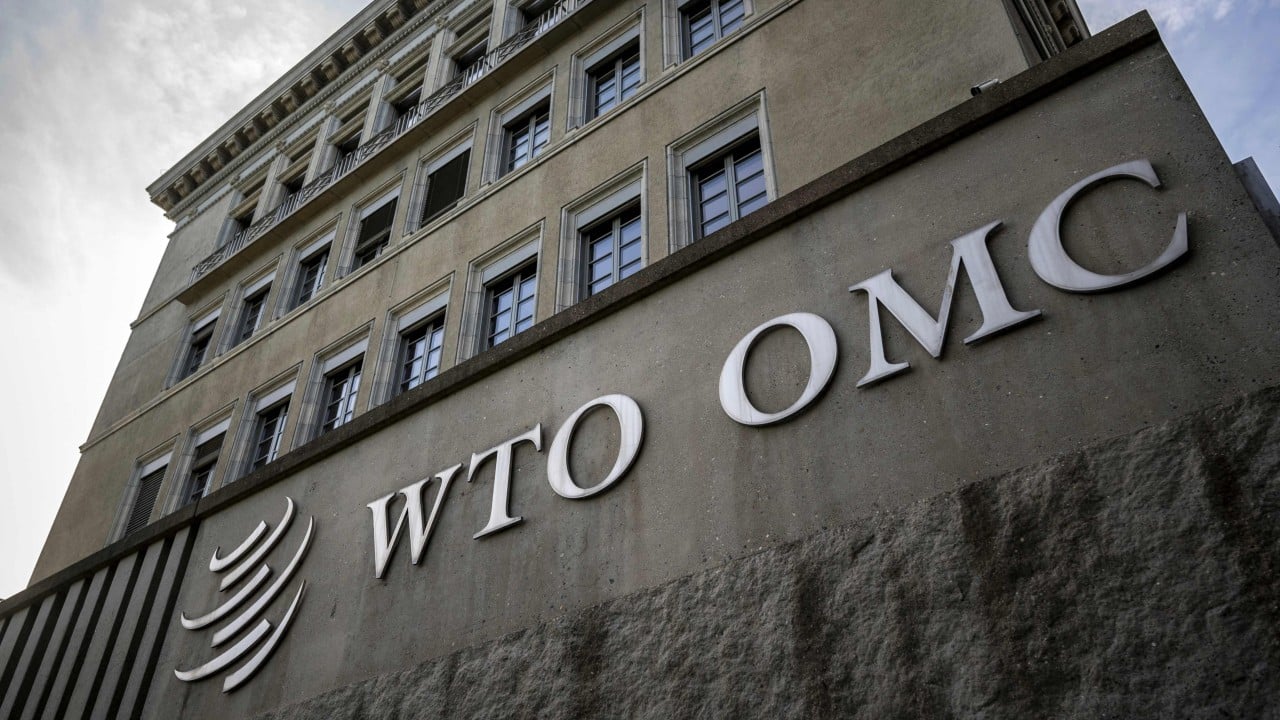
The architecture of global trade governance is experiencing a structural failure. Decades after the integration of state-capitalist economies into multilateral frameworks, state actors and domestic industry coalitions are colliding over a fundamental reality: traditional trade dispute mechanisms were built to police tariff differentials, not to govern industrial policy, state-directed equity infusion, or supply chain subsidization. When the Office of the United States Trade Representative receives coordinated petitions from industrial associations, the friction points are symptoms of a deep institutional mismatch. The existing multilateral rules assume market-clearing pricing mechanisms, whereas state-directed economic models operate on long-term capacity retention and macroeconomic employment stabilization.
Understanding this dynamic requires dissecting the mechanics of structural divergence. Multilateral trade rules rely on transparency, notification, and countervailing duties responding to quantifiable price distortions. When an economy deploys non-market instruments—such as subsidized input costs, state-directed credit allocation, and administrative market entry barriers—the distortion occurs upstream of the export price. By the time a finished commodity reaches an international port, its baseline production cost has been decoupled from market reality. If you liked this post, you should look at: this related article.
[State Capitalist Input Allocation]
       │
       ▼ (Subsidized Credit, Energy, Land)
[Upstream Industrial Production]
       │
       ▼ (Price Suppression)
[Multilateral Market Penetration] ──> [Traditional WTO Dispute Mechanism Failure]
This architecture creates three distinct friction vectors for domestic industry groups filing compliance complaints.
The first vector involves structural overcapacity. Traditional trade law treats overproduction as a cyclical inventory correction handled by market contraction. When production quotas or capital injections are maintained by state mandate, overcapacity transforms from a temporary cyclical trough into a permanent structural floor. Producers in market-driven jurisdictions face margin compression because they must cover the cost of capital and amortize debt through market returns, while state-supported competitors absorb operational losses indefinitely through sovereign backstops. For another look on this development, check out the recent coverage from Business Insider.
The second vector centers on technology transfer and indigenous innovation mandates. Multilateral frameworks protect intellectual property via judicial enforcement and border measures. However, when market access is conditioned on joint ventures, local equity caps, or mandatory source-code disclosures, the leakage of proprietary technology occurs through administrative friction rather than direct intellectual property theft. Industry groups find that traditional dispute settlement fails because the coercion is embedded in the initial conditions of market entry rather than a clear statutory violation of national treatment.
The third vector is the erosion of standard trade defense efficacy. Countervailing duties and anti-dumping measures are retrospective instruments. They look backward at historical pricing data, historical dumping margins, and materialized injury. In fast-moving technological sectors, a retrospective penalty operates on a multi-year lag. By the time a tariff is calculated and applied, the domestic industrial base targeted by the initial distortion has often suffered irreversible capital starvation and talent migration.
To bypass these multilateral bottlenecks, injured economies are shifting toward plurilateral coordination frameworks. The revitalization of mechanisms like the Global Forum on Steel Excess Capacity illustrates an operational pivot. Rather than relying on consensus-driven dispute resolution panels that face perpetual paralysis, participating nations are attempting to construct synchronized domestic regulatory perimeters. These efforts involve coordinated import monitoring, domestic subsidy transparency requirements, and aligned national security exemptions.
Yet, plurilateral frameworks carry their own limitations. Without binding enforcement mechanisms, compliance relies entirely on domestic political alignment across shifting administrations. If a key trading partner opts out of a coordinated perimeter, trade deflection occurs immediately, routing distorted goods through third-party intermediary nations. This creates a whack-a-mole dynamic where trade restrictions on direct imports simply give rise to complex transshipment webs designed to launder country-of-origin data.
The strategic imperative for industrial sectors navigating this friction is the transition from reactive litigation to proactive resilience modeling. Relying on multilateral bodies to force structural reform in a non-market economy is an exercise in administrative friction. Capital allocators and enterprise strategists must instead evaluate supply chain exposure through the lens of state-directed competition.
Firms operating in high-stakes manufacturing, energy transition infrastructure, and advanced technology must map their cost structures against potential state-backed margin pressure. Supply chain diversification must prioritize operational redundancy over cost minimization, factoring in the probability of sudden, asymmetric supply shocks driven by regulatory interventions.
Governments, meanwhile, are moving past the illusion that bilateral dialogues or consultative panels will alter fundamental domestic governance models abroad. The operational playbook is shifting from dispute settlement to autonomous defensive architecture. This involves deploying preventative screening mechanisms for inbound investments, expanding export controls on foundational research, and utilizing plurilateral coalitions to establish shared standards that bypass traditional multilateral stalemates. The future of international trade governance will not be defined by compliance with a single rulebook, but by the friction between competing economic systems and the defensive walls they build to protect domestic industrial continuity.