Air cargo ecosystems operate on tight margins, fixed infrastructural constraints, and geopolitical vulnerabilities. When regional chokepoints alter traditional trade routes, logistics authorities must recalibrate physical corridors to protect freight velocity. The decision by transport officials to align regional office expansions with new Central Asia flight routes reveals a calculated effort to mitigate single-corridor dependency. This analysis deconstructs the structural mechanics behind Hong Kong International Airport's recent network diversification, examining how capacity thresholds, carrier consolidation, and regional economic corridors dictate long-term hub viability.
The Infrastructure Capacity Function
A primary constraint on air cargo growth is runway and terminal throughput. For an international logistics hub handling high-density freight, capacity expansion is governed by the equation: You might also find this similar article useful: Why LG Energy is Running Away From Electric Vehicles Right Now.
$$C_{total} = f(R_{movements}, T_{turnaround}, S_{ground})$$
Where total capacity is a function of hourly runway movements, aircraft turnaround speed, and ground storage efficiency. Following the full commissioning of the Three-Runway System, Hong Kong's maximum theoretical capacity reached seventy-seven flight movements per hour. As reported in latest coverage by The Wall Street Journal, the results are worth noting.
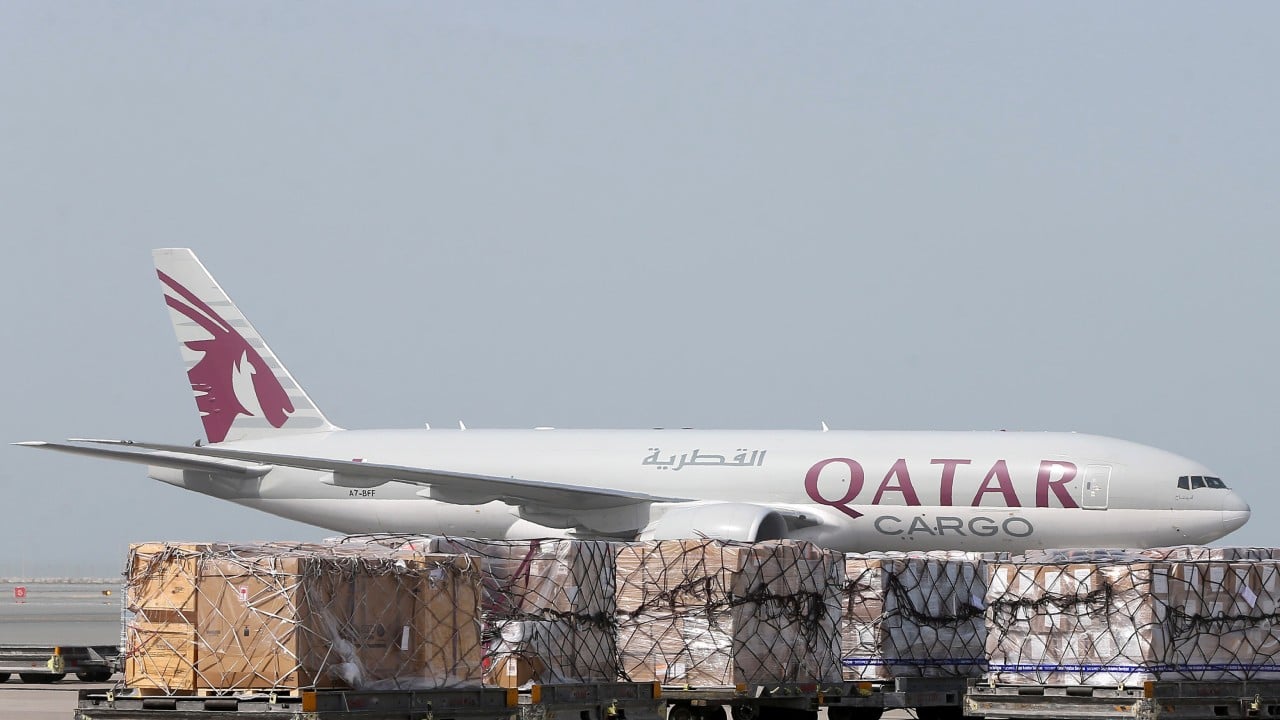
The introduction of regional headquarters by major global carriers, such as Qatar Airways Cargo, directly alters the variables in this equation. By anchoring dedicated regional management on-site, carriers streamline ground handling workflows and reduce aircraft turnaround times.
Physical infrastructure alone does not guarantee cargo volume. Airport Authority frameworks rely on high-yield bilateral agreements and memorandum networks to incentivize foreign carriers. When cargo operators invest in regional offices rather than simple agency representation, they commit long-term asset allocation to the hub. This structural commitment reduces carrier churn and stabilizes throughput projections for airport authorities, independent of short-term macroeconomic fluctuations in Western consumer markets.
Risk Mitigation via Corridor Diversification
Traditional air freight architectures linking East Asia to Europe have heavily depended on Middle Eastern airspace and transit hubs. Historically, approximately thirteen percent of the city's total air freight passed through Middle Eastern nodes. While economically efficient during periods of geopolitical stability, this concentration introduces severe systemic risk. Regional airspace restrictions or security anomalies instantly create cascading scheduling bottlenecks, driving up fuel burn through mandatory rerouting.
The strategic pivot toward Central Asia, highlighted by upcoming direct routes to destinations such as Almaty, Kazakhstan, serves as an operational hedge. Cargo data demonstrates that freight volume transported via Central Asian corridors experienced a fivefold year-on-year increase during the initial five months of the operational shift. This trajectory establishes several structural benefits for supply chain architecture:
- Geographic redundancy that bypasses congested Middle Eastern flight corridors.
- Shaded great-circle distances for specific Eurasian origin-destination pairs, reducing block hours.
- Enhanced access to landlocked emerging markets rich in raw materials and industrial components.
- Direct integration with overland Eurasian rail and multimodal logistics networks.
By diversifying the inbound and outbound vector profile, logistics planners insulate the local hub from single-point-of-failure vulnerabilities. This creates an elastic supply chain capable of absorbing regional shocks without sacrificing delivery SLAs.
The Economics of Airline-Government Coordination
The execution of route expansion relies on a collaborative framework between state transport bureaus, airport operators, and home-carrier flagships. This tripartite alignment—often operating under a coordinated coalition model—overcomes coordination market failures that typically plague liberalized aviation sectors.
Individually, an airline evaluates route profitability purely on yield per available freight tonne-kilometer (AFTK). Conversely, government transport bureaus evaluate routes based on macroeconomic spillover, employment generation, and aggregate trade velocity. When state entities intervene to secure bilateral air service agreements, they lower the regulatory barrier to entry for commercial carriers.
For instance, initialing civil aviation agreements with Central Asian states establishes the legal framework required for commercial flight schedules to launch without protracted diplomatic friction. Once the regulatory overhead is cleared, home carriers and foreign mega-freighters can deploy capacity with predictable cost structures. This dynamic explains why route reveals frequently coincide with infrastructural milestones, such as regional office openings or terminal expansions. The supply of capacity meets newly unlocked regulatory permissions in real-time, preventing dead-weight loss from idle infrastructure.
Operational Execution for Logistics Operators
To capitalize on the shift toward Eurasian and Central Asian corridors, cargo operators and freight forwarders must adjust their asset deployment models. Traditional point-to-point scheduling models perform poorly in emerging corridors characterized by directional trade imbalances.
Operators should implement triangular routing structures that pair heavy outbound industrial exports from the Greater Bay Area with high-value inbound commodities from Central Asia and Eastern Europe.
Forwarders must establish localized partnership networks with ground handlers in emerging nodes like Kazakhstan and neighboring republics to mitigate lack of real-time cargo visibility.
Logistics firms need to re-evaluate their fleet composition, favoring medium-widebody freighters capable of economically servicing secondary Eurasian tech and resource hubs without incurring the high unit costs of large quad-engine aircraft on thin routes.
Supply chain managers should audit their current carrier contracts to identify exposure to single-corridor Middle Eastern routing, gradually shifting flexible volume toward the newly established northern and central land-bridge connectors.