Institutional governance relies on statutory boundaries, pre-established fiduciary duties, and legislative appropriations. When external political entities attempt to alter these parameters without legislative authorization, a predictable friction emerges between legal constraints and administrative maneuvering. The recent sequence of events surrounding the John F. Kennedy Center for the Performing Arts illustrates the mechanics of institutional capture, judicial intervention, and physical fortification as a tool of administrative leverage.
The Statutory Baseline and the Authority Vector
The foundational mechanics governing federal cultural institutions depend on explicit congressional mandate. Public assets financed or maintained through federal funds operate under strict legislative control. In the case of the Kennedy Center, Congress previously allocated $257 million earmarked for structural maintenance and repairs.
Administrative control, however, is mediated through a board of trustees. When a board composition shifts to align with a specific executive agenda, the vector of operational decisions alters. The board voted to mandate a facility closure, ostensibly for safety and renovation operations, while simultaneously attempting to tie these physical interventions to branding concessions—specifically, inscribing the sitting president's name onto the facility's primary facade and renaming the surrounding plaza.
This creates a direct conflict between administrative authority and statutory limits. The mechanism failed when U.S. District Judge Christopher Cooper intervened, ruling that structural renaming and branding alterations require explicit congressional authorization rather than unilateral board fiat.
The Response Function of Physical Enclosure
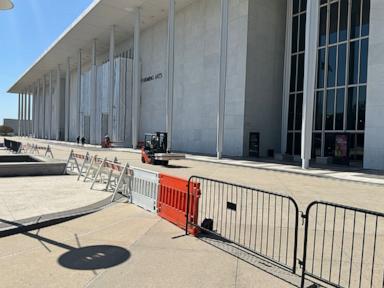
When judicial rulings block administrative objectives, the tactical response often shifts from legal argumentation to physical enclosure. Within 24 hours of the judicial block and the board's closure vote, security perimeters shifted drastically. Fencing was erected around the main building, and access for both pedestrians and vehicles was abruptly restricted.
From an operational standpoint, physical closure serves three distinct strategic functions within a political dispute:
- Asset Denied State: By cutting off public and staff access, the administration removes the facility from active public utility, converting a cultural asset into an inert, contested zone.
- Negotiation Leverage: Enclosure forces an operational crisis. When a facility is shuttered, stakeholders face mounting pressure from disrupted schedules, financial bleed, and public relations fallout, altering the cost-benefit matrix of resisting administrative demands.
- Enforcement Preemption: Restricting access preempts potential compliance actions or physical occupancy by opposing stakeholders or legal observers, creating an enforced vacuum around the disputed asset.
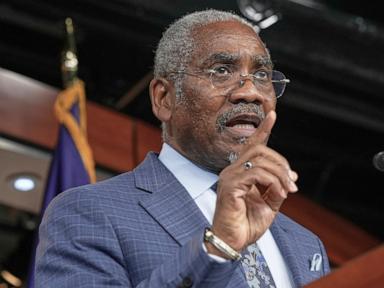
Legal representatives for opposing lawmakers, such as Democratic Representative Joyce Beatty, immediately filed for emergency hearings, characterizing the closure as an unlawful maneuver designed to bypass judicial oversight and potentially render physical access permanently impractical. The strategy relies on shifting the timeline: if physical alterations or structural changes outpace judicial enforcement, the factual reality on the ground forces a new legal baseline.
The Fiscal and Operational Hazard Matrix
The conflict exposes structural vulnerabilities in how federally supported cultural institutions manage capital projects under political polarization.
The administration's tactical deployment of the $257 million congressional allocation as a conditional resource—asserting that repairs will only proceed concurrently with the implementation of requested branding changes—transforms a maintenance budget into a coercive instrument. Conversely, opponents argue that unverified claims of structural decay and sudden emergency closures mask an effort to force compliance through manufactured crisis.
The risk profile for the institution is defined by two competing failure modes:
- Fiduciary Dereliction: If necessary infrastructure maintenance is delayed or weaponized for political bargaining, the physical plant deteriorates, risking permanent structural compromise of a national monument.
- Institutional Legitimacy Erosion: If an administrative board can bypass judicial rulings by turning a public performance venue into a fenced-off administrative enclave, the precedent undermines the separation of powers governing federal property.
Strategic Forecast
The resolution of this deadlock depends entirely on the enforcement capacity of the federal judiciary versus the executive branch's control over physical assets. Because the court ruled that structural branding changes cannot occur without congressional blessing, the Trump-aligned board faces a binary choice: release the $257 million for repairs without the mandated inscriptions, or maintain the physical blockade and risk contempt-of-court challenges and legislative countermeasures.
The immediate trajectory points toward prolonged litigation centered on emergency injunctions, where the primary battleground has shifted from administrative boardrooms to perimeter security lines.
Fencing goes up at Kennedy Center after Trump-aligned board votes to close it
This footage documents the rapid erection of security fencing around the main facility following the contentious board vote and subsequent legal blocks.