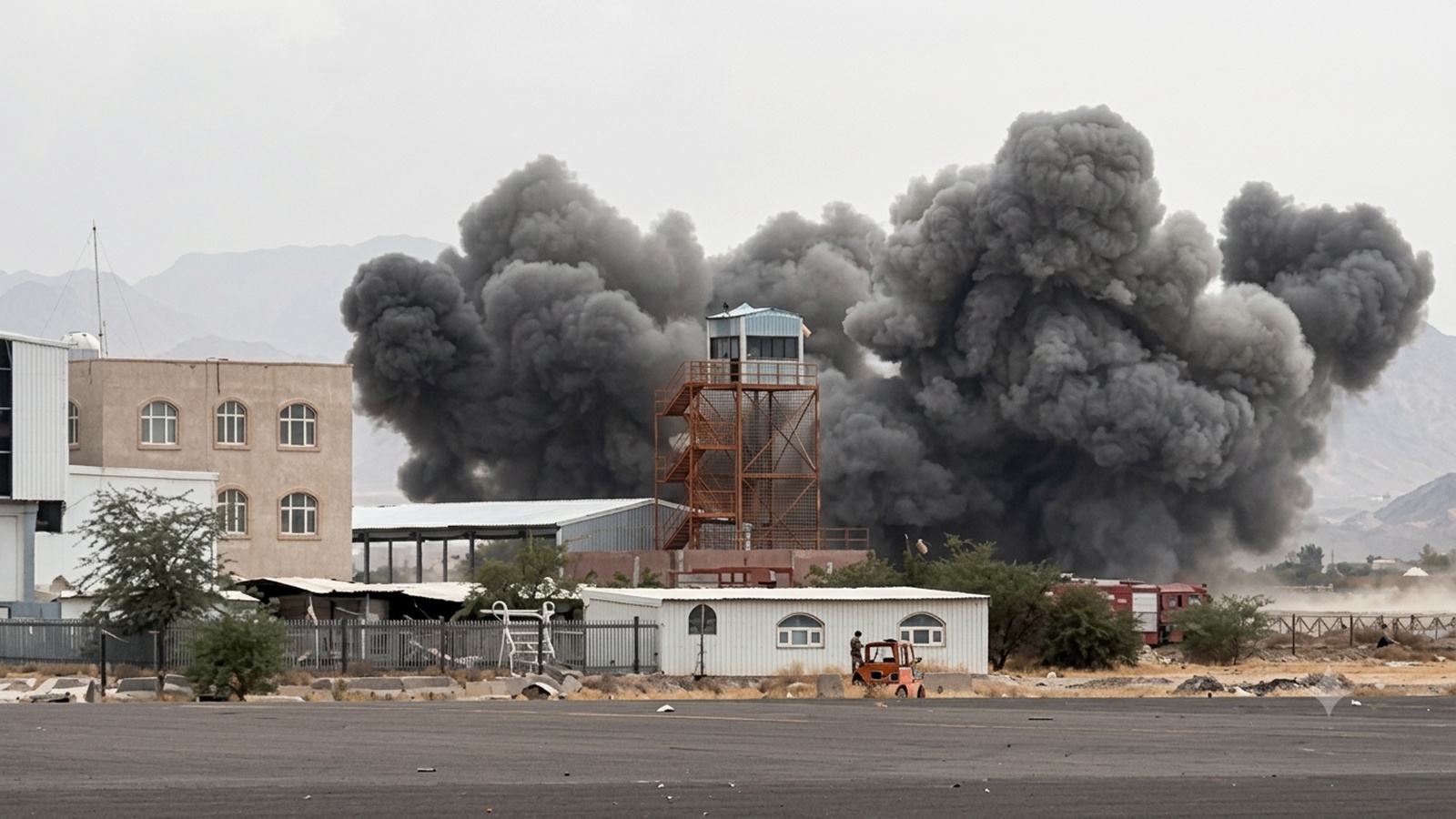
Interception architectures in West Asia operate under a severe mathematical constraint: defensive parity requires absolute reliability, whereas offensive saturation requires only a single vector of success. When regional air defense networks engage incoming unmanned aerial vehicles, the underlying mechanics reflect an asymmetric economic and operational equation. The interception of Iran-backed munitions by regional actors such as Saudi Arabia exposes the fault lines of modern deterrence models. This analysis deconstructs the systemic variables governing these engagements, mapping the transition from localized proxy friction to systemic regional exposure.
The Economic Asymmetry of Interception
The fundamental vulnerability of modern air defense does not lie in interceptor physics, but in marginal cost functions. Deploying surface-to-air missiles against low-cost, mass-produced unmanned platforms creates a structural resource drain.
- The Unit Cost Differential: A standard interceptor missile routinely exceeds the unit manufacturing cost of a loitering munition by a factor of twenty to one.
- Inventory Depletion Rates: Sustained defensive operations force a consumption curve that outpaces replenishment manufacturing capacity.
- Logistical Friction: Supply chains for precision guidance components face severe bottlenecks under high-cadence operational loads.
When state actors engage multiple incoming vectors, the primary objective is asset protection. However, prolonged engagement horizons shift the strategic advantage to the attacking party through financial attrition. The defender must maintain a 100 percent success threshold across all trajectories, while the aggressor gains utility simply by forcing resource expenditure.
The Three Vectors of Escalation Risk
Escalation dynamics in the region are governed by interdependent operational vectors rather than isolated tactical exchanges.
1. The Proximity Hazard Matrix
Geographic concentration of critical energy infrastructure and population centers creates high-value vulnerability zones. Intercepted debris frequently poses collateral kinetic and incendiary hazards, independent of the primary warhead payload. This introduces an unpredictable damage variable into defensive calculations.
2. Command and Control Latency
As engagement velocity increases, decision-making cycles compress. Automated threat assessment systems must evaluate trajectory, speed, and signature within seconds. This reliance on automated filtering introduces the risk of false positives, miscalculations, and premature escalation thresholds across sovereign borders.
3. Diplomatic Signaling Loops
Every kinetic interception alters the bargaining threshold between state actors and non-state proxies. When defensive measures succeed consistently, the perceived risk of aggression decreases for the proxy, ironically incentivizing higher-frequency, low-consequence probes designed to test response integration.
Systemic Limitations of Deterrence Frameworks
Traditional deterrence theory relies on assured retaliation and clear escalation ladders. These frameworks break down when applied to asymmetric proxy networks backed by sovereign sponsors.
The primary limitation involves attribution ambiguity. When unmanned systems are launched from decentralized staging grounds utilizing obscured command routing, the target state faces a high burden of proof before executing retaliatory kinetic action. This delay neutralizes the immediate deterrent effect of counter-force operations.
Furthermore, economic integration introduces competing priorities. Regional states pursuing large-scale economic diversification programs face acute sensitivity to regional instability indices. Capital flight and insurance premium surges immediately follow visible security breaches, regardless of whether the interception attempt succeeded. Consequently, the defense calculus must account for macroeconomic stability alongside immediate kinetic preservation.
Strategic Interception Protocols
Mitigating future escalation loops requires a fundamental shift from reactive interception to proactive network disruption. State actors are increasingly forced to address upstream vulnerabilities.
- Targeting Supply Chain Nodes: Shifting operational focus toward intercepting the procurement networks that supply guidance systems and engine components to proxy manufacturers.
- Multi-Tiered Directed Energy Integration: Accelerating the deployment of high-powered microwave and laser systems to radically alter the cost-per-engagement equation.
- Unified Regional Sensor Sharing: Establishing real-time telemetry integration across sovereign boundaries to extend early warning timelines and reduce decision latency.
The structural reality of the current security environment is that tactical defense alone cannot resolve strategic volatility. Without addressing the underlying economic and political drivers of proxy proliferation, defensive architectures will remain trapped in an unsustainable cycle of high-cost mitigation against low-cost saturation.


