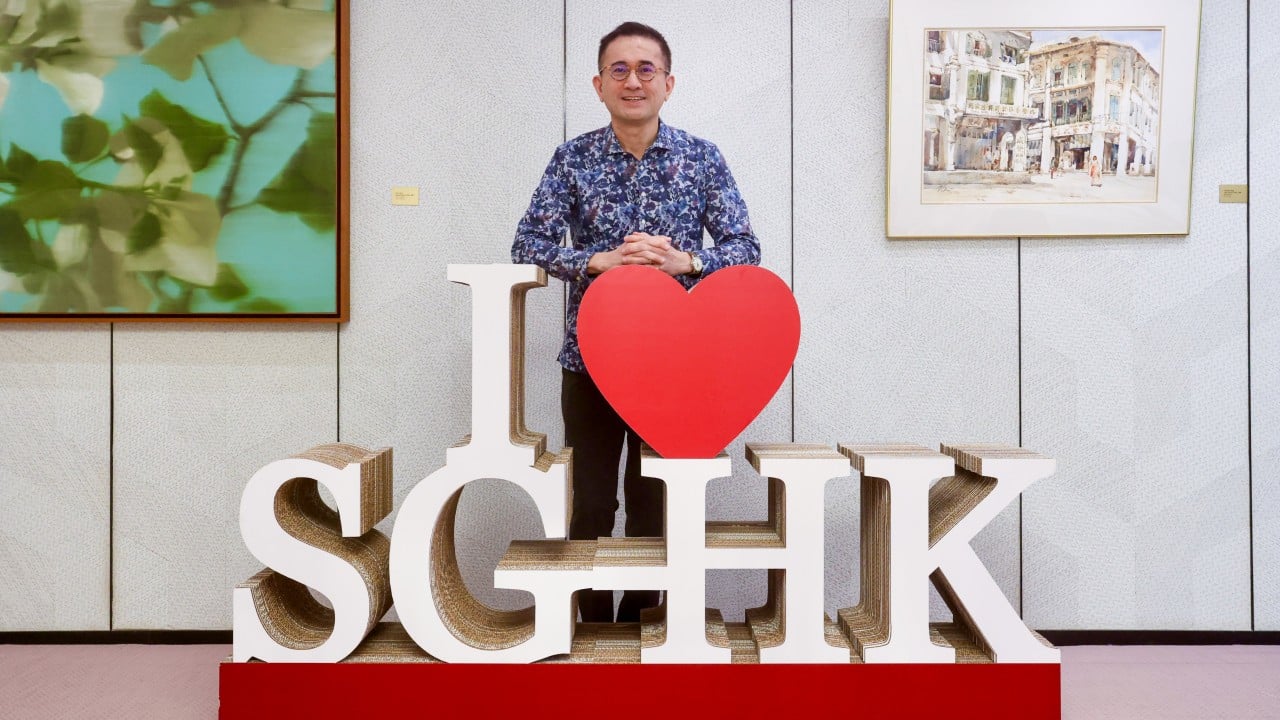
Economic geography rarely tolerates absolute parity between proximate financial hubs. The persistent narrative framing Hong Kong and Singapore as mortal enemies vying for a zero-sum liquidity prize ignores the structural specialization that actually governs institutional capital allocation. Diplomatic framing from trade envoys frequently characterizes this relationship as a healthy, co-dependent competitive dynamic, yet capital markets operate on cold optimization algorithms rather than geopolitical diplomacy. Understanding why multinational corporations and sovereign wealth funds partition their operations across these two jurisdictions requires stripping away diplomatic rhetoric to examine the distinct functional friction points, regulatory arbitrage opportunities, and operational cost functions native to each market.
The core misconception plaguing standard commentary is the assumption of total substitutability. Asset managers do not choose between Hong Kong and Singapore based on lifestyle preferences or broad cultural affinities; they choose based on systemic inputs that dictate transaction velocity, compliance overhead, and proximity to primary target markets. Hong Kong functions as the primary conduit for mainland Chinese capital formation, structural debt issuance, and direct cross-border equity integration. Singapore operates as the premier treasury management, wealth structuring, and regional orchestration hub for Southeast Asia and South Asia. Evaluating these two cities through a binary lens of victory and defeat misunderstands how global capital routing functions under modern regulatory constraints.
The Capital Ingress Vector
Capital flows respond directly to institutional gravity. Hong Kong derives its irreplaceable market utility from its structural tether to mainland China. Despite evolving geopolitical frictions and shifting regulatory oversight from Beijing, the structural financial plumbing linking Hong Kong to Shanghai and Shenzhen remains unique. The Stock Connect programs, Bond Connect mechanisms, and mutual recognition of funds create a legally binding pipeline for renminbi-denominated assets that cannot be replicated outside Chinese territory.
When international institutional investors seek exposure to mainland industrial output, technology equities, or onshore corporate debt, Hong Kong provides the requisite clearing infrastructure, legal recourse under common law traditions adapted for Chinese commerce, and deep secondary market liquidity. This creates an unshakeable institutional moat. The cost function of bypassing Hong Kong involves accepting higher friction, increased currency conversion hurdles, and a reliance on offshore synthetic instruments that lack the liquidity depth of primary listings.
Conversely, Singapore engineered its preeminence by removing friction for regional headquarters and global family offices. While Hong Kong focuses heavily on equity capital markets and primary initial public offerings tied to Chinese balance sheets, Singapore built a diversified ecosystem for trade finance, commodity trading, and private wealth administration. The Monetary Authority of Singapore deployed targeted tax incentives, streamlined work pass approvals for specialized financial talent, and predictable regulatory sandboxes that attracted multinational treasury operations seeking a stable base outside the direct regulatory jurisdiction of Beijing.
The Regulatory Cost Function and Operational Friction
Financial hubs are defined by their regulatory burdens. Compliance overhead acts as a direct tax on financial institutions, dictating profit margins and influencing where executive talent chooses to deploy capital. Hong Kong faces unique compliance complexities stemming from its dual regulatory identity. Financial institutions operating within the territory must navigate both local common law frameworks and the practical realities of mainland regulatory mandates, particularly concerning data security laws, anti-money laundering protocols, and cross-border information sharing.
The operational friction in Hong Kong manifests primarily through real estate overhead and talent acquisition costs. Office rental rates in core districts have historically outpaced almost every other major metropolitan center, driven by geographical constraints and intense demand from mainland firms seeking physical representation. This creates a high fixed-cost barrier for boutique asset managers and specialized advisory firms, forcing them to justify their physical footprint through immediate deal flow.
Singapore presents a distinct cost matrix. While commercial real estate has experienced severe inflationary pressure due to an influx of global capital and high-net-worth migration, the regulatory environment is engineered for predictability. The Monetary Authority of Singapore maintains an open, consultative relationship with licensed financial institutions, emphasizing transparent risk management over rapid administrative shifts. However, this stability comes with strict operational mandates regarding local employment quotas, housing costs for expatriates, and stringent vetting procedures for family office tax exemptions.
Talent Mobility and Human Capital Allocation
The velocity of a financial center depends entirely on the specialization and mobility of its human capital. Hong Kong possesses a dense concentration of investment bankers, equity research analysts, and legal practitioners who specialize in Chinese corporate law, initial public offerings, and cross-border restructuring. This expertise is deep, highly localized, and difficult to transplant. An analyst who has spent a decade navigating the intricacies of Chinese corporate filings and regulatory disclosures possesses tacit knowledge that takes years to replicate.
Singapore approaches human capital through a regional aggregation lens. Rather than anchoring its workforce to a single massive hinterland economy, Singapore attracts talent portfolios capable of managing cross-border operations spanning Indonesia, Malaysia, Vietnam, India, and the broader ASEAN bloc. The talent pool is structurally international, supported by progressive immigration policies designed to capture specialized technology talent, quantitative traders, and compliance architects.
This divergence in human capital creates distinct operational profiles. Hong Kong remains unmatched for transactional intensity, deal execution speed within the Chinese economic sphere, and heavy equity underwriting. Singapore excels in strategic asset allocation, multi-jurisdictional tax planning, treasury operations, and risk management that requires diversification away from single-country exposure.
The Wealth Management Divergence
Private wealth management highlights the divergence in market mechanics. Hong Kong captures the vast majority of ultra-high-net-worth wealth originating from mainland entrepreneurs looking for offshore diversification while maintaining proximity to their primary business operations. The relationship managers in Hong Kong speak the precise dialect of mainland wealth creators, understanding the nuances of private enterprise financing, family trust structures adapted for Chinese inheritance laws, and onshore-offshore asset coordination.
Singapore captures international capital that seeks neutral jurisdictional ground. Family offices establishing operations in Singapore frequently manage assets originating from Europe, the Middle East, South Asia, and Western markets. The appeal lies in asset protection, political neutrality, and a diversified investment mandate that allocates capital globally rather than concentrating primarily on Greater China equities. The growth of Variable Capital Companies in Singapore has provided a flexible corporate vehicle specifically designed for wealth funds, lowering the administrative friction of managing complex multi-asset portfolios.
Systemic Vulnerabilities and External Shocks
Neither jurisdiction operates without structural vulnerabilities. Hong Kong's fortunes remain inextricably linked to the macroeconomic trajectory of the mainland Chinese economy. When mainland property markets contract, domestic consumption slows, or regulatory crackdowns alter business sentiment in key sectors such as technology and education, Hong Kong's equity capital markets experience immediate contraction. The Pegged Exchange Rate System linking the Hong Kong dollar to the US dollar forces the city to import United States monetary policy, creating periodic divergences between local economic conditions and interest rate environments.
Singapore confronts physical resource constraints and geopolitical vulnerability as a small city-state navigating great power competition between the United States and China. As a major maritime and aviation transshipment node, Singapore is acutely sensitive to global trade fragmentation, supply chain reshoring, and shifts in regional trade pacts. Furthermore, the rapid influx of foreign capital has triggered localized inflationary pressures, housing affordability crises, and social friction regarding expatriate employment ratios, prompting tighter regulatory scrutiny on foreign workforce policies.
Strategic Trajectory for Capital Allocation
Deploying capital or establishing institutional presence across these markets requires abandoning the false premise of a winner-take-all contest. Institutions that treat Hong Kong and Singapore as interchangeable alternatives will consistently misallocate resources.
Firms focused on capturing returns from Chinese industrial restructuring, primary equity financing, and domestic mainland corporate expansion must anchor their execution capabilities in Hong Kong. The proximity to decision-makers, regulatory bodies, and corporate headquarters in Shenzhen, Beijing, and Shanghai provides an unquantifiable operational advantage.
Firms constructing diversified multi-asset portfolios, managing regional treasury functions for multinational enterprises, or deploying private wealth strategies unexposed to single-jurisdiction regulatory risk must utilize Singapore as their operational nexus. The institutional stability, predictable regulatory framework, and integration with the ASEAN growth story offer the necessary risk mitigation.
Market dynamics will continue to enforce this division of labor. As macroeconomic volatility persists, capital will increasingly reward specialization over duplication. The enduring strength of both financial centers lies not in their identical capabilities, but in their permanent, structural divergence.