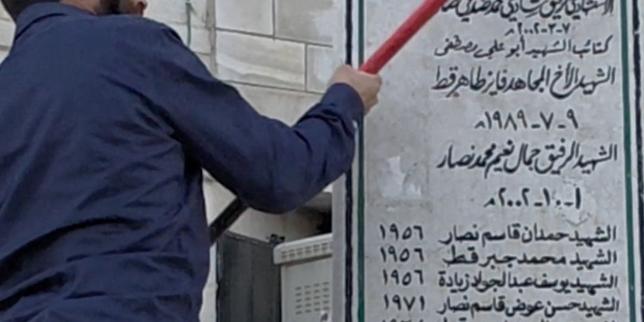
Political theater in occupied territories rarely manifests as random violence; rather, it operates as a calculated exercise in boundary-testing designed to force institutional compliance. The recent actions of Member of Knesset Zvi Sukkot in the West Bank village of Madama provide a clear window into how fringe political actors exploit security frameworks to alter ground-level realities. By utilizing an authorized legislative oversight tour as a vehicle for property destruction, this event highlights structural breakdowns in military command, jurisdictional friction, and the weaponization of symbolic architecture.
The Mechanics of Jurisdictional Exploitation
The operational blueprint executed in Madama relied on a deliberate abuse of administrative clearance protocols.
- The Authorization Phase: The Israel Defense Forces approved an oversight tour for parliamentary members across designated sectors of the West Bank. These movements typically require military coordination to allocate security details, given the complex administrative divisions established under historical agreements.
- The Operational Pivot: Security escorts assigned to protect elected officials function under strict mandates of defensive positioning. When participants deviate from approved itineraries to engage in direct action, they exploit the protective umbrella of the military to neutralize immediate localized intervention.
- The Tactical Execution: Using manual demolition tools against structural memorials transforms passive protection details into active structural shields, as ground troops must navigate the command vacuum between political immunity and military enforcement.
This sequence demonstrates how legislative actors bypass institutional choke points. When the state apparatus is compelled to guard a representative, that representative leverages the presence of armed forces to execute extra-institutional objectives without immediate tactical pushback.
Institutional Friction and the Chain of Command
The immediate institutional response to the Madama incident exposed deep fractures within the governance model governing the West Bank. The military command structure condemned the operation as a deceptive exploitation of authority, noting that authorized demolitions of contentious monuments follow strict legal pathways rather than ad-hoc sledgehammer interventions.
Simultaneously, the political echelon experienced internal friction. While executive offices reiterated that the military remains the sole sovereign authority in the territory, aligned coalition figures defended the underlying rationale of targeting memorials dedicated to individuals implicated in past attacks. This divergence creates a classic principal-agent problem. The military acts as the agent tasked with maintaining territorial stability, but political principals within the legislative branch actively subvert operational guidelines to achieve ideological signaling goals.
The systemic risk of this dynamic lies in resource redirection. Troops deployed to secure unauthorized political stunts are diverted from baseline security operations. In regions characterized by high baseline volatility, every squad tied up in guarding an ideological provocation represents a deficit in operational readiness elsewhere.
The Economics of Symbolic Architecture
Monuments commemorating armed combatants function as focal points for collective memory and community friction. In protracted conflicts, physical markers serve distinct strategic functions for both populations.
For local Palestinian communities, these structures anchor historical narratives and honor figures defined as resistance actors or martyrs, regardless of how external actors classify their histories. For right-wing Israeli politicians, these same installations are categorized as vectors of incitement that perpetuate cycles of recruitment and ideological hardening among younger generations.
The conflict over these sites is essentially an economic struggle over psychological territory. Destroying a monument via viral media production yields a high return on investment for an elected official seeking to pressure the defense establishment into adopting a more aggressive clearance posture. The physical act of demolition is secondary to the broadcasted image, which serves to delegitimize existing administrative controls and compel institutional alignment with fringe policy goals.
Strategic Forecast for Territorial Governance
The recurrence of direct-action political interventions in the West Bank signals a continuing erosion of centralized military oversight in favor of decentralized nationalist friction. As legislative actors increasingly test the boundaries of civil-military command structures, the operational cost borne by security forces will rise.
When institutional frameworks fail to establish a predictable monopoly on the regulation of disputed symbols, political entrepreneurs will continue to substitute state bureaucracy with direct physical intervention. The structural outcome is a compounding cycle of escalation where administrative protocols are routinely bypassed to satisfy short-term political incentives, leaving security forces caught between legal mandates and political impunity.
.jpg?auto=webp&format=pjpg&width=3840&quality=60)