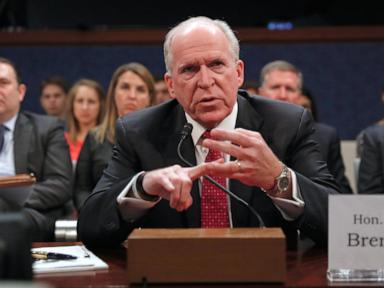
Every time a headline drops about a former intelligence chief getting dragged into a courtroom crossfire, the political commentariat loses its collective mind. They treat it like the opening salvo of a historic reckoning. They envision grand juries, perp walks, and the majestic crumbling of deep state impunity.
It is complete nonsense.
When lawyers trumpet that John Brennan or any other former CIA director has been slapped with a subpoena in a high-stakes conspiracy lawsuit, the media treats it as a structural earthquake. They frame it as accountability finally catching up to the untouchable caste of Washington insiders. But if you have spent any time tracking how elite litigation actually functions behind closed doors, you know the truth is far more cynical. These subpoenas are not weapons of justice. They are marketing materials.
Let us look past the breathless chyrons and examine the machinery of these legal battles.
The Anatomy of a Performative Subpoena
Let us be entirely clear about what happens when a high-profile political figure or ex-intelligence official receives a subpoena in a civil or quasi-criminal grand conspiracy action.
First, understand the financial architecture. Litigation costs money. Millions of dollars. When a legal team announces a major subpoena targeting a household name like Brennan, donor portals light up within minutes. Political action committees, crowdfunding campaigns, and partisan advocacy groups experience an immediate surge in capital. The subpoena is not designed to produce a smoking-gun confession on page four hundred of a deposition transcript. It is designed to trigger a fundraising email blast.
Second, look at the legal reality. Former agency directors do not march into depositions unprepared and spill national security secrets because a clever lawyer asked a sharp question. They walk in surrounded by top-tier white-collar defense attorneys whose retainer fees could buy a suburban subdivision. Every single answer is vetted, parsed, and scrubbed through the rigid filters of classification reviews and executive privilege claims.
When Brennan sits down across from opposing counsel, he is not sweating. He is running down the clock while his lawyers object to form, relevance, and jurisdiction.
The mainstream narrative insists that compelling testimony from a former director will blow the lid off institutional corruption. This ignores how institutional self-preservation actually works. Intelligence veterans spend decades mastering the art of bureaucratic evasion. They speak fluently in non-answers, strategic memory lapses, and invocations of sources and methods.
Why the Grand Conspiracy Frame Fails
The phrase grand conspiracy is catnip for cable news, but it completely misrepresents how modern power operates.
Conspiracies require coordination, secrecy, and a master plan. What we actually witness in Washington is something much more mundane and much harder to fight: alignment of incentives.
You do not need a shadowy cabal meeting in a windowless room to subvert democratic norms or manipulate public narratives. You just need thousands of career bureaucrats, political appointees, and contractors all acting rationally within a system that rewards conformity, protects institutional turf, and punishes whistleblowers.
When litigants try to shoehorn this messy, sprawling ecosystem of bureaucratic self-interest into a neat legal framework like a racketeering or grand conspiracy charge, they almost always crash against the rocks of standing, materiality, and immunity.
Judges throw these cases out with regularity, or they get bogged down in multi-year procedural quagmires that exhaust everyone except the lawyers billing by the hour. Yet, the public is led to believe that each new subpoena brings us one step closer to a dramatic courtroom confession. It is a comforting myth. It reassures people that the legal system has an automatic correction mechanism for institutional overreach.
It does not.
The Cost of the Distraction
Here is the dirty secret that neither side of the partisan aisle wants to admit: these high-profile legal battles serve as a brilliant distraction from actual structural reform.
While the public obsesses over whether a retired spook will be forced to answer questions about past investigations, the real architecture of unchecked executive power remains untouched. Surveillance authorities get renewed with bipartisan majorities. Emergency powers expand quietly in midnight omnibus bills. Oversight committees turn into television studios where members audition for primetime slots instead of conducting rigorous audits.
Focusing populist energy on individual high-profile figures creates a convenient soap opera. It personalizes systemic problems. If we can just defeat or humiliate a specific villain in court, the narrative goes, the system will heal itself.
That is a dangerous delusion. Even if every subpoenaed official were forced to testify publicly for days on end, the underlying vulnerabilities in our institutional checks and balances would remain completely unaddressed. In fact, they would be reinforced, because everyone involved would walk away claiming vindication while their respective fanbases cheered.
Navigating the Noise
If you want to cut through the theater and understand what is actually happening when these legal maneuvers hit the news cycle, you have to adopt a radically different lens.
Stop asking whether the subpoena will break the case wide open. It won't.
Start asking who benefits from the attention. Follow the capital flows, the media amplification, and the legislative distractions. When a legal filing makes front-page news with cinematic descriptions of grand conspiracies, check to see what boring, consequential policy vote is happening on Capitol Hill the very same week.
The game is rigged, but not in the way the conspiracy theorists or the institutional defenders claim. It is rigged to keep you entertained, outraged, and permanently focused on personalities rather than policies.
Stop falling for the paperwork. Stop treating legal posturing as a moral crusade. And above all, stop expecting a subpoenaed bureaucrat to save you from a system they helped build.