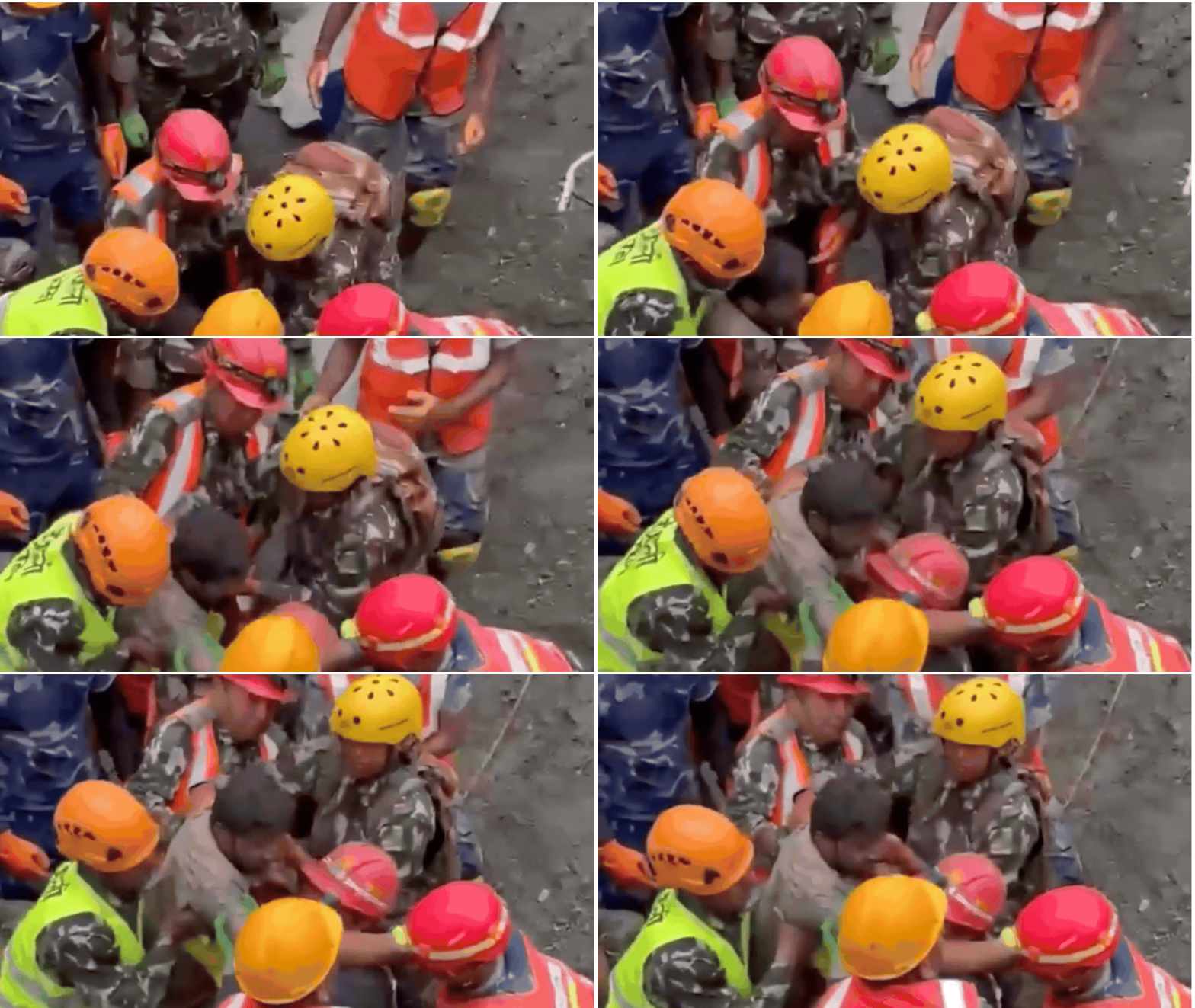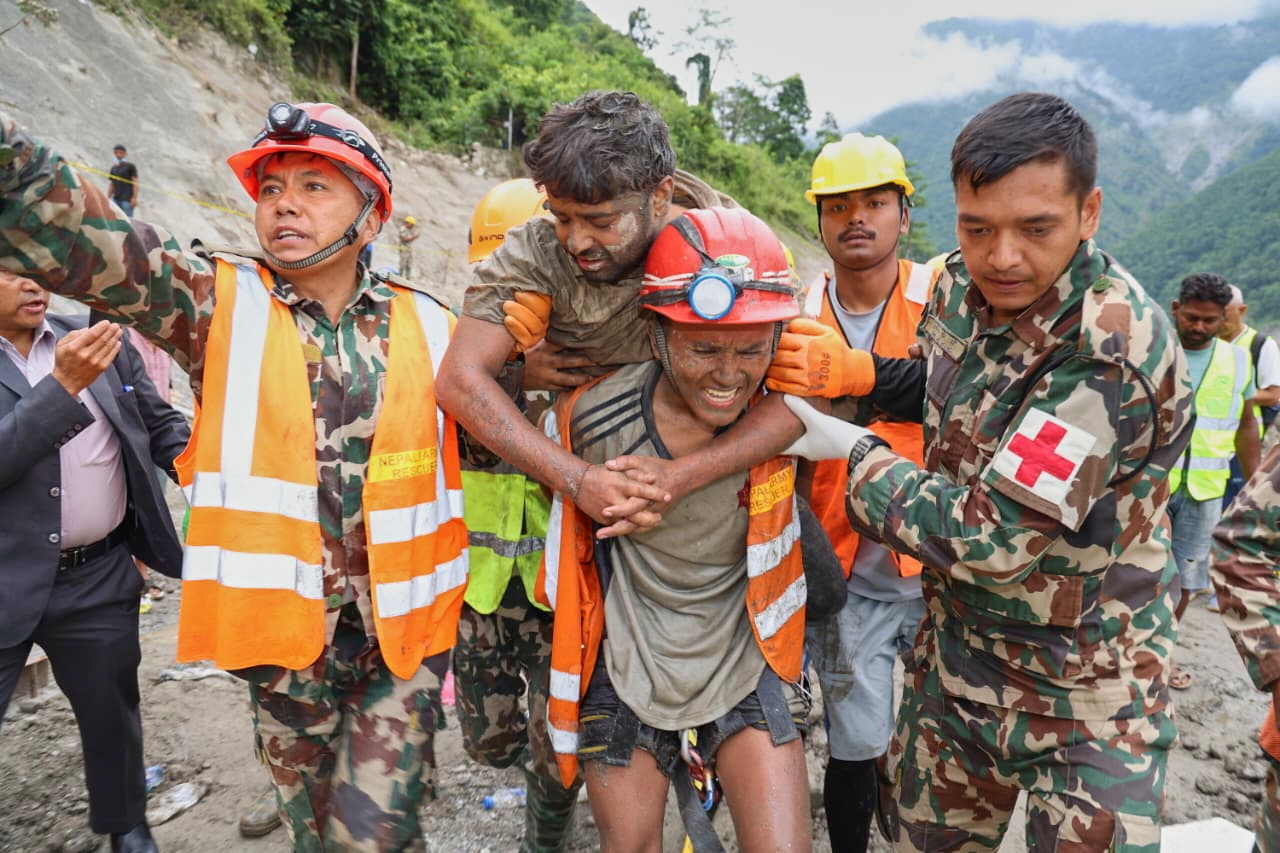
Engineering failures during catastrophic climate events expose structural vulnerabilities that extend far beyond initial structural breaches. When extreme hydrological pressure compromises subterranean works, the resulting crises test the limits of emergency response protocols, geological stabilization models, and human survivability limits in hyperbaric or isolated environments. The successful extraction of workers trapped inside a hydropower tunnel for more than a week following regional flooding offers a rare empirical window into the operational constraints, physiological decay curves, and logistical bottlenecks governing subterranean survival scenarios.
Subterranean infrastructure, particularly run-of-river or diversion-type hydropower installations, operates under high-risk hydraulic and geological parameters. When flash flooding occurs, the primary failure mode is rarely a singular structural collapse; rather, it is a multi-variable cascade involving water ingress, debris occlusion, power grid failure, and immediate atmospheric degradation.
The initial impact phase of a tunnel flooding event triggers three distinct physical crises:
- Hydraulic Inundation: Rapid filling of subterranean voids reduces available air pockets, forcing workers to seek high ground within utility niches, surge chambers, or unlined upper galleries.
- Atmospheric Stratification: Stagnant air trapped behind water locks rapidly degrades. Oxygen depletion and carbon dioxide accumulation create a lethal microclimate within forty-eight hours unless positive-pressure ventilation lines remain intact.
- Kinetic Obstruction: Slurry, boulders, and organic debris swept downstream form dense plugs inside narrow conduits, effectively sealing exit paths and preventing heavy machinery from entering during the early response window.
Standard emergency response frameworks assume a golden window of seventy-two hours for search and rescue operations in urban or surface collapse zones. Subterranean hydrological incidents distort this timeline entirely. The extended duration of nine days observed in recent hydropower entrapment events shifts the analytical focus from acute trauma response to chronic environmental management and prolonged extraction engineering.
To understand how survival extends beyond the standard decay curve, operations must be analyzed through a tripartite functional matrix: environmental stabilization, physiological degradation mitigation, and engineering clearance velocity.
Environmental Stabilization Mechanics
Maintaining life support within a sealed hydraulic conduit requires establishing a controlled atmospheric and hydrological equilibrium. When primary ventilation shafts are submerged, rescue teams must deploy auxiliary life-support systems through narrow boreholes or unblocked access adits.
The thermodynamics of a deep tunnel complicate this phase. Subterranean ambient temperatures interact with metabolic heat produced by trapped personnel and friction from pumping machinery. Humidity levels approach saturation, accelerating hypothermia risks even in moderate ambient temperatures.
Oxygen delivery cannot rely on passive diffusion. Forced-air injection must account for friction losses along thousands of meters of flexible ducting. Concurrently, carbon dioxide scrubbers or high-capacity exhaust fans must clear metabolic waste gases. If the exit path is blocked by a water lock, dewatering pumps become the critical path. The rate of water extraction dictates the expansion of the habitable air pocket. However, aggressive pumping in unstable geological strata can destabilize saturated surrounding soil, risking secondary collapses that would seal the conduit permanently.
Physiological Degradation and Adaptation
Human survivability past the one-week mark in a flooded tunnel relies on a delicate balance between metabolic conservation and environmental resilience. Without external caloric intake, the body enters a starvation state characterized by glycogen depletion followed by lipid catabolism.
Hydration dictates the timeline far more strictly than nutrition. While a healthy human can survive up to three weeks without solid food, survival without water rarely exceeds three to seven days, depending on ambient temperature and humidity. In a subterranean environment with high humidity, transcutaneous water loss is minimized compared to arid environments, extending the metabolic window slightly. However, consumption of untreated floodwater introduces immediate biological hazards:
- Pathogen Ingestion: Subterranean floodwaters carry agricultural runoff, sewage contamination, and decaying organic matter, presenting high loads of coliform bacteria and waterborne pathogens.
- Chemical Contamination: Industrial lubricants, transformer oils, and heavy metals washed out from subterranean machinery accumulate in standing pools.
- Electrolyte Imbalance: Prolonged ingestion of hypotonic water without mineral replenishment induces hyponatremia, leading to neurological decline and cardiac arrhythmias well before starvation claims the subject.
Psychological decay runs parallel to physiological decline. Sensory deprivation, absolute darkness, auditory monotony punctuated by the sound of shifting water, and escalating uncertainty regarding rescue efforts induce acute dissociation and cognitive impairment. Personnel extraction protocols must account for compromised decision-making capacity upon contact; trapped workers frequently exhibit disorientation and paradoxical resistance to early rescue directives due to prolonged hyper-vigilance.
Engineering Clearance Velocity
The physical extraction phase represents a race against structural fatigue and secondary hydrological events. Clearing a blocked hydropower tunnel requires heavy plant mobility inside confined spaces, where internal combustion engines are restricted by carbon monoxide accumulation.
Electric or pneumatic excavation tools must be deployed, tethered to external power sources via long-run cabling that remains vulnerable to secondary water incursions. The clearance velocity is dictated by the geotechnical composition of the blockage.
- Cohesive Slurry Plugs: Require high-volume slurry pumps and vacuum excavation trucks operating at maximum static head pressures.
- Berr-and-Boulder Obstructions: Demand precision controlled micro-blasting or hydraulic rock-splitting tools that minimize concussive vibrations within weakened tunnel linings.
- Debris Mats: Tangled reinforcement bars, timber formwork, and synthetic geotextiles require thermal lances or heavy-duty hydraulic shears for piecemeal removal.
The economic and operational cost of these recovery operations highlights profound vulnerabilities in contemporary infrastructure design. Most hydropower tunnels lack dedicated secondary escape shafts engineered to withstand major seismic or hydrological events. Evacuation routes typically mirror the primary intake or tailrace tunnels, creating a single-point-of-failure topology.
Infrastructure Resilience Redesign
Mitigating future subterranean entrapment crises requires a fundamental shift in civil engineering standards. Reliance on operational procedures alone is insufficient when environmental volatility increases the frequency of extreme flood events.
Subterranean installations must incorporate redundant safety architecture:
- Independent Lifeline Corridors: Separate, small-diameter boreholes structurally isolated from the main water conduit, pre-equipped with uninterruptible power supplies, fiber-optic communication lines, and continuous oxygen supply tubes.
- Automated Isolation Bulkheads: Hydraulically actuated sealing gates placed at strategic intervals along the tunnel length, designed to automatically deploy upon detecting rapid pressure spikes or sudden drops in downstream flow rates, preventing total inundation.
- Strategic Safe Havens: Elevated, reinforced chambers built directly into the rock matrix above the maximum probable flood level, stocked with non-perishable rations, medical supplies, multi-spectral beacon transmitters, and self-contained atmospheric scrubbers capable of sustaining a shift crew for fourteen days without external intervention.
The operational reality of extended subterranean rescues demonstrates that survivability is an engineered variable, not a stroke of fortune. When infrastructure design accounts for catastrophic boundary conditions, the dependency on heroic, high-risk surface rescue operations diminishes.
To permanently alter the survival curve in subterranean disaster scenarios, regulatory bodies must mandate the retrofitting of legacy hydropower assets with pressurized refuge stations and independent micro-ventilation networks, shifting the operational paradigm from reactive recovery to proactive containment.