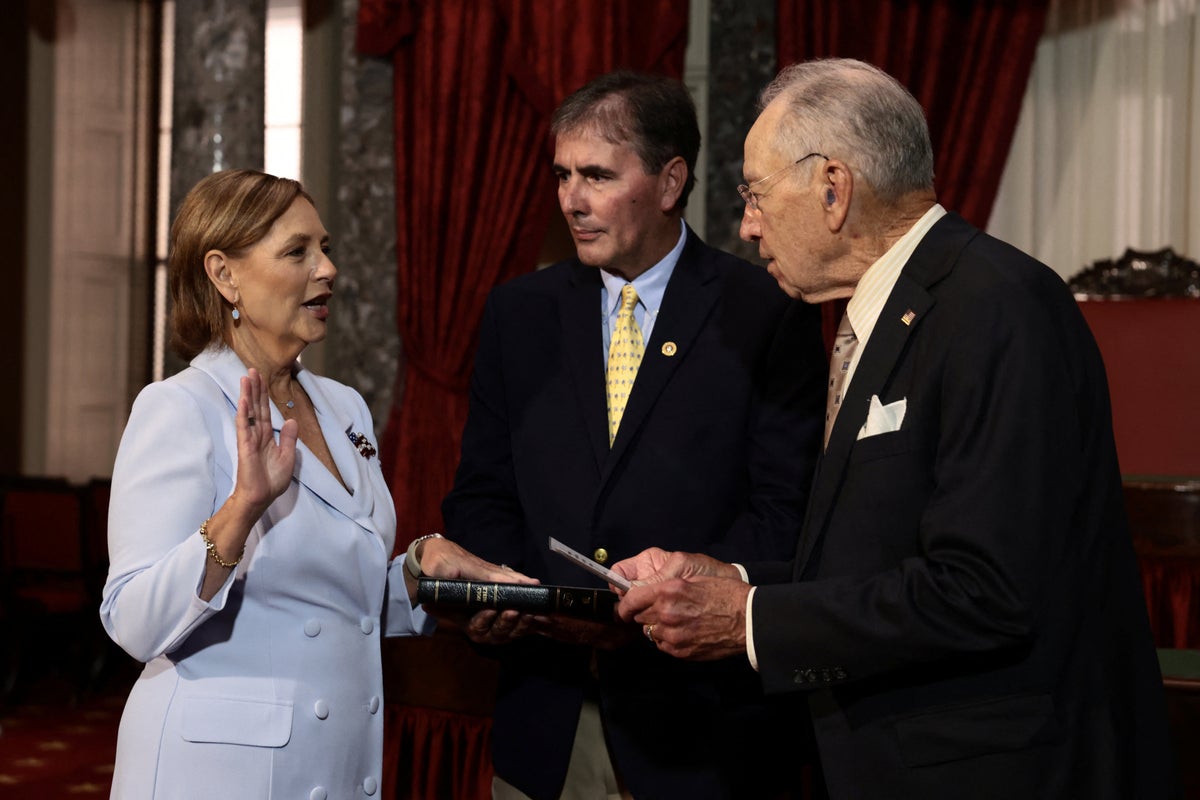
The sudden vacancy of a long-held Senate seat does not just leave a legislative void. It triggers a quiet, intense scramble for power where family ties, backroom agreements, and state party machinery collide. Following the passing of veteran Senator Lindsey Graham, the political apparatus of South Carolina moved with remarkable speed. The swearing-in of his sister, Darline Graham Nordone, to the state legislative ranks is not merely a story of family transition. It represents a calculated effort by the state's political establishment to maintain stability, project continuity, and manage the highly volatile factions of the modern Republican party.
To understand how a relative step into the political arena during a period of immense grief, one must look past the ceremonial photos and the public statements of unity. This transition is about control. By elevating a trusted family member who understands the late senator's coalition, South Carolina party leaders are attempting to freeze the playing field. They want to prevent an immediate, destructive primary war among ambitious local politicians who have spent decades waiting in Graham’s shadow.
The Strategy Behind Familiar Names
Dynastic politics is a time-tested mechanism for risk mitigation. When an iconic political figure passes away, the immediate threat to the dominant party is fragmentation.
In South Carolina, Lindsey Graham was a polarizing but undeniably powerful force. He bridged the gap between old-school Southern conservatism and the populist, modern movement. He kept disparate factions of the state GOP from tearing each other apart. His sudden absence threatened to break that fragile peace.
By rallying around Darline Graham Nordone, the party establishment deployed a classic defensive strategy.
- Instant Brand Recognition: A familiar surname instantly commands respect and dampens immediate opposition.
- The Sympathy Shield: Challenging a grieving family member is a terrible political look. Potential rivals are forced to wait, giving the party leadership time to organize.
- Preservation of Staff and Networks: A successor from the immediate family is far more likely to retain the existing network of advisors, donors, and strategists, keeping the political machine running without a hitch.
This is not a unique phenomenon. Historically, widows and family members have frequently been appointed or backed to finish terms or step into legislative seats. It is a holding pattern disguised as a legacy tribute. But holding patterns cannot last forever.
Navigating the Fractured South Carolina GOP
South Carolina's Republican landscape is far from monolithic. Beneath the surface lies a fierce ideological divide. On one side stands the traditional, business-oriented establishment that Graham championed. On the other lies an aggressive, populist grassroots movement that viewed Graham with constant skepticism.
For years, Graham survived by playing both sides. He was a master negotiator who could pivot from bipartisan compromises in Washington to fiery populist rhetoric on national television.
[Traditional Establishment] <====== (The Graham Bridge) ======> [Populist Grassroots]
Without Graham’s personal relationships and political instincts, that bridge is under immense strain.
The entry of Darline Graham Nordone into the state senate is a tactical maneuver to keep the populist wing at bay. The grassroots factions have long wanted to install a hardline insurgent into any available seat of power. By securing this seat quickly with a candidate carrying the Graham name, the party establishment has bought itself invaluable time.
But this strategy carries significant risks. The populist base is highly sensitive to what they perceive as "coronation" tactics by party elites. If the transition is viewed as an undemocratic backroom deal rather than an authentic continuation of leadership, it could trigger a fierce backlash in the next open primary.
The Hidden Mechanics of Party Succession
The public sees the swearing-in ceremony. They see the Bible, the robes, and the solemn oaths. What they do not see are the furious negotiations that occur in the preceding days.
Donors must be called and reassured that their investments in the state's political infrastructure remain secure. Committee assignments must be quietly reshuffled. Local party chairmen must be appeased with promises of future access.
In South Carolina, power is decentralized but tightly held by a core group of influential lawmakers and consultants. When a seat opens, this network immediately goes into overdrive to vet candidates. They look for loyalty, fundraising capability, and, most importantly, predictability.
Nordone represents the ultimate predictable choice. She has lived alongside one of the most intense political careers in modern American history. She knows the players, understands the stakes, and has no interest in burning down the house her brother helped build.
For the establishment, she is a safe harbor in a perfect storm.
The Limits of Legacy
Inherited political capital is a depreciating asset.
Initially, the name Graham carries immense weight. It opens doors, secures meetings, and raises money. However, the legislative reality of state government quickly strips away the sentimentality. Nordone will face immediate pressure to define her own legislative identity.
She will have to vote on contentious state issues, from infrastructure spending to tax reform and social legislation. Every vote will be scrutinized.
   Legacy Capital (High initially) ──> Declines over time
   Legislative Demands (Low initially) ──> Increases over time
If she votes with the traditional wing, she will draw the ire of the populist right. If she tries to appease the populists, she risks alienating the very establishment that helped her secure the seat. The middle ground that her brother walked with such agility is vanishingly small in today's polarized environment.
Furthermore, South Carolina’s political calendar waits for no one. The quiet period bought by this transition will eventually expire. Ambitious representatives, wealthy outsiders, and ideological purists are already looking at their calendars, calculating the exact moment when respect for the family name must yield to their own political ambitions.
A Changing Southern Political Map
What is happening in South Carolina is a microcosm of a broader shift across the American South.
The era of the untouchable Southern political titan is ending. Figures who held sway over state politics for decades are passing from the scene, and the machines they left behind are struggling to find heirs who can command the same level of deference.
The traditional path to power in Southern politics relied on seniority, committee placements, and bringing federal dollars back home. Today’s political environment values ideological purity, media presence, and grassroots grievance.
This transition represents one of the final stands of the old guard. They are using the ultimate traditional tool—family succession—to fend off a populist wave that rejects the very concept of the political establishment. Whether this move secures a lasting legacy or merely delays an inevitable ideological realignment remains the defining question for the state's political future. The machine has worked this time, but the gears are grinding louder than ever before.