Summer smells different in a city that forgets how to sleep. It smells of scorched rubber, of ozone trapped in the sticky humidity of asphalt, of dust shaken loose from drywall by concussions five miles away.
For months, the standard news feeds flattened it into dry wire copy. Reports of intercepts. Statistics of payload capacities. Bar charts tracking regional air defense activations across the western territories of the Russian Federation. But numbers do not capture the specific quality of dread that settles into the spine when an ordinary Tuesday night dissolves into a red glare.
Consider a hypothetical resident of a quiet industrial suburb three hundred miles from the border—call him Alexei. Alexei works logistics for a municipal heating plant. For years, the war was something that happened on a television screen in the corner of a kitchen, flickering quietly while he ate uninspired bowls of kasha. It was an abstraction. A matter of political bulletins read by anchors with stiff posture.
Then came June.
The first night, it wasn't the explosion that woke him, but the sound. A low, furious buzzing, like an overgrown hornet trapped inside a tin bucket. It is an industrial, unromantic noise. The sound of a lawnmower engine mated with a model airplane, cutting through the heavy midnight air with absolute indifference to who is listening.
Alexei sat up in the dark. The floorboards were cold beneath his bare feet. Outside his window, the orange streetlamps hummed, casting long, fractured shadows across the wallpaper. Across the city, car alarms began to yelp in ragged, uncoordinated succession. Then the sky tore open.
That sound—the sudden, dry rip of air defense batteries punching through the stratosphere—became the metronome of the season.
Over the subsequent months, this was the invisible reality behind the dry military briefings. Ukraine’s strategic shift to deep-strike drone operations did not merely alter tactical maps; it systematically dismantled the psychological insulation that protected the Russian interior. For the first time since the winter of forty-one, the civilian population centers of European Russia found themselves living inside a firing solution.
The logistics of this transformation are stark. When a state relies on centralized energy grids and vast, sprawling industrial complexes, distance is supposed to be a shield. Voronezh, Kursk, Belgorod, and even the sprawling outskirts of Moscow learned that hundred-mile radii are no longer sanctuary zones. Ukrainian defense engineers, operating under the existential pressure of survival, had iterated rapidly. They built long-range loitering munitions out of fiberglass and commercial off-the-shelf electronics, trading heavy military armor for fuel capacity and aerodynamic efficiency.
They flew low. They hugged the contours of river valleys, slipping beneath the blind spots of legacy radar networks designed to catch high-altitude bombers rather than carbon-fiber lawnmower engines packed with C4.
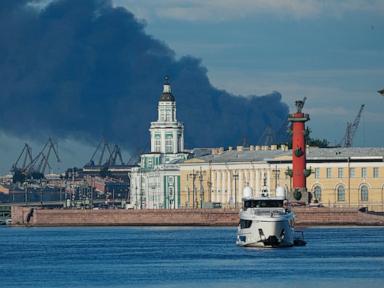
And they disrupted. Not just through physical destruction—though fuel depots turned into roaring pillars of black smoke that choked out the summer sun for days—but through friction.
Imagine the psychological cost of systemic friction. Every time a drone’s low thrum echoed over an oil refinery or an airfield, the ripple effects cascaded through millions of lives. Commercial flights were grounded for hours at Domodedovo and Vnukovo. Passengers sat on tarmac aprons in stifling heat, staring out at wings while announcements stuttered through static. Commuter trains slowed down as railway junctions near targeted infrastructure were inspected for unexploded ordnance or secondary strike vectors.
The state apparatus strained to maintain the illusion of normalcy. State television continued its steady diet of cultural programming and patriotic variety shows, even as presenters occasionally had to pivot through breaking news updates about debris falling on residential courtyards.
This juxtaposition created a strange, surreal cognitive dissonance. People went to work. They bought groceries. They complained about the price of melons at the open-air markets. But everyone kept one eye on the horizon, waiting for the gray streak of smoke or the sudden flash of light that would turn their daily routine into an emergency response.
By August, the cumulative effect was undeniable. The strikes were not designed to win the war overnight; they were designed to redistribute the cost. As long as the war remained a distant theater, public exhaustion was easy to manage. But when the war flew overhead on cheap engines bought off commercial marketplaces, the geography of consequence shifted entirely.
Alexei eventually stopped checking his phone for updates every ten minutes. Not because he felt safe, but because exhaustion is a powerful anesthetic. He learned to read the different pitches of the night sky. He learned which rumbling meant a cargo train hauling grain and which one meant it was time to move away from the plate-glass windows and sit in the hallway with his cat.
That is what the statistics miss. They measure the tonnage of fuel lost, the cost of interceptor missiles versus low-end composite airframes, the square footage of damaged roofs. They do not measure the quiet erosion of certainty. They do not account for the millions of people who discovered, over the course of a single long summer, that distance is an illusion and the sky no longer belongs to the state.
The heat of those months has broken now. Autumn has brought cold rains and mud that freezes solid by dawn. But the drones keep coming, stitching their invisible lines across the dark, a relentless reminder that the distance between a battlefield and a bedroom has been reduced to zero.