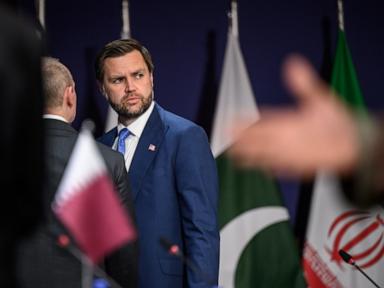
The mainstream media is treating the emergency summit in Bürgenstock, Switzerland, as a grand diplomatic triumph. They are painting a picture of Vice President JD Vance swooping into a luxury lakeside resort to hammer out the final details of a historic Middle East peace deal. This narrative is completely disconnected from reality.
I have spent two decades analyzing back-channel Middle East negotiations and watching administrations pump millions into broken diplomatic frameworks. The current consensus surrounding these talks is dangerously naive. The mainstream press wants you to believe that a 60-day interim agreement signed by the White House and Iranian President Masoud Pezeshkian is a masterstroke of statecraft.
It is not. It is an expensive, short-sighted optical illusion designed to temporarily suppress global oil prices and boost domestic political prospects. The foundational premises of the Bürgenstock summit are fundamentally broken.
The Fatal Flaw of the 60-Day Clock
The central pillar of this diplomatic push is a 60-day window to finalize a permanent settlement, lift oil sanctions, unfreeze Iranian assets, and dilute Tehran’s enriched uranium stockpile. Believing that decades of systemic ideological warfare can be unwound in eight weeks is absurd.
True diplomacy requires leverage and enforceable terms. This framework offers neither. The administration has already ordered the US Navy to lift blockades on Iranian ports and allowed Tehran to resume oil sales. By giving away the primary economic leverage before technical negotiations even begin, the US delegation has walked into Switzerland with empty pockets.
+------------------------------------------+------------------------------------------+
| Standard Media Illusion                  | Harsh Geopolitical Reality               |
+------------------------------------------+------------------------------------------+
| The 60-day window forces rapid compliance| It rewards Iranian stalling tactics      |
| Sanctions relief incentivizes peace      | Early relief surrenders all US leverage  |
| The interim deal stabilizes oil markets  | It provides capital for proxy funding    |
+------------------------------------------+------------------------------------------+
Look at the mechanics of the uranium dilution requirement. The Memorandum of Understanding calls for on-site dilution of Iran’s 9,000-kilogram stockpile, including the critical 440 kilograms near weapons-grade material, under the supervision of the International Atomic Energy Agency. I have reviewed the structural oversight capabilities of these verification missions. They are reactive, slow, and easily manipulated. Expecting an adversarial state to permanently neutralize its ultimate geopolitical shield while its regional proxies are actively fighting is a fantasy.
The Phantom Closure of the Strait of Hormuz
Every major news outlet panicked when the Islamic Revolutionary Guard Corps announced they were closing the Strait of Hormuz to all maritime traffic. The media treated this as a brand-new threat that required urgent American concessions.
They fell for a textbook extortion play.
US Central Command confirmed that dozens of merchant ships carrying over 17 million barrels of oil transited the waterway without incident immediately following the Iranian announcement. The strait was never structurally closed because Iran cannot afford to close it. Tehran relies on the same maritime lanes to export its newly un-sanctioned crude oil to international buyers.
A threat that ruins the threat-maker as much as the target is not a strategic move; it is a theatrical performance.
By elevating this empty threat to a core agenda item in Switzerland, Vance and his envoys, Steve Witkoff and Jared Kushner, have validated a bluff. The administration is negotiating against a ghost. They are treating a routine maritime posturing exercise as a structural crisis, allowing Iranian negotiators to demand further concessions just to keep a channel open that they had no intention of permanently shutting.
The Lebanon Blindspot
The most glaring piece of misinformation circulating through the press is that this summit will establish a mechanism to track violations and maintain a lasting ceasefire in Lebanon.
Let's look at the actual players on the ground. Neither Israel nor Hezbollah are signatories to this document.
- The Israeli Position: Benjamin Netanyahu has stated unequivocally that Israeli forces will not halt operations in southern Lebanon until every cross-border threat is removed.
- The Hezbollah Position: The group has made it clear that they will continue striking until Israeli forces completely withdraw.
The negotiators in Switzerland are pretending they can dictate terms to sovereign military entities and entrenched insurgent forces who aren't even sitting at the table.
Imagine a scenario where a corporate headquarters signs an agreement forcing two independent, competing regional branches to stop fighting without consulting the branch managers. The agreement is worthless on arrival. The Swiss summit is trying to build a diplomatic roof before pouring the structural concrete. The violent exchanges in Lebanon that delayed Vance's departure from Washington aren't minor speed bumps; they are proof that the core agreement is completely detached from the actual conflict.
Disruption Over Decoration
People constantly ask if this deal is structurally superior to the 2015 nuclear agreement. Hardliners from the vice president's own party are already comparing the two, claiming this version fails to permanently terminate the nuclear program.
The entire premise of that comparison is flawed. The 2015 agreement relied on a multi-lateral legal framework that assumed all parties cared about international norms. This current iteration is a transactional, bilateral crisis-management stunt. It doesn't look to solve the root causes of regional instability; it merely seeks a temporary pause to give the appearance of peace.
If the goal is genuine stability, the strategy must change:
- Stop Giving Up Leverage Early: Re-impose targeted maritime blockades immediately. Do not trade real economic pressure for vague promises of future compliance.
- Acknowledge the Proxies: Stop negotiating with Tehran as if it has absolute, push-button control over every localized commander in Lebanon or Yemen. Localized conflicts require localized deterrence, not Swiss mountain resort galas.
- End the 60-Day Illusion: Abandon arbitrary timelines that allow adversaries to simply run out the clock while accessing frozen assets.
The 2028 Political Theater
We cannot analyze the Bürgenstock summit without addressing the domestic political reality. Vance's presence in Switzerland has very little to do with long-term Middle Eastern stability and everything to do with building a foreign policy resume for a 2028 presidential campaign.
By positioning himself alongside special envoys and taking center stage at a high-profile international summit, the vice president is gathering video clips and headlines to prove his statesman credentials to voters back home. This is why the delegation is rushing to declare a win, even as the ceasefire hangs by a thread and rockets continue to fly across the Lebanese border.
When diplomats prioritize domestic political messaging over cold, hard strategic reality, the resulting agreements are always fragile. The administration wants a quick, photogenic breakthrough to show the world. What they are actually building is a temporary paper dam against a rising geopolitical tide. When that dam breaks—and it will, the moment the 60-day clock expires and the frozen funds are safely in Tehran's accounts—the fallout will be far more dangerous than the original conflict. The talks in Switzerland aren't the beginning of a new era of peace; they are a masterclass in political theater.