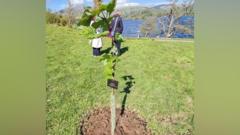
People really know how to ruin a good thing. Just when we thought the heartbreak of losing Britain's most famous tree was behind us, someone went and proved that human greed and malice have no floor.
The theft of a Sycamore Gap sapling from secure grounds sent shockwaves through the conservation world. It feels like a sick joke. We watched an iconic piece of natural heritage get illegally felled in 2023, cheered on the horticulturists who miraculously saved its genetic line, and now we are dealing with thieves targeting the babies.
This isn't just a simple case of garden-variety plant theft. It's a direct assault on a collective symbol of recovery. When the original tree along Hadrian's Wall came down, it felt like a death in the family for millions of people who had walked past it, proposed under it, or photographed its perfect symmetry. The saplings represented a second chance. Taking one is a special level of cruel.
The obsession with owning a piece of tragedy
We need to talk about why someone steals a plant like this. It isn't for a backyard greenhouse. A stolen Sycamore Gap sapling is functionally unsellable on the open market. Every reputable botanist, nursery, and collector knows the story. You can't exactly post it on eBay or show it off to your neighbors without raising massive red flags.
That leaves two distinct possibilities. Either it was stolen to order for a private collector with zero conscience, or it was taken by someone driven by a bizarre sense of entitlement.
Plant poaching is a massive, quiet industry. High-value specimens get ripped out of national parks globally all the time. Think about poaching of rare succulents in California or old-growth bonsai trees in Japan. The black market for rare flora operates on the same dark principles as stolen art. The value isn't in showing it off. The value is in the private knowledge of possession.
Horticultural experts at organizations like the National Trust spent months nurturing the rescued material from the fallen tree. They kept these plants under lock and key, using specialized grafting techniques to ensure the tree's DNA lived on. To have that work compromised by a thief is a massive blow to the teams who poured their lives into the rescue mission.
Why heritage crime keeps rising
Security at historic sites and open lands has always relied heavily on an unspoken social contract. We don't touch the exhibits. We don't carve our initials into ancient ruins. We don't chop down ancient trees.
That contract is completely broken.
The original felling of the tree was a wake-up call that caught authorities completely flat-footed. For decades, the sycamore sat undefended in a dramatic dip in the landscape, protected only by public affection. That obviously wasn't enough. Now, even placing the offspring within castle grounds and guarded estates hasn't stopped motivated criminals.
It highlights a massive vulnerability in how we protect living history. A painting can be locked in a vault with laser sensors and armed guards. A tree needs sun, soil, and air. It has to exist in the world.
We are seeing a noticeable spike in heritage crime across Europe and North America. Vandalism, illegal metal detecting, and the theft of natural artifacts are pushing cash-strapped heritage organizations to the brink. They face an impossible choice. They can either spend their limited budgets on high-tech surveillance or on actual conservation work. Every pound spent on security cameras around a sapling is a pound taken away from restoring ancient woodlands or repairing crumbling stonework.
What it takes to keep a biological legacy alive
The science behind saving the Sycamore Gap tree is fascinating, and it makes the theft even more frustrating. When the tree was cut down, twigs, buds, and seeds were rushed to a high-security conservation center in Devon.
Horticulturists used a process called grafting. They took buds from the fallen giant and attached them to the rootstocks of other, ordinary sycamore trees. It's delicate, precise work. If the connection fails, the tissue dies.
Against the odds, those buds took hold. They began to grow. The National Trust successfully generated dozens of genetically identical clones. These aren't just offspring; they are literally the same tree, reborn.
The plan was always to use these saplings to bring life back to the region and to share them with communities as symbols of resilience. Guarding them requires immense effort. Young trees are incredibly fragile. They need specific watering schedules, protection from pests, and shelter from harsh weather. When a thief yanks a young sapling from its pot or soil, they risk killing the root system entirely. The person who took this plant didn't just steal it; they very likely signed its death warrant.
The logistics of protecting open spaces
We can't put a fence around every tree in the countryside. Doing that destroys the very thing that makes these places special. The beauty of the original sycamore was its isolation, standing stark against the sky next to Roman stones.
Moving the saplings to castle grounds was supposed to be the safe compromise. These sites have walls, gates, and staff. Yet, thieves managed to find a window of opportunity.
It forces a tough conversation about the future of public access to heritage. If we can't trust the public near rare or significant plants, the natural response from land managers will be to restrict access. We might see future plantings happening in undisclosed locations, hidden away from the very people who need the healing that these trees provide. That would be a massive shame.
Next steps for recovery
The police are investigating, but finding a single young tree is like looking for a needle in a haystack of pine needles. The real focus needs to shift toward making sure the remaining saplings are completely secure.
If you want to help, support the organizations doing the actual heavy lifting. Don't buy plants from unverified online sellers who can't prove the provenance of their stock. Keep your eyes open when visiting historic sites. Report suspicious behavior immediately instead of assuming someone is just a keen gardener.
The original tree is gone, and this stolen sapling is a setback, but the project isn't dead. Hundreds of healthy shoots are still growing under close watch. The legacy of the gap will continue, no matter how hard some people try to tear it down.


