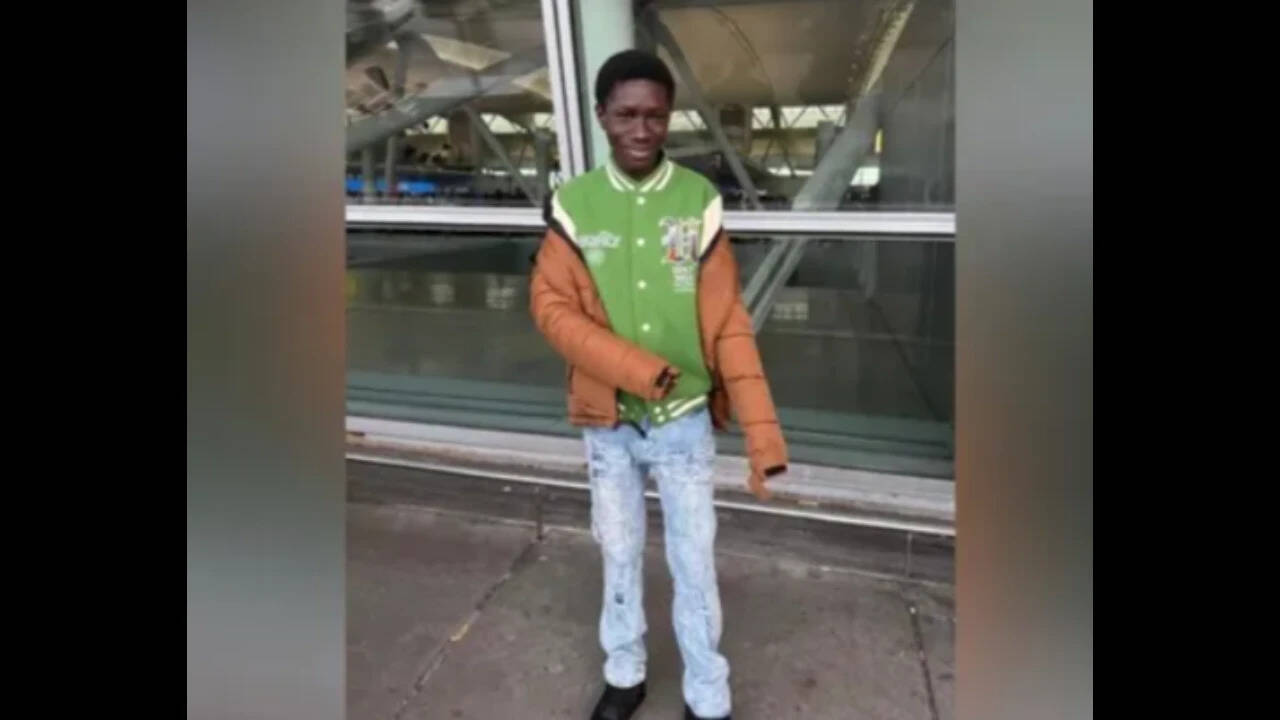
The fatal shooting of teenager Javits Frimpong in the Bronx exposes a compounding failure across three distinct institutional systems: municipal school-transit security, urban firearm proliferation, and federal humanitarian visa adjudication. Standard news coverage treats this tragedy as an isolated local crime followed by a high-profile diplomatic intervention. That framing obscures the structural mechanics at play. When a student with a documented history of bullying is killed while commuting to school, the failure is not merely interpersonal; it is operational. When the mayor of New York City must engage the President of the United States to secure a visa for the victim's mother in Ghana, it demonstrates that standard consular pathways cannot process acute humanitarian emergencies without executive override.
To understand how an adolescent immigrant becomes trapped in a lethal street dynamic—and why his family faces bureaucratic barriers to mourning him—requires deconstructing the event into its component parts.
The Transit Corridor Vulnerability Model
Municipal education systems typically define their duty of care by physical property lines. Once a student exits a school building, institutional responsibility transfers abruptly to municipal transit authorities and local law enforcement. This creates a jurisdictional gap known in urban planning as the Transit Corridor Vulnerability.
In high-density urban environments like the Bronx, the daily commute functions as an unmonitored staging ground where unresolved school-based conflicts escalate without adult intervention. The mechanics of this escalation follow a predictable three-stage progression:
- In-School Friction: Bullying rarely begins on the street. It originates within the structured environment of the school, often driven by status competition, cultural assimilation pressures, or linguistic differences—factors that disproportionately affect recent immigrants like Frimpong.
- Jurisdictional Handoff: School administrators may log incidents or issue internal disciplinary measures, yet this intelligence rarely transfers to the New York City Police Department (NYPD) precincts patrolling the surrounding transit hubs.
- Asymmetric Escalation: Inside a school building, metal detectors and administrative oversight limit the tools of conflict to verbal harassment or physical altercations. Outside the perimeter, the presence of illegal firearms converts a schoolyard dispute into a fatal encounter.
The presence of a known bullying dynamic prior to a shooting indicates a breakdown in threat assessment. Effective threat management requires treating persistent bullying not as a behavioral infraction, but as an early-warning indicator of targeted violence. When schools fail to map the social networks of targeted students and coordinate safe-passage protocols with local precincts, the commute becomes the point of maximum exposure.
Urban Firearm Asymmetry and Adolescent Risk
Analyzing the fatal outcome requires separating the interpersonal conflict from the lethality of the instrument used. In criminology, the Instrumentality Effect posits that the type of weapon available during a dispute directly dictates the mortality rate of the conflict.
New York maintains some of the strictest firearm possession laws in the United States, yet illegal handguns continue to circulate within specific neighborhood micro-networks via the Iron Pipeline—the trafficking of firearms from states with permissive purchasing laws along the Interstate 95 corridor. For an adolescent navigating a hostile peer environment, this creates a severe security dilemma:
- Deterrence Failure: Traditional conflict-resolution mechanisms fail when one party possesses a firearm. A victim of bullying cannot de-escalate an armed confrontation through standard behavioral avoidance if the aggressor controls the transit route.
- Impulse Lethality: Adolescent neurological development is characterized by heightened emotional reactivity and underdeveloped impulse control. Introducing a firearm into an adolescent dispute removes the margin for survival that exists in unarmed altercations.
- Targeted vs. Opportunistic Violence: A shooting occurring on a predictable route to school suggests a degree of premeditation or surveillance rather than a spontaneous clash. The victim's adherence to a fixed schedule—the school bell—creates a deterministic target for an aggressor.
Standard policy responses to such shootings frequently focus on reactive policing after the homicide occurs. That approach addresses the symptom rather than the supply chain. Without disrupting the hyper-local distribution networks that place handguns into the hands of teenagers, school-adjacent corridors remain high-risk zones regardless of internal school security measures.
The Architecture of Humanitarian Visa Bottlenecks
The secondary dimension of the Frimpong case—Mayor Zohran Mamdani intervening with President Donald Trump to secure a visa for the victim's mother in Ghana—highlights a profound structural rigidity in U.S. immigration law.
Under normal statutory conditions, a foreign national seeking entry to attend a funeral or claim a deceased relative's remains must apply for a B-2 Tourist Visa or request Humanitarian Parole through U.S. Citizenship and Immigration Services (USCIS). Both pathways are structurally misaligned with the timeline of bereavement and burial customs.
The Section 214(b) Presumption Barrier
Consular officers evaluating non-immigrant visa applications at the U.S. Embassy in Accra operate under Section 214(b) of the Immigration and Nationality Act. This statute mandates that every applicant is presumed to be an intending immigrant until they prove otherwise through demonstrable economic, social, and familial ties to their home country.
When a citizen of a developing economy applies for an emergency visa following the death of an immediate family member in the United States, the applicant faces an inherent paradox:
- Weakened Home Ties: The death of a child in the U.S. alters the applicant's personal circumstances, often leading consular officers to suspect the parent may overstay the visa to remain near other relatives or pursue legal action.
- Documentation Latency: Standard emergency appointments require certified death certificates, hospital records, and proof of financial solvency. Generating and authenticating these documents across municipal and federal agencies takes weeks, during which time religious or cultural burial windows expire.
- Administrative Processing: Security vetting and biometric clearances operate on fixed bureaucratic schedules that do not automatically accelerate for personal tragedies.
Humanitarian Parole Limitations
Humanitarian Parole (Form I-131) exists specifically to bypass standard visa inadmissibility for urgent humanitarian reasons. In practice, the mechanism is functionally broken for immediate crises. Processing times for parole applications routinely stretch into months, accompanied by substantial filing fees and complex evidentiary burdens. For a mother in Ghana needing to travel within days, the statutory remedy is practically unusable.
Executive Intervention as a Diagnostic Metric
When local officials must escalate a consular case directly to the White House, it serves as a diagnostic indicator of institutional failure. The collaboration between a progressive municipal leader like Mamdani and a conservative administration led by Trump demonstrates that executive override is currently the only reliable mechanism to bypass consular gridlock in high-profile tragedies.
This dynamic exposes a critical equity flaw in administrative governance. System performance should not depend on media visibility or political brokerage. While executive intervention resolves the immediate crisis for the Frimpong family, it leaves the underlying bureaucratic apparatus untouched. Thousands of non-publicized families facing identical cross-border emergencies remain subject to standard denial rates and processing delays.
Structural Remedies and Operational Constraints
Addressing the dual failures exposed by this case requires targeted interventions at both the municipal and federal levels. However, every operational remedy carries inherent constraints that prevent it from functioning as a universal fix.
1. Predictive Safe-Passage Networks
Municipalities must replace passive perimeter security with active transit corridor management. This involves integrating school disciplinary data with local precinct deployment models to identify students experiencing severe, persistent bullying.
- Mechanism: When a student is flagged for targeted harassment, school safety officers and local community-based violence interrupters establish monitored transit routes during peak arrival and dismissal windows.
- Constraint: Data-sharing between educational institutions and law enforcement is heavily restricted by privacy statutes such as the Family Educational Rights and Privacy Act (FERPA). Over-integrating police into school disciplinary data also risks criminalizing minor adolescent behavior, requiring strict operational firewalls that limit intervention strictly to protective escorting.
2. Automated Consular Fast-Tracks for Bereavement
The Department of State requires a dedicated, rapid-adjudication sub-category within the B-2 visa framework specifically for verified next-of-kin emergencies.
- Mechanism: Upon electronic verification of a homicide or accidental death by a U.S. medical examiner's office, the embassy in the next-of-kin's home country triggers an automatic 48-hour interview waiver or expedited adjudication protocol, suspending standard financial solvency thresholds for a strictly time-bound 14-day entry permit.
- Constraint: Consular bureaus resist relaxing Section 214(b) standards due to statutory mandates regarding visa overstay rates. Without explicit congressional authorization or a binding directive from the Secretary of State, individual consular officers face professional liability if an applicant fails to depart on schedule, incentivizing default denials.
The Strategic Imperative
Municipal governments cannot treat school-aged homicides as isolated criminal investigations, nor can federal agencies rely on ad-hoc presidential intervention to manage humanitarian visa crises.
To prevent future casualties along school transit routes, municipal authorities must immediately audit their threat-assessment protocols to mandate proactive safe-passage interventions for any student with a documented history of severe bullying. Simultaneously, the Department of State must institutionalize an expedited bereavement visa protocol triggered directly by verified U.S. medical examiner notifications, eliminating the need for political brokerage when foreign nationals must bury their children on American soil.