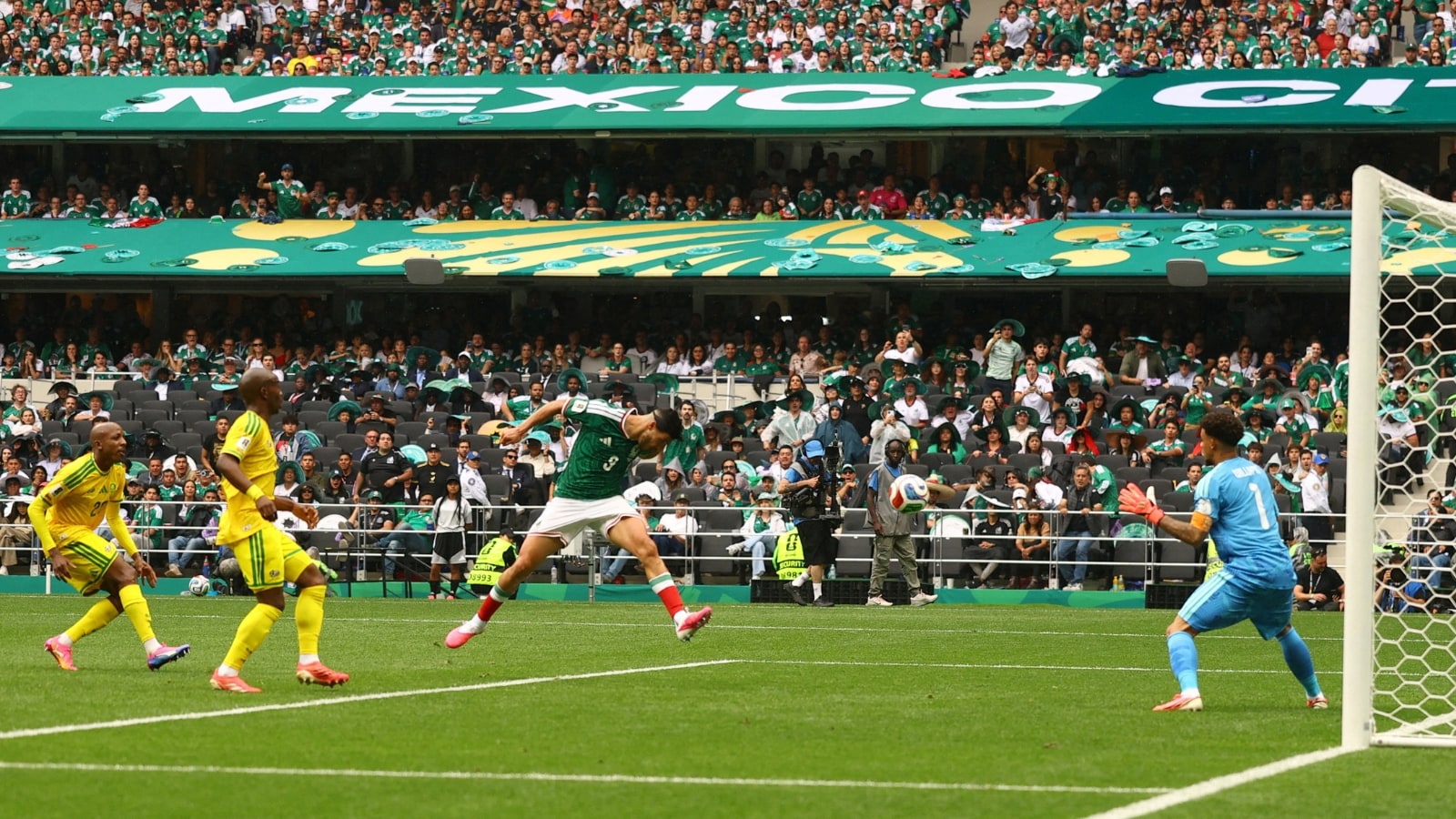
The Mexican national team secured a crucial victory against South Africa by leveraging tactical discipline, precise wing play, and the clinical finishing of veteran forwards Raúl Jiménez and Julián Quiñones. This match was not just a display of superior individual talent, but a chess match won on the drawing board.
While superficial match reports point to the scoreline as evidence of simple dominance, a deeper tactical breakdown reveals that El Tri's victory was forged in the subtle spatial reconfigurations orchestrated in the midfield, specifically engineered to exploit South Africa's narrow defensive block.
How Mexico Dismantled the South African Low Block
South Africa entered the match deploying a highly compact defensive shape, intending to clog the central channels and force Mexico into harmless sideways passing. This strategy has frequently frustrated Mexican sides in recent years. However, this encounter showed a distinct evolution in El Tri's approach.
Instead of recycling possession slowly across the backline, the Mexican midfield looked to isolate South Africa’s fullbacks.
The mechanism was deliberate. The holding midfielder dropped between the two center-backs, creating a temporary three-man buildup line. This numerical superiority deep in the pitch pulled South Africa's first line of pressing forward, inadvertently stretching the vertical distance between their midfield and defensive units. Once that space opened, quick vertical passes bypassed the central press entirely, finding the inverted wingers in the half-spaces.
The Role of Overlapping Fullbacks
With the inverted wingers dragging the South African fullbacks inside, massive corridors of space opened on the flanks. The Mexican fullbacks exploited these channels with perfectly timed overlapping runs.
- The Trigger: The moment the central attacking midfielder received the ball on the half-turn, the fullback initiated a full sprint.
- The Delivery: High-velocity low crosses targeted the penalty spot rather than traditional looping crosses to the back post, completely neutralizing the height advantage of the South African center-backs.
The Resurgence of Raúl Jiménez
For seasons, critics questioned whether Raúl Jiménez could still operate as a focal point at the international level. His performance in this fixture silenced those doubts, demonstrating that his value extends far beyond the goals he scores.
Jiménez operated as a classic defensive forward when out of possession, but became a sophisticated playmaker when El Tri transitioned into attack. He consistently dropped into the "hole" between the opposition's midfield and defense, dragging a central defender with him.
This movement created a recurring tactical dilemma for South Africa. If the defender followed Jiménez, a massive gap opened in the heart of the defense. If the defender stayed at home, Jiménez was given time to turn and pick a pass. This intelligent spatial awareness directly created the sequence that led to the opening goal, demonstrating that his football intelligence remains elite.
Julián Quiñones and the Power of Directness
If Jiménez provided the nuance, Julián Quiñones provided the raw power. Operating primarily from the left flank, Quiñones gave Mexico an element of unpredictability that has been sorely lacking in recent tournament cycles.
Quiñones possesses a rare combination of physical strength and explosive acceleration. His instructions were clear: isolate the defender in one-on-one situations and drive toward the box.
[Tactical Shift]
Traditional Winger: Hugs touchline -> Crosses high into box
Quiñones Model: Cuts inside -> Attacks half-space -> Shoots or cuts back
By consistently cutting inside onto his stronger right foot, Quiñones forced the South African midfield to shift across to provide cover. This defensive over-shifting left the opposite side of the pitch vulnerable, allowing Mexico to switch play rapidly and catch the opposition out of structural alignment.
Managing the Transitional Threat
South Africa is renowned for its devastating counter-attacking speed. Winning this match required Mexico to master the art of "rest defense"—the positioning of players while your team is actually in possession of the ball.
Mexico's defensive midfielder stayed disciplined, rarely venturing past the center circle. He acted as a human shield, breaking up transitional plays before they could gather momentum. When South Africa did manage to win the ball cleanly, they were met by an immediate counter-press designed to force hurried clearance passes rather than structured counter-attacks.
| Tactical Phase | Mexico's Approach | South Africa's Counter-Measure |
|---|---|---|
| Buildup | 3-man deep line to pull opposition press | Narrow block attempting to clog center |
| Attacking Third | Overlapping fullbacks, low hard crosses | Compact box defending, zonal marking |
| Defensive Transition | Immediate counter-press, deep anchor man | Direct long balls to speedy wingers |
The Vulnerabilities That Still Remain
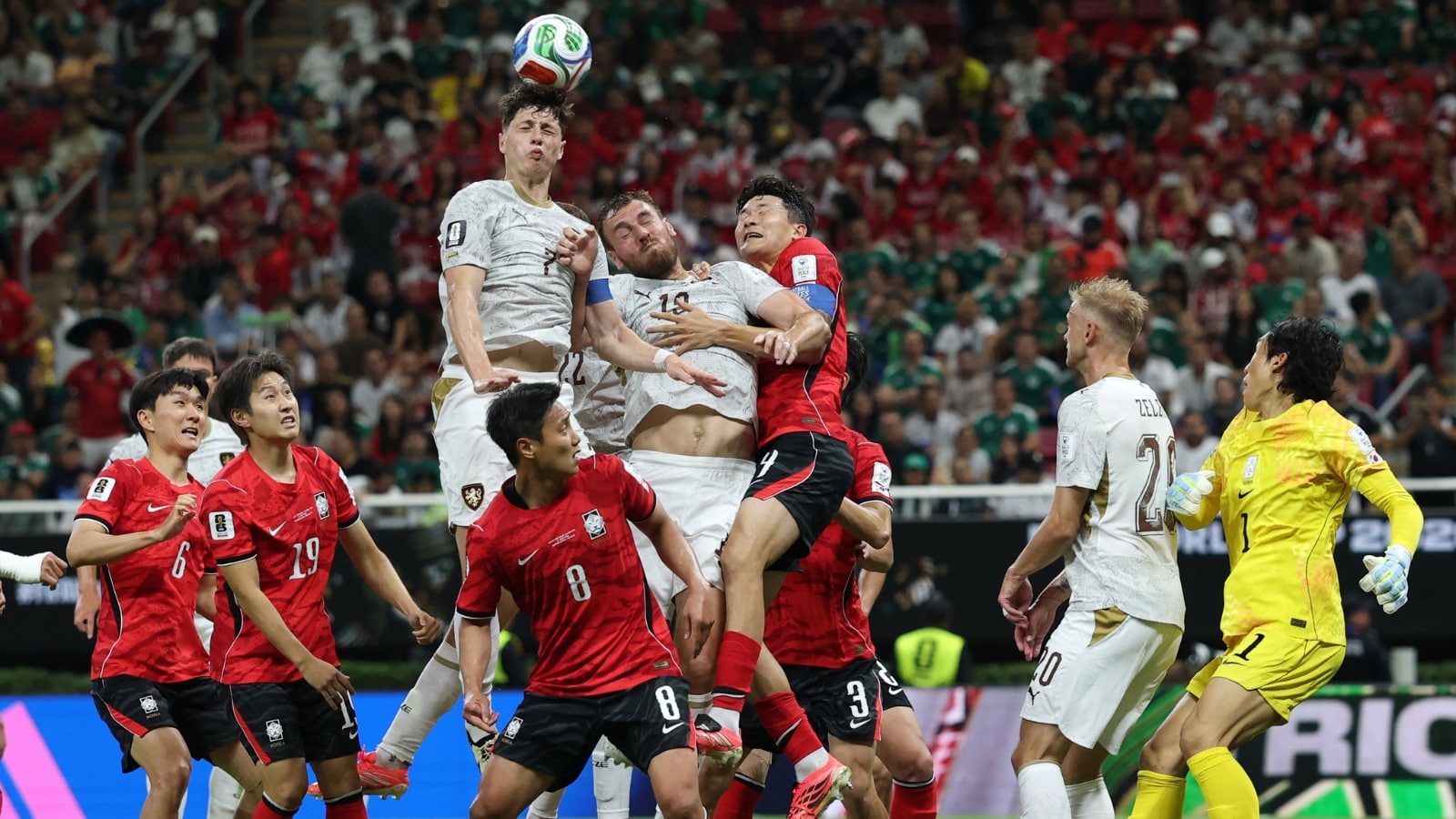
Despite the victory, it would be a mistake to view the performance through rose-tinted glasses. Mexico showed a familiar vulnerability when defending set-pieces, an issue that top-tier international sides will ruthlessly punish.
On multiple occasions, static marking inside the penalty area allowed South African attackers free headers. There was a visible lack of communication between the goalkeeper and the central defensive pairing regarding who commanded the six-yard box.
Furthermore, when the tempo of the match slowed in the second half, Mexico drifted into a passive defensive shape. Against an opponent with more clinical finishers, giving up that much possession in the defensive third could have resulted in a very different scoreline. The team must learn to kill off matches by retaining possession rather than dropping into a low block that invites unnecessary pressure.
The victory provides a vital psychological boost and validates the tactical adjustments made by the coaching staff. By successfully unlocking a stubborn defense through calculated wing overloads and intelligent forward movement, Mexico has shown it possesses the tactical flexibility required to compete at the highest level, provided they can iron out the persistent defensive frailties that continue to linger during set-pieces.