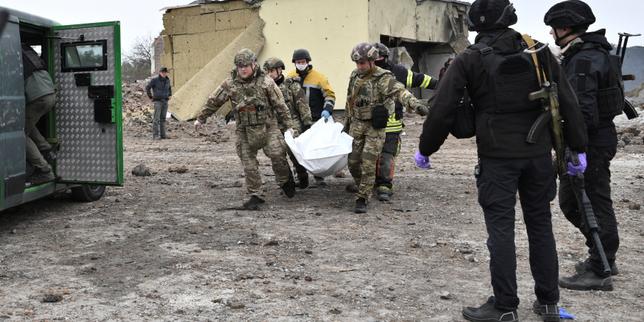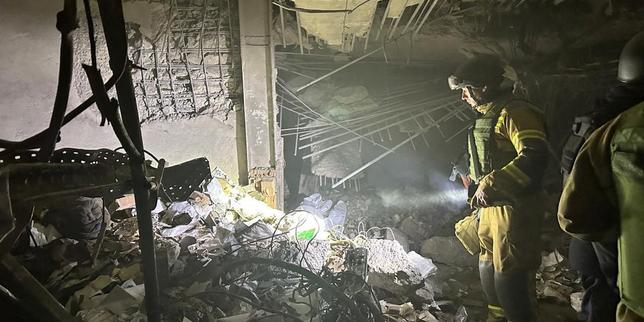
The strike on Komyshuvakha represents a calculated operational mechanism designed to degrade rear-area logistics and civilian infrastructure along the Zaporizhzhia axis rather than an isolated tactical aberration. Positioned along the T0803 highway roughly 25 kilometers southeast of Zaporizhzhia city and less than 15 kilometers from the active line of contact near Orikhiv, Komyshuvakha functions as a critical staging, transit, and medical evacuation node. Analyzing this attack requires stripping away episodic news framing and examining the geographic, logistical, and doctrinal drivers dictating Russian fire missions in southern Ukraine.
Geographic Compression and the T0803 Corridor
To understand why Komyshuvakha absorbs recurring kinetic strikes, one must map the regional road network. Modern mechanized warfare relies on hard-surface arteries capable of supporting heavy armor, fuel tankers, and ammunition transports under all weather conditions. In the Zaporizhzhia sector, the T0803 highway serves as the primary logistical spine connecting the regional capital of Zaporizhzhia to the frontline defensive belt around Orikhiv and Mala Tokmachka.
Komyshuvakha sits directly astride this corridor. Because of its proximity to the front, the settlement operates inside the standard engagement envelope of Russian tube artillery, multiple launch rocket systems (MLRS), and short-range glide bombs. When an attacking force aims to stall a defender's operational tempo without committing infantry to high-casualty urban assaults, it targets the chokepoints through which supplies must flow.
This creates a geographic compression effect:
- Transit Bottlenecks: Every rotation of personnel, delivery of artillery shells, and evacuation of wounded soldiers from the Orikhiv sector must pass through or near Komyshuvakha.
- Sensor-to-Shooter Proximity: At a distance of 12 to 18 kilometers from Russian forward positions, reconnaissance unmanned aerial vehicles (UAVs) can maintain persistent loitering observation over the settlement, reducing the time between target acquisition and munition impact to minutes.
- Dual-Use Infrastructure Vulnerability: In frontline settlements, civilian municipal buildings, schools, and agricultural warehouses frequently share proximity with military staging areas, power substations, and communication relays.
The Three Mechanisms of Rear-Area Attrition
Standard reporting on deadly strikes in frontline towns typically focuses on immediate casualty figures and structural damage. While accurate as a snapshot, this approach misses the systemic military logic driving the bombardment. Russian operational doctrine in this theater relies on three distinct mechanisms to erode Ukrainian defensive capacity.
1. Logistics Interdiction and Friction Generation
According to Clausewitzian friction theory, the cumulative effect of minor delays, damaged vehicles, and rerouted convoys can paralyze an army as effectively as a direct battlefield defeat. Striking Komyshuvakha forces Ukrainian logistics planners to abandon direct highway transit in favor of secondary, unpaved agricultural roads. This shift increases fuel consumption, accelerates mechanical wear on armored vehicles, and extends transit times for critical supplies. Even when a strike hits civilian residential zones rather than a military convoy, the resulting rubble, downed power lines, and emergency response operations temporarily close the T0803 artery.
2. Air Defense Saturation and Munition Depletion
Komyshuvakha lies within range of diverse strike platforms, creating an asymmetric cost problem for Ukrainian air defenders. Russian forces deploy guided aerial bombs (KABs) retrofitted with UMPK wing kits, S-300 surface-to-air missiles repurposed for ground-attack roles, and Grad or Uragan rockets.
Each munition type imposes a different defensive dilemma:
- Ballistic and Quasi-Ballistic Trajectories: Repurposed S-300 missiles travel at high supersonic speeds with minimal flight time from launch sites in occupied Zaporizhzhia oblast, leaving radar operators seconds to react.
- Glide Bombs: Released from Sukhoi aircraft 40 to 50 kilometers behind the front line, these munitions carry 250-kilogram to 1,500-kilogram warheads. Intercepting the launch aircraft requires forward-deploying high-value air defense batteries—such as Patriot or SAMP/T systems—within range of Russian counter-battery fire and loitering munitions.
- Uncontrolled Area Saturation: Unguided MLRS rockets lack terminal precision, meaning their deployment against a populated settlement inevitably produces widespread civilian casualties and structural destruction across a wide dispersion ellipse.
3. Demographic Hollowing and Civic Collapse
A functional rear-area hub requires a baseline civilian population to maintain local utilities, clear debris, operate repair shops, and sustain municipal services. Repeated lethal strikes against residential districts accelerate forced displacement. As the civilian population evacuates, the local economy collapses, removing the indigenous maintenance and support infrastructure that military units rely upon for basic sustenance and billeting. Once a town is hollowed out demographically, it transitions from a resilient logistics hub into a ghost town of exposed ruins, stripping away the concealment and cover that urban density provides to defending forces.
Distinguishing Known Operational Facts from Hypotheses
Rigorous conflict analysis demands strict separation between verified physical realities and inferred strategic intent.
Verified Facts:
- Komyshuvakha is located approximately 15 kilometers north of the active frontline in Zaporizhzhia oblast and sits directly on the T0803 highway.
- The settlement has been subjected to repeated Russian bombardments involving guided aerial bombs, MLRS, and ballistic missiles, resulting in confirmed civilian fatalities and the destruction of residential and municipal infrastructure.
- Russian forces utilize high-altitude reconnaissance drones (such as Orlan-10 and ZALA systems) across this exact sector to direct fire missions.
Analytical Hypotheses:
- Intentional Targeting vs. Collateral Dispersion: While the use of unguided MLRS in populated areas guarantees civilian harm under international humanitarian law, it remains an open analytical question whether specific strikes target suspected military command posts utilizing inaccurate munitions, or whether the civilian population itself is the primary target intended to induce panic and flight.
- Pre-Offensive Shaping: Sustained bombardment of a specific logistics node often precedes localized ground assaults. However, without observable concentrations of mechanized reserves south of Orikhiv, strikes on Komyshuvakha currently align more closely with routine attrition and defensive disruption than with an imminent large-scale breakthrough attempt.
The Structural Limitations of Frontline Defense
Protecting settlements like Komyshuvakha exposes the hard physical limits of modern air defense and fortification engineering. No defensive network can achieve total interception against short-range threats.
First, the physics of short-range ballistics and glide bombs compress the engagement window. Radar horizon limitations mean low-flying munitions or high-speed rockets fired from 30 kilometers away are detected too late for multi-layered interception protocols to execute.
Second, interceptor economics favor the attacker. A single surface-to-air interceptor missile costs between $500,000 and $4 million, depending on the system. A Soviet-era 500-kilogram bomb fitted with a glide kit costs roughly $25,000. Trading multi-million-dollar interceptors for cheap glide bombs rapidly exhausts finite Western-supplied missile stockpiles, forcing Ukrainian commanders to reserve air defense assets for strategic infrastructure in major cities like Zaporizhzhia, Dnipro, and Kyiv rather than frontline towns.
Third, passive defense measures—such as concrete blast shelters, underground command bunkers, and dispersed supply caches—mitigate lethality but cannot prevent infrastructure paralysis. Subterranean shelters protect human life during an alert, yet they do not protect electrical transformers, water pumping stations, or highway overpasses from 500-kilogram high-explosive warheads.
Operational Imperatives for Frontline Resilience
Because total air superiority over the Zaporizhzhia line of contact remains unachievable in the immediate term, mitigating the lethality and operational disruption of attacks on Komyshuvakha requires structural adaptation rather than reliance on interception.
- Decentralize Logistics Nodes: Military planners must abandon centralized warehousing and staging inside Komyshuvakha. Supplies moving down the T0803 corridor must be broken down into micro-transports further north, utilizing dispersed, camouflaged transfer points across rural tree lines rather than fixed urban structures.
- Automate Civilian Evacuation and Hardening: Municipal authorities must enforce mandatory evacuation protocols for non-essential civilians within the 20-kilometer artillery envelope while deploying modular, reinforced concrete shelters at remaining transit points and medical stabilization centers.
- Shift to Counter-Reconnaissance Denial: Since Russian precision strikes depend on persistent overhead drone surveillance, the highest-return defensive investment is deploying localized electronic warfare (EW) domes and kinetic counter-UAS interceptor drones directly around Komyshuvakha to blind enemy targeting sensors before the munition is launched.