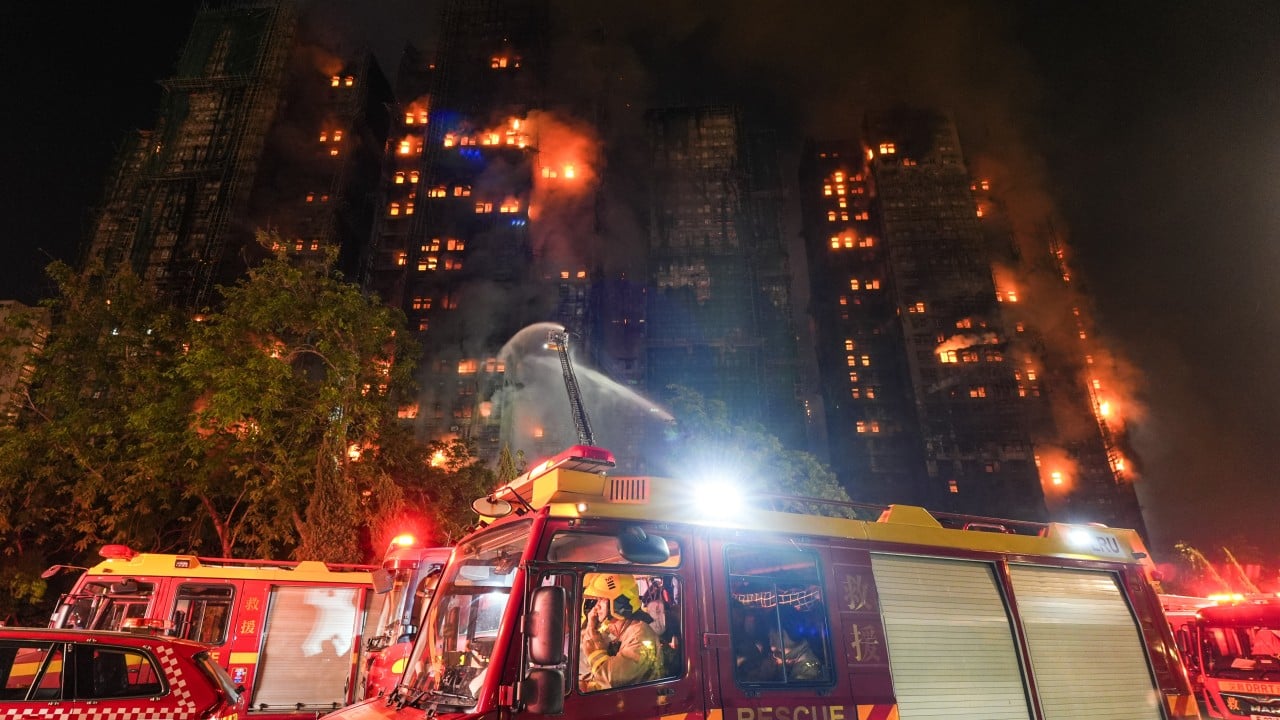
One spark didn't cause the Tai Po blaze. A dozen small, lazy decisions stacked on top of each other until a single failure turned into a full-blown crisis.
When you read through the official findings on the Tai Po fire, one thing jumps out immediately. Nobody woke up intending to create a death trap. Instead, building managers, contractors, and inspectors each cut one tiny corner, assuming someone else was watching the store. Spoiler alert: nobody was.
If you live in a high-density city like Hong Kong, or anywhere with aging residential blocks and cramped commercial spaces, you've probably walked past these exact hazards without blinking. I've spent years analyzing urban infrastructure and fire safety compliance, and the pattern here is painfully familiar. Regulators write thick rulebooks. Property managers check boxes on clipboards. Meanwhile, the actual physical environment slowly turns into kindling.
Let's strip away the bureaucratic jargon from the investigation report and look at what actually broke down—and what needs to change before the next alarm goes off.
The Myth of the Single Point of Failure
People love simple villains. When a major fire tears through a neighborhood in Tai Po, the public naturally looks for one person to blame—the careless worker who dropped a cigarette, or the cheap landlord who bought knockoff wiring.
That's not how real disasters work.
Safety engineers call it the "Swiss Cheese Model." Imagine several slices of Swiss cheese lined up in a row. Each slice is a layer of defense—fire alarms, sprinkler systems, clear stairwells, fire-rated doors, regular inspections. Every layer has holes in it. Normally, a hazard passes through one hole and gets stopped by the solid part of the next slice. Disaster only strikes when the holes in every single slice line up at the exact same moment.
In Tai Po, the holes lined up perfectly.
First, you had unauthorized modifications to the building's internal layout. Over years of renovations, tenants and owners threw up flimsy partitions that chopped open floor plans into confusing mazes. Then came the storage creep. Corridors meant for rapid evacuation quietly became overflow closets for cardboard, plastics, and cleaning solvents. Finally, the active detection systems—the very things meant to buy residents precious minutes—failed to trigger properly when smoke filled the hallways.
Remove any one of those failures, and we're talking about a minor incident handled by a single fire engine. Stack them together, and you get a catastrophe.
Five Breakdowns Exposed by the Tai Po Report
The investigation into the Tai Po blaze laid bare five systemic failures that plague older urban developments. None of these are theoretical problems. They are happening right now in thousands of buildings across the New Territories and beyond.
1. Compromised Escape Routes and Blocked Stairwells
Fire doors exist for one reason: to hold back smoke and flames long enough for people to get out. They only work if they stay closed and the stairwell behind them stays empty.
In the Tai Po incident, investigators found the classic urban disease. Residents and shop operators had wedged fire doors open for ventilation and convenience. Worse, the stairwells themselves were choked with bicycles, discarded furniture, and stacked boxes. When smoke hits a stairwell, that vertical shaft turns into a chimney. Smoke rises fast, blinds evacuees within seconds, and kills far more people than actual flames ever do. If your escape route is full of clutter, you don't have an escape route.
2. Aging Electrical Infrastructure Pushed Past Its Limit
Buildings put up thirty or forty years ago weren't designed for modern power loads. Think about what we plug in today compared to the 1980s. High-wattage air conditioners, induction cookers, battery chargers, commercial refrigeration units, and endless power strips all draw massive current through wiring that has been degrading behind concrete walls for decades.
The report highlighted severe strain on outdated electrical distribution boards. When circuits are overloaded and protective breakers are either corroded or improperly bypassed, wires overheat behind walls where nobody can see them. By the time you smell burning plastic, the fire is already inside the structural voids.
3. Unchecked Subdivisions and Illegal Alterations
Space in Hong Kong is absurdly expensive, which creates an enormous financial incentive to carve every square foot into smaller rentable units. The problem? Drywall and cheap plywood don't care about fire codes.
When property owners erect unapproved partitions, they break the building's original fire compartmentation. Architects design buildings as a series of sealed boxes so a fire in Unit A stays in Unit A. Tear down a rated wall or punch holes through it for makeshift plumbing and cables, and you destroy that containment. Fire and toxic gases race horizontally across floors in minutes instead of hours.
4. Maintenance Theater Instead of Real Testing
Have you ever looked closely at the inspection tag on a fire extinguisher or a hose reel in an older building? Sometimes the signature is there, dated neatly every twelve months, yet the pressure gauge sits dead in the red zone.
That's maintenance theater. It's the practice of paying for paperwork rather than actual readiness. The Tai Po findings pointed to glaring gaps between what maintenance logs claimed and how the equipment actually performed under stress. Alarm bells that didn't ring loud enough, emergency lighting with dead backup batteries, and water valves that hadn't been exercised in years all showed up in the post-incident review. Checking a box on a clipboard doesn't put out a fire.
5. Slow Communication and Resident Confusion
Even when alarms sound, human psychology gets in the way. People suffer from "normalcy bias"—our brains desperately want to believe that an alarm is just another false trigger or routine test.
In Tai Po, confusion over whether to shelter in place or evacuate immediately cost vital minutes. Without clear building-wide protocols or regular drills, residents hesitated. Some tried to grab valuables. Others opened apartment doors into smoke-filled corridors without checking the temperature of the handle first. Panic doesn't happen because people are weak; it happens because nobody gave them a clear plan before the crisis hit.
Why Inspection Regimes Keep Missing the Obvious
You might be wondering how a building passes inspections right up until the day it burns. It's a fair question, and the answer comes down to how municipal oversight actually operates on the ground.
Inspectors are stretched thin. Across districts like Tai Po, thousands of composite buildings—structures mixing ground-floor retail, restaurants, and upper-floor residences—require monitoring. When an official schedules an inspection in advance, property managers scramble to clear the hallways for that specific Tuesday morning. By Thursday afternoon, the boxes are back in the stairwell.
Then there's the fragmentation of ownership. In buildings with dozens of individual owners and an inactive or underfunded owners' corporation, getting everyone to agree on a multi-million-dollar fire safety upgrade is like herding cats. Nobody wants to pay the special levy. Years drag by in committee arguments while the Fire Safety Directions issued by authorities sit gathering dust in a filing cabinet.
Honestly, relying solely on government inspectors to catch every blocked corridor is a losing strategy. The math doesn't work. There will never be enough inspectors to babysit every building twenty-four hours a day.
What Mixed-Use Buildings Get Dangerously Wrong
Tai Po has a massive concentration of older composite buildings, and they present a unique nightmare for firefighters.
Downstairs, you have restaurants running open flames, grease-heavy exhaust ducts, and commercial freezers. Right next door might be a hardware shop storing paints and thinners, or a logistics storefront piled high with cardboard packaging. Directly above them sit hundreds of sleeping residents.
Grease ducts are notorious fire highways. If a restaurant skips proper hood cleaning, thick layers of vaporized oil coat the inside of the ductwork. One flare-up on a wok burner ignites that grease, turning the exhaust pipe into a blowtorch that shoots heat straight up through the residential floors above.
When commercial operators treat ground-floor loading bays as permanent warehouses, they block the exact access points fire trucks need to position aerial ladders. Seconds matter when crews are trying to hook up to street hydrants and breach heavy shutters.
Practical Steps Residents and Building Managers Can Take Right Now
Waiting around for new legislation or government crackdowns won't protect your family tonight. Real fire safety happens at the building level, driven by people who actually live and work there. If you're a tenant, homeowner, or sit on an owners' committee, stop assuming the building is safe just because nothing has happened yet.
Walk your building this week and run through these exact checks:
- Test the fire doors yourself. Push open the stairwell doors on your floor and two floors below. Do they swing shut firmly on their own and latch completely? If the hydraulic closer is broken, leaking oil, or propped open with a wooden wedge, remove the wedge immediately and demand a repair in writing.
- Document stairwell obstructions with timestamps. Don't just complain verbally to the security guard. Take clear photos of blocked corridors and locked exit gates, send them via email to the property management company, and copy the local fire safety enforcement division if they aren't cleared within 48 hours.
- Audit your own unit's electrical load. Stop daisy-chaining power strips. If you have high-draw appliances like space heaters, dehumidifiers, or portable AC units plugged into extension cords, move them directly into wall outlets. Get a licensed electrician to inspect your consumer unit if breakers trip regularly.
- Check your smoke detectors and buy a fire blanket. Hardwired building alarms fail. Put battery-operated photoelectric smoke alarms inside your own flat—especially near bedrooms and the kitchen—and test them on the first day of every month. Keep a fiberglass fire blanket within arm's reach of your stove; throwing a blanket over a grease fire works infinitely better than panicking with water, which causes an explosive fireball.
- Map two ways out in the dark. Stand in your living room, close your eyes, and count the steps to your front door and then to the nearest stairwell. If thick black smoke fills your hallway at 3 AM, you won't be able to see your own hand in front of your face. Stay low to the floor where the air is cooler and cleaner, and always feel a closed door with the back of your hand before opening it.
The lessons from the Tai Po report aren't complicated, and they certainly aren't new. Fire physics hasn't changed. What has to change is our tolerance for everyday corner-cutting—because the next time those holes in the Swiss cheese line up, nobody gets a second chance to clear the stairwell.