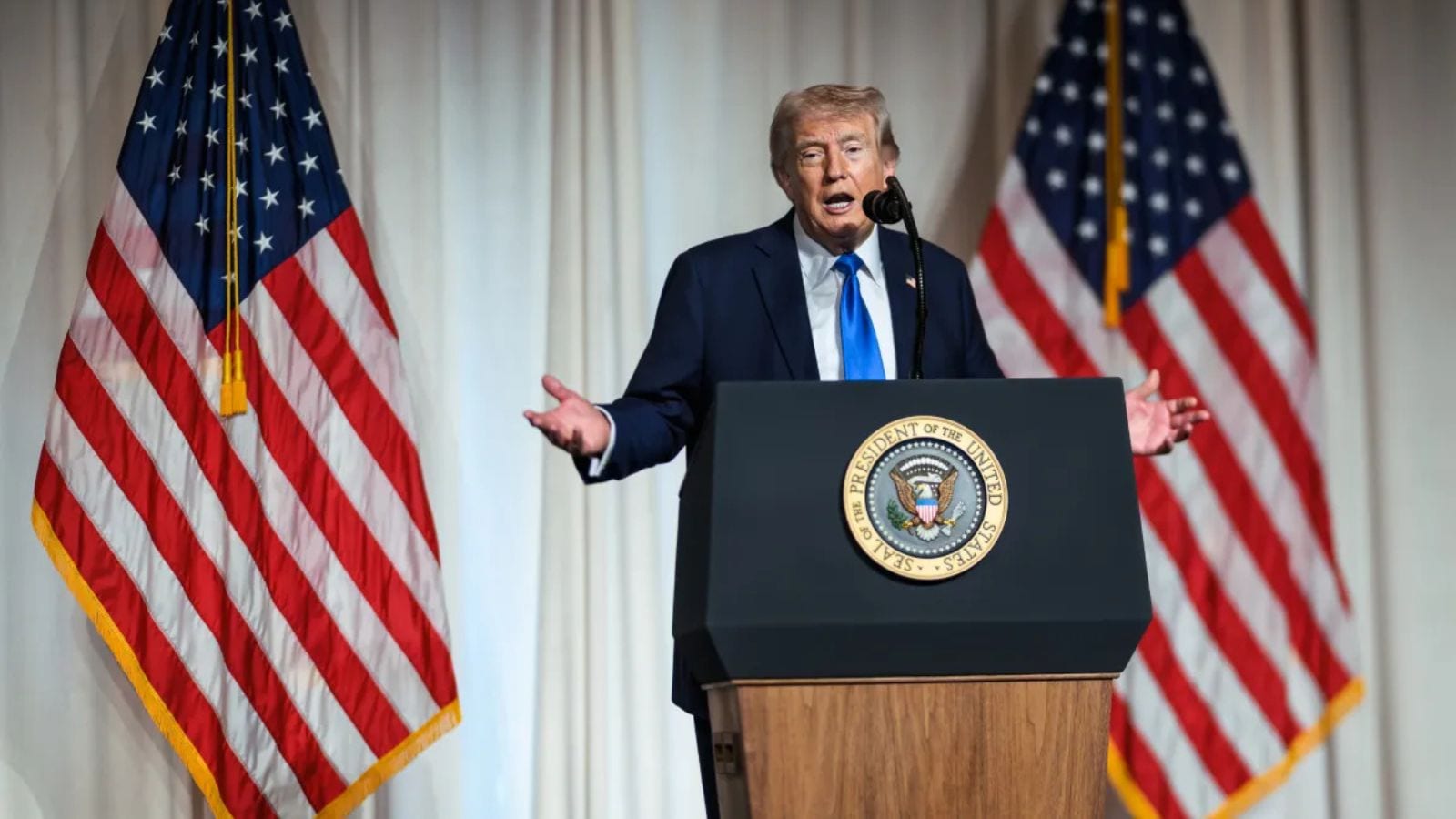
A federal court in Florida has dismantled one of the most audacious legal maneuvers in modern executive history, ruling that President Donald Trump and his legal team misused the judiciary to orchestrate a self-dealing settlement with the Internal Revenue Service. On July 13, 2026, U.S. District Judge Kathleen Williams declared that a $10 billion lawsuit filed by Trump against his own administration’s tax agency was a legal fiction designed to secure sweeping audit immunities and taxpayer-funded payouts. By referring Trump's attorneys for professional discipline and invalidating the judicial backing of their settlement, the court drew a sharp line against the exploitation of federal legal processes.
The ruling cuts to the core of a fundamental constitutional doctrine. Under Article III of the United States Constitution, federal courts are restricted to hearing actual "cases or controversies." This means there must be genuine adversity between the opposing parties. When a sitting president sues a federal agency whose leadership reports directly to him, the adversarial requirement becomes a mirage. Expanding on this idea, you can find more in: Why Chirag Veer Singh Sarao Breaking Barriers at the US Air Force Academy Matters.
The Anatomy of a Controlled Lawsuit
The dispute began with a legitimate grievance. In 2019, a rogue IRS contractor leaked Trump’s highly sensitive tax information to investigative media outlets. While federal law permits taxpayers to seek damages for unauthorized disclosures of tax returns, the manner in which the president chose to pursue recompense turned a statutory remedy into an instrument of executive self-enrichment.
In January, Trump, his adult sons, and the Trump Organization filed a staggering $10 billion lawsuit against the IRS and the Department of the Treasury. From its inception, the litigation bypassed the customary friction of civil proceedings. For the 109 days the case sat on the docket, no Justice Department lawyer entered an appearance to defend the targeted government agencies. The government offered no defenses, submitted no motions to dismiss, and raised none of the sovereign immunity arguments that the Department of Justice routinely deploys to shield federal agencies from multi-billion-dollar liabilities. Observers at Al Jazeera have provided expertise on this matter.
Instead, the two sides swiftly presented a finished settlement. The terms of this agreement were extraordinary. It proposed the creation of a $1.776 billion taxpayer-funded "Anti-Weaponization Fund" designed to compensate individuals who claimed to be victims of politicized government actions. More quietly, but perhaps more significantly, the deal permanently barred the IRS from initiating or continuing audits, investigations, or tax claims against Trump, his sons Donald Jr. and Eric, and their sprawling network of corporate entities.
The mechanics of this negotiation revealed a total collapse of institutional boundaries. Acting Attorney General Todd Blanche, who had previously served as Trump’s personal defense attorney, signed off on the agreement for the United States government. At the same time, private attorneys representing the president's personal interests signed for the plaintiffs. In her 56-page order, Judge Williams pointed out that Blanche possessed the "apparent capacity to speak for both Plaintiffs and Defendants," an arrangement that proved there was only one set of interests represented in the room.
The Illusion of Adverseness
To understand why this settlement triggered such a severe judicial backlash, one must look at how federal courts protect their own jurisdiction. Courts are not rubber stamps for private treaties. They are arbiters of genuine conflict.
When a private citizen sues the government, the Department of Justice is legally obligated to mount a zealous defense. In this case, the defense was nonexistent. The presidency effectively sat on both sides of the V. in the case caption. Trump was the plaintiff seeking billions, and as the head of the executive branch, he was also the ultimate superior of the defendants.
Historically, the executive branch has maintained a strict division between a president’s personal legal battles and the official actions of the Department of Justice. This division exists to prevent the public treasury from being converted into a personal legal reserve. By short-circuiting this division, the administration sought to use the prestige of a federal court order to insulate a highly controversial, self-serving settlement from future political or legal challenges.
Judge Williams rejected the notion that this was a routine settlement of a routine lawsuit. She noted that the parties attempted to use the judiciary to grant a veneer of lawfulness to an agreement that defied established Treasury and Justice Department guidelines. The "Anti-Weaponization Fund" was designed to bypass the congressional appropriations process, earmarking public funds for a loosely defined class of ideological allies without legislative oversight. Though that fund was subsequently abandoned under intense bipartisan pressure, the remaining provisions—specifically the lifetime audit immunity for the Trump family—revealed the true objective of the litigation.
Professional Fallout for the President's Legal Team
The judicial response went far beyond simply dismissing the case. Under Rule 11 of the Federal Rules of Civil Procedure, attorneys are legally bound to certify that every document they file is grounded in fact, supported by existing law, and not presented for an "improper purpose". When an attorney violates this oath, the court has a duty to intervene.
Judge Williams imposed targeted, nonmonetary sanctions and initiated formal disciplinary referrals that could alter the careers of the lawyers involved:
- Alejandro Brito: The attorney who signed and filed the initial $10 billion complaint was referred to the Florida Bar for potential disciplinary proceedings. The court found that he participated in filing a lawsuit that lacked a genuine legal basis and was brought for an improper purpose.
- Daniel Epstein: A lawyer representing Trump who signed the settlement agreement without first securing permission to practice in the Southern District of Florida. The judge barred him from seeking temporary admission to practice in the district for a year.
- Todd Blanche and Stanley Woodward: Copies of the scathing judicial order were sent to bar authorities in New York and Washington, D.C.. The judge raised severe ethical concerns regarding their failure to recuse themselves from the negotiations, given their deep past personal representation of the very individuals benefiting from the taxpayer-funded payouts and audit exemptions.
By sending these referrals, the federal court has signaled to the legal community that professional ethics cannot be subordinated to executive convenience. The rules of practice do not change depending on the status of the client.
A Dangerous Precedent Checked
For decades, legal scholars have warned about the gradual expansion of executive power and the erosion of the checks and balances that hold the presidency accountable. The IRS lawsuit represents a new, highly concentrated attempt to bypass those traditional limits.
If the court had allowed this settlement to stand unquestioned, it would have established a highly destructive blueprint for future administrations. A sitting president could sue any federal agency under their control—whether the Environmental Protection Agency, the Securities and Exchange Commission, or the Department of Labor—and then quickly negotiate a "settlement" that grants their private businesses sweeping exemptions from federal regulations, clean air acts, or financial disclosure laws. The judicial branch would have been reduced to a clearinghouse for unilateral executive actions.
This threat explains the tone of Judge Williams's opinion. She described the attempt to secure taxpayer billions and personal immunity under the guise of a court-approved settlement as a manipulation of the judicial process.
While the Trump legal team continues to argue that the lawsuit was a necessary response to an egregious leak of private tax records, the ruling leaves no room for ambiguity. The court did not dismiss the severity of the original tax leak. It simply ruled that a legitimate injury cannot be used as a Trojan horse to smuggle an illegal, non-adversarial windfall through the federal courts.
The immediate legal impact of the decision is clear. While the underlying lawsuit remains dismissed, the parties are strictly barred from citing or using the terms of their private settlement in any future official, judicial, or regulatory proceedings. The attempt to wrap a private deal in the protective armor of a federal court order has failed completely. The executive branch must operate within the confines of the law, and its lawyers remain answerable to the disciplinary bodies of the states whose licenses they hold. This decision stands as a blunt reminder that the presidency does not carry the power to turn a court of law into a personal boardroom.