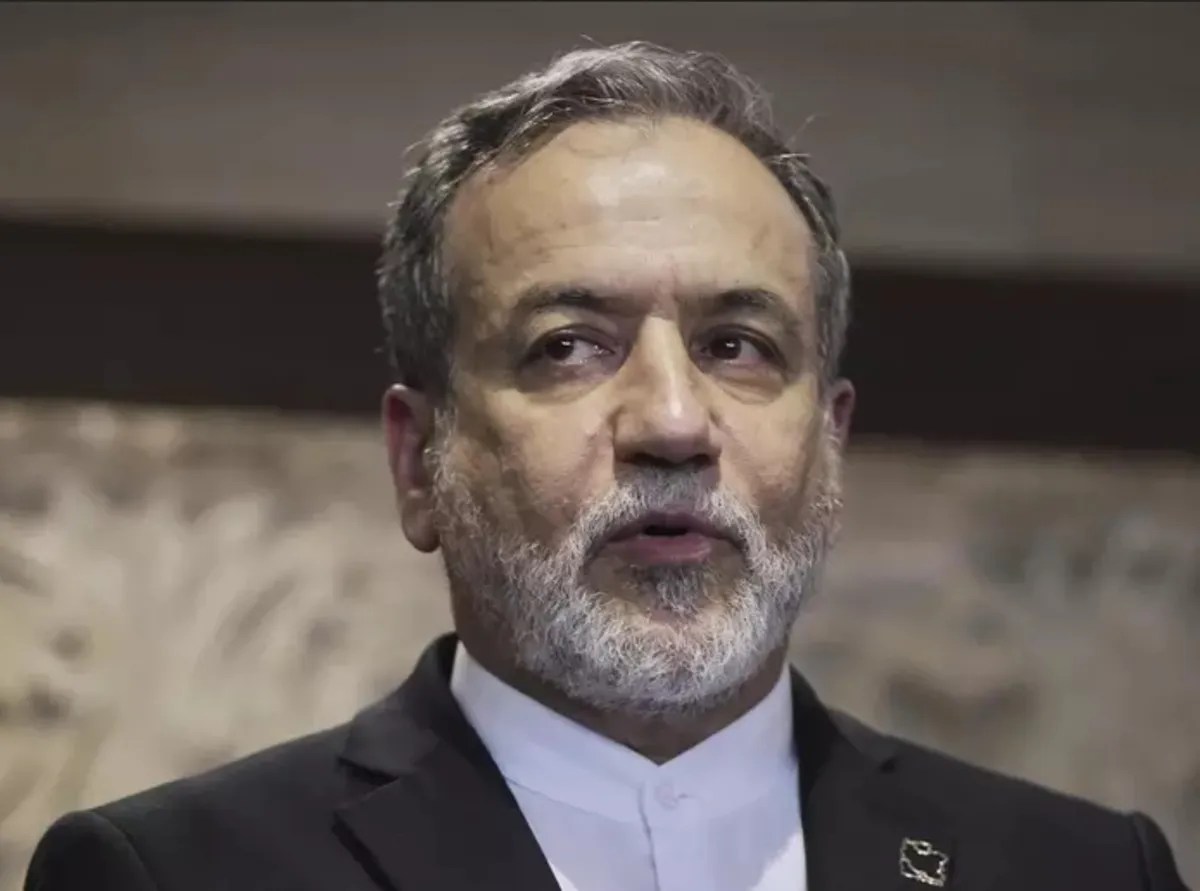
Abbas Araghchi stood before the microphones and stripped away the diplomatic veneer that usually coats high-stakes Middle Eastern summits. Iran's top diplomat delivered a blunt assessment of regional security, arguing that external actors holding power outside the neighborhood have only exacerbated the volatility plaguing West Asia. Foreign military intervention, economic coercion, and security frameworks designed in Western capitals do not protect the nations of the region. They fracture them.
The core premise of Araghchi's stance is straightforward. Regional security must be built from within by the sovereign states that share borders, trade routes, and geopolitical realities. Yet, the diplomatic friction playing out across Tehran, Riyadh, Washington, and European capitals reveals a deeper fracture. For decades, the architecture of Middle Eastern defense has relied heavily on extra-regional powers. The United States maintains a sprawling network of bases, intelligence-sharing agreements, and naval patrols designed to safeguard maritime transit and allied governments. If you enjoyed this article, you might want to check out: this related article.
This foreign footprint has created a paradox. The very presence meant to stabilize the region often acts as a lightning rod for conflict.
The Cost of External Security Guarantees
Look past the communiques released after high-level bilateral talks, and a different picture emerges. Nations that host foreign military assets frequently find themselves entangled in friction not of their own making. When maritime trade is disrupted in the Bab-el-Mandeb or the Strait of Hormuz, the shockwaves hit every littoral state immediately. For another perspective on this event, refer to the recent coverage from NBC News.
Local economies pay the price for rivalries played out on their doorsteps. Energy infrastructure becomes vulnerable to asymmetrical warfare, drone incursions, and cyber disruptions. External powers frequently treat the region as a chessboard, moving assets to counter global adversaries while leaving local populations to manage the fallout of kinetic escalation.
Araghchi's rhetorical pushback taps into a growing weariness across West Asia. Governments that once deferred entirely to Western security umbrellas are quietly hedging their bets. Diplomatic rapprochement between historic rivals demonstrates a burgeoning realization that external arbiters benefit from regional division.
The Mechanics of Regional Autonomy
Building an indigenous security framework sounds appealing in a press conference, but the mechanics are fraught with friction. Trust is scarce. Decades of proxy conflicts, sectarian tensions, and territorial disputes have left deep scars.
Consider the Persian Gulf security complex. For an inclusive regional arrangement to function, nations with diametrically opposed political systems and strategic alignments must sit at the same table. Tehran and its partners advocate for a security architecture that excludes Western navies completely. Conversely, smaller Gulf states worry about Iranian hegemony filling the vacuum left by a potential American military withdrawal.
Achieving genuine autonomy requires more than rhetorical flourishes about anti-imperialism. It demands verifiable confidence-building measures, transparent military doctrines, and economic interdependence that makes conflict too costly to pursue. When nations rely on external guarantors, they outsource their risk management. Taking control means accepting the burden of regional diplomacy, where compromises are messy and failures carry immediate, catastrophic consequences.
The Economic Imperative Behind the Rhetoric
Geopolitics rarely operates divorced from economic survival. The push for regional self-reliance coincides with a global transition away from fossil fuel dependency and a growing recognition that prolonged instability deters vital foreign investment.
Mega-projects like Saudi Arabia's Vision 2030 or the expansion of trade corridors linking the Gulf to South Asia require a predictable security environment. Wars of attrition and constant threats of escalation scare off the capital needed to diversify domestic economies. When Iranian officials insist that security cannot be imported, they are also signaling to regional neighbors that economic resilience is tied directly to regional de-escalation.
External actors have historically used arms sales as both an economic engine and a diplomatic leash. By tying defense procurement to strategic obedience, foreign capitals maintain leverage over local decision-makers. Breaking this cycle means transitioning toward indigenous defense manufacturing, joint intelligence networks, and localized maritime patrols that do not require aircraft carriers flying foreign flags.
The Limits of Rhetoric in a Fractured Landscape
Diplomacy is often an exercise in managed friction. While Araghchi's articulation of regional sovereignty resonates with anti-interventionist sentiments globally, the practical implementation remains out of reach. Deep-seated mistrust cannot be legislated away by a joint statement.
As long as strategic imbalances persist, smaller nations will cling to external security guarantees as an insurance policy against larger neighbors. At the same time, regional powers like Iran will continue to challenge the legitimacy of those foreign footprints, viewing them as an existential threat to their own sphere of influence.
The struggle for the future of West Asia is not merely a contest of arms. It is a fundamental disagreement over who gets to write the rules of engagement. Until the nations within the region establish a credible, inclusive mechanism to manage their own disputes, the shadow of external powers will continue to loom large over every capital from Tehran to Riyadh.