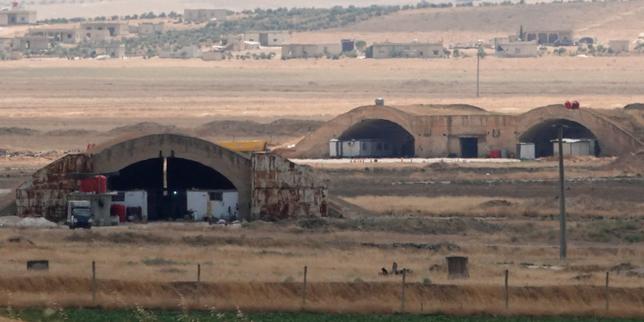
The Middle East just got a lot more complicated. Earlier this week, Israeli airstrikes pounded the Abu al-Duhur airbase in northwestern Syria. While Israeli strikes in Syria aren't exactly new, the justification provided this time shifts the entire regional dynamic. Israel claims it acted because Damascus was supposedly allowing Turkish troops to move in. Ankara, for its part, is flatly denying any such presence.
Basically, we’re looking at a high-stakes blame game. Israel insists it caught Syria trying to break a long-standing security status quo. Turkey says Israel’s attack is an unprovoked act of aggression against Syrian sovereignty.
What Actually Happened at Abu al-Duhur
The strikes hit the airbase on August 18, 2026. For years, this facility has been largely dormant, having been out of commission since 2013. However, with the regional landscape shifting rapidly following the fall of the Assad regime in late 2024, the site has suddenly become a focal point of geopolitical tension.
The Israeli narrative is simple: they argue that Syria was on the verge of letting Turkish forces entrench themselves at the base. Prime Minister Benjamin Netanyahu’s office framed the move as a direct threat to Israeli security. They claim they’d issued warnings to Damascus, which were ignored. From their perspective, the strike was a preemptive measure to maintain a specific, albeit unofficial, balance of power.
Ankara’s response was immediate and sharp. A spokesperson for the Turkish Ministry of Defense stated clearly that no Turkish military delegation was at the airbase before or during the attack. They aren’t just denying presence; they’re questioning the legitimacy of the strike itself. Turkish officials have labeled the attacks "unacceptable," warning that Israel’s habit of striking across its borders shouldn’t be treated as "routine."
The View From Damascus
The situation becomes even murkier when you look at the messaging coming out of Syria. Syrian officials have admitted that a Turkish military delegation visited the site recently. However, they argue this visit was standard procedure. They claim it was part of ongoing military cooperation and training, intended to help rebuild Syrian infrastructure and stability—not a precursor to a permanent Turkish military base.
This creates a massive discrepancy. If Damascus confirms a visit but denies a deployment, and Ankara denies a presence entirely, Israel’s "status quo" argument faces a legitimacy crisis. Is this a strategic move by the new Syrian government to align more closely with Turkey, or is Israel using a exaggerated security concern to keep the pressure on Syria’s new leadership?
Why This Standoff Is Different
You have to look at the broader context. For nearly two decades, Israeli strikes in Syria were almost exclusively aimed at Iranian influence or Hezbollah supply lines. That was the primary goal. The game changed when the Iranian foothold in Syria collapsed. Now, the regional power struggle has evolved. It’s no longer just about Iran. It’s about how much influence Turkey—a major regional power—will exert as Syria attempts to get back on its feet.
Israel is clearly worried about a "Turkish entrenchment." They don't want a capable, Turkish-backed military force sitting on their northern flank. For Turkey, helping rebuild Syria is a way to secure its borders and expand its influence in a post-Assad world. When these two goals collide, you get events like the strike at Abu al-Duhur.
The Risk of Escalation
We’re moving into a space where the risk of a direct incident between Turkey and Israel is higher than it has been in years. You have the Israeli Defense Minister Israel Katz publicly warning Turkish President Recep Tayyip Erdogan against "dangerous adventures." That’s not diplomatic talk. That’s a direct challenge.
Washington is clearly feeling the heat, too. There are reports that efforts are underway to establish some form of deconfliction mechanism. They need a way to keep these two major players from walking right into a larger conflict. If they don’t, a misunderstanding on the ground or a miscalculated strike could escalate into something neither side actually wants.
Moving Forward
Don't expect the rhetoric to cool down overnight. Turkey has vowed to continue its work supporting Syrian sovereignty, and Israel has made it clear it won't tolerate what it perceives as a threat. The immediate next step is watching how the diplomatic channels—and the back-channel communication—handle the aftermath.
Keep an eye on the "deconfliction" talks. If Washington manages to get Israel, Syria, and Turkey to agree on a clear set of rules for the area, the temperature might drop. If they fail, the area around places like Abu al-Duhur will remain a volatile flashpoint where a single misstep could set off a much larger chain reaction. For now, it’s a game of brinkmanship that neither side is looking to end quietly.