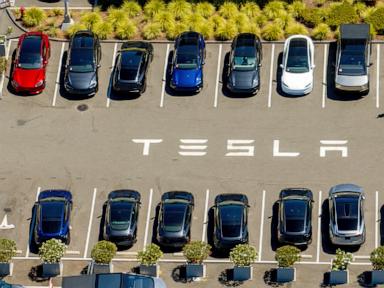
Wall Street expected a bloodbath. Instead, they got a blowout.
For the past two years, the narrative surrounding Tesla was one of terminal decline. Critics claimed Elon Musk’s loud political shifts, his high-profile stint cutting government spending in Washington, and his embrace of polarizing figures had permanently toxicified the brand. Activists burned his effigy in Milan. Showrooms faced protests. Potential buyers swore they would never put a Tesla in their driveway.
The data just proved that outrage has a shelf life.
Tesla just released its second-quarter 2026 delivery numbers, shattering expectations by moving 480,126 vehicles. That is a massive 25% jump compared to the 384,122 cars delivered in the same period last year. It marks Tesla’s strongest second quarter in company history and completely reverses a multi-year sales slump.
If you thought the Musk backlash was going to kill the company, it's time to look at what actually drives consumer choices.
The Math Behind the Rebound
The consensus among analysts tracked by FactSet sat at roughly 406,000 deliveries for the quarter. Goldman Sachs and Barclays were among the most optimistic, bumping their targets to around 420,000 units. Tesla blew past even the highest estimates by more than 60,000 cars.
What makes this surge even more striking is how the company handled its inventory. Unlike previous quarters where Tesla built tens of thousands of vehicles it couldn’t sell, the script flipped. Tesla produced 451,758 vehicles this quarter but delivered 480,126. It wiped out nearly 28,000 units of backlogged inventory.
The high-volume Model 3 and Model Y did the heavy lifting, accounting for 467,762 deliveries. The remaining 12,364 units went to what Tesla calls "Other Models"—the Cybertruck, the Tesla Semi, and lingering orders for older lines.
The global EV market has been brutal lately. General Motors reported EV sales declines, and Ford saw a 10% drop in overall US auto sales due to supply chain fires and cooling demand. Yet Tesla managed a 34% sequential jump from its first quarter this year.
Why Buyers Are Forgiving Elon Musk
The media loved the story of the progressive EV buyer ditching Tesla for a hybrid out of political spite. That certainly happened in portions of the US, where research firm Cox Automotive estimates Tesla's domestic sales are still down roughly 20%. The loss of the $7,500 federal EV tax credit late last year continues to hurt the US market.
But global automotive markets are pragmatic, not purely ideological. Three specific catalysts triggered this massive quarterly beat.
1. Geopolitics Fixed the European Problem
The biggest surprise came from Europe, where the consumer revolt against Musk was loudest. Through May, new Tesla registrations in the EU surged 77.3% year-over-year, including an astonishing 300% spike in Germany. Why? The Iran war sent gasoline and diesel prices through the roof. When it costs a small fortune to fill up a conventional car, consumers care a lot less about a CEO's social media posts. The sudden financial pressure forced buyers to choose efficiency over politics.
2. Radical Price Adjustments
Tesla stopped trying to protect its luxury margins and went for volume. Last year, the Austin-based automaker introduced cheaper, stripped-down variants of both the Model 3 and Model Y. In Europe, they backed this up by slashing interest rates on vehicle leases and auto loans. They made the cars too cheap to ignore.
3. FSD Regulatory Breakthroughs
Musk spent the last year shifting Tesla's public focus away from manufacturing and toward autonomous driving and robotics. That bet is starting to pay off in real-time utility. European regulators are rapidly opening up to Tesla’s Full Self-Driving (Supervised) platform. The Netherlands cleared the system for public roads in April, and Estonia, Greece, and Lithuania followed suit. Buyers aren't just purchasing a car anymore; they're buying into a software ecosystem that is finally legal in their home countries.
The Reality of the BYD Rivalry
Let’s be honest about the global hierarchy. This quarter’s surge narrows the gap with China's BYD, but it does not erase it. BYD delivered 557,090 fully electric vehicles during the exact same three-month window, holding its crown as the world's top battery-electric vehicle seller.
But look at the trajectories. BYD’s battery-electric vehicle deliveries actually fell about 8% year-over-year. Tesla’s jumped 25%. A year ago, Tesla trailed BYD by over 220,000 units in a single quarter. Today, that gap has shrunk to 77,000.
Tesla also quietly built a massive secondary firewall through its energy storage business. The company deployed 13.5 GWh of battery storage this quarter, up more than 40% from last year. Commercial demand is through the roof. In April, SpaceX alone purchased $269 million worth of Tesla Megapacks to power its massive xAI data centers in Memphis.
Tesla is systematically executing a transition that most legacy automakers can't figure out. They ended production of the low-volume Model S and Model X in January, permanently clearing out factory lines in Fremont to make room for Optimus humanoid robot production. Volume production for both the Cybercab and the Tesla Semi is scheduled for later this year.
If you are tracking this stock or trying to time the EV market, stop watching the CEO’s political commentary. Look at the local fuel prices, watch the regulatory approvals for autonomous software, and follow the factory floor conversions. Tesla proved this quarter that product utility and aggressive pricing will always outrun a public relations crisis. Investors looking for a deeper look at the margins will get their answers when the final financial results drop on July 22.