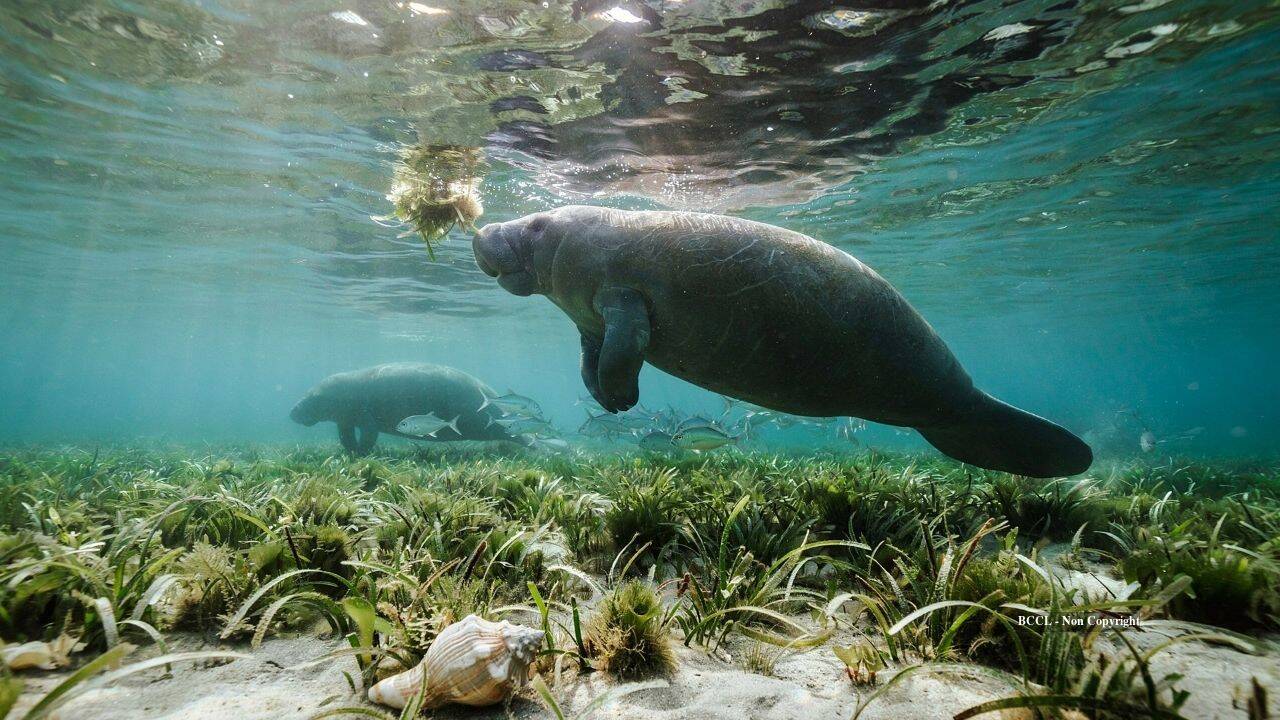
Marine biologists tracking West Indian manatees along the Texas coast face an uncomfortable reality as summer heat peaks. Recent sightings from Galveston down to Port Mansfield and Corpus Christi are routinely framed by local outlets as charming novelties—gentle sea cows taking an extended vacation far west of their traditional Florida strongholds.
This framing is dangerously incomplete.
Manatees arriving in Texas waters are not accidental tourists. They represent a widening geographic range driven by warming Gulf waters and expanding summer habitats. As these animals push westward into unfamiliar and heavily industrialized waterways, they encounter a gauntlet of high-speed boat traffic, narrow channels, and hazardous marinas. Treating these seasonal arrivals as rare anomalies prevents local authorities from implementing the permanent infrastructure and legal protections required to keep them alive.
The Marina Trap
When migratory manatees reach the Texas coast, they frequently seek out freshwater outflows to drink. Unfortunately, these freshwater sources often empty directly into busy commercial harbors, crowded recreational marinas, and industrial ship channels.
This creates a severe ecological mismatch. Manatees possess a low-frequency hearing range that makes it difficult for them to detect oncoming high-speed watercraft until it is too late. Their natural buoyancy and slow swimming speeds render them virtually incapable of evading a planing boat hull or a spinning propeller.
Wildlife rescuers report that well-meaning beachgoers and marina operators often exacerbate the danger. Hand-feeding manatees or using hoses to provide them with fresh water encourages the animals to linger in high-traffic zones rather than moving safely through open coastal waters. Once a manatee associates a concrete bulkhead or a fuel dock with a reliable freshwater source, it stays put. That residency turns a temporary migratory route into a fatal trap.
Deep History on the Texas Coast
To understand why manatees show up in Texas, investigators must look past modern climate shifts and examine the fossil record. Recent discoveries along McFaddin Beach near Port Arthur and Caplen Beach near Galveston have unearthed Pleistocene-era manatee jawbones and rib fragments dating back to the last Ice Age.
These findings prove that Trichechus manatus and its ancient relatives inhabited the Texas coastline long before modern urbanization. The current western migration is not an unnatural invasion or a sudden biological error. It is a reassertion of historical range.
The coastline these ancient animals inhabited looked radically different, featuring expansive river outlets and wide, protected embayments. Today's Texas coast offers a fragmented version of that environment. Dredged channels, bulkheads, and heavy hydrocarbon traffic have replaced natural marshlands. The modern manatee is attempting to reclaim an ancestral home that has been transformed into an obstacle course.
Regulatory Blind Spots
Protection efforts in Texas lag far behind the standardized protocols established in core habitats like Florida. While agencies such as the Texas Marine Mammal Stranding Network maintain active reporting hotlines and work alongside the U.S. Fish and Wildlife Service, enforcement remains reactive rather than proactive.
Texas waters lack the widespread, legally mandated slow-speed zones and seasonal manatee sanctuaries common in southeastern states. When a manatee decides to take up residence near a major construction project or a ferry terminal—as occurred recently near Port Aransas—operations pause temporarily, but systemic changes to local boating regulations rarely follow.
Public awareness campaigns rely heavily on voluntary compliance. Boaters are urged to wear polarized lenses to cut surface glare and to watch for the distinctive swirling circular patterns manatees leave on the water's surface. Voluntary measures fail against the reality of weekend recreational boating culture, where high horsepower and crowded waterways routinely eclipse wildlife caution.
The presence of endangered marine mammals along the Texas coast is a permanent fixture of a warming Gulf. Until regional authorities treat these waters as active manatee habitat with enforceable speed restrictions and strict no-feeding laws, every summer migration will remain a high-stakes gamble for survival.