The desk in the corner of the room held a half-empty cup of cold black tea and a red telephone that had not rung in three hours. Outside, the dust of the capital settled over concrete blocks and hurried pedestrians, routine masking a quiet dread. Inside, the air conditioning hummed a low, mechanical note, drowning out the distant, rhythmic pulses of news anchors broadcasting from across oceans.
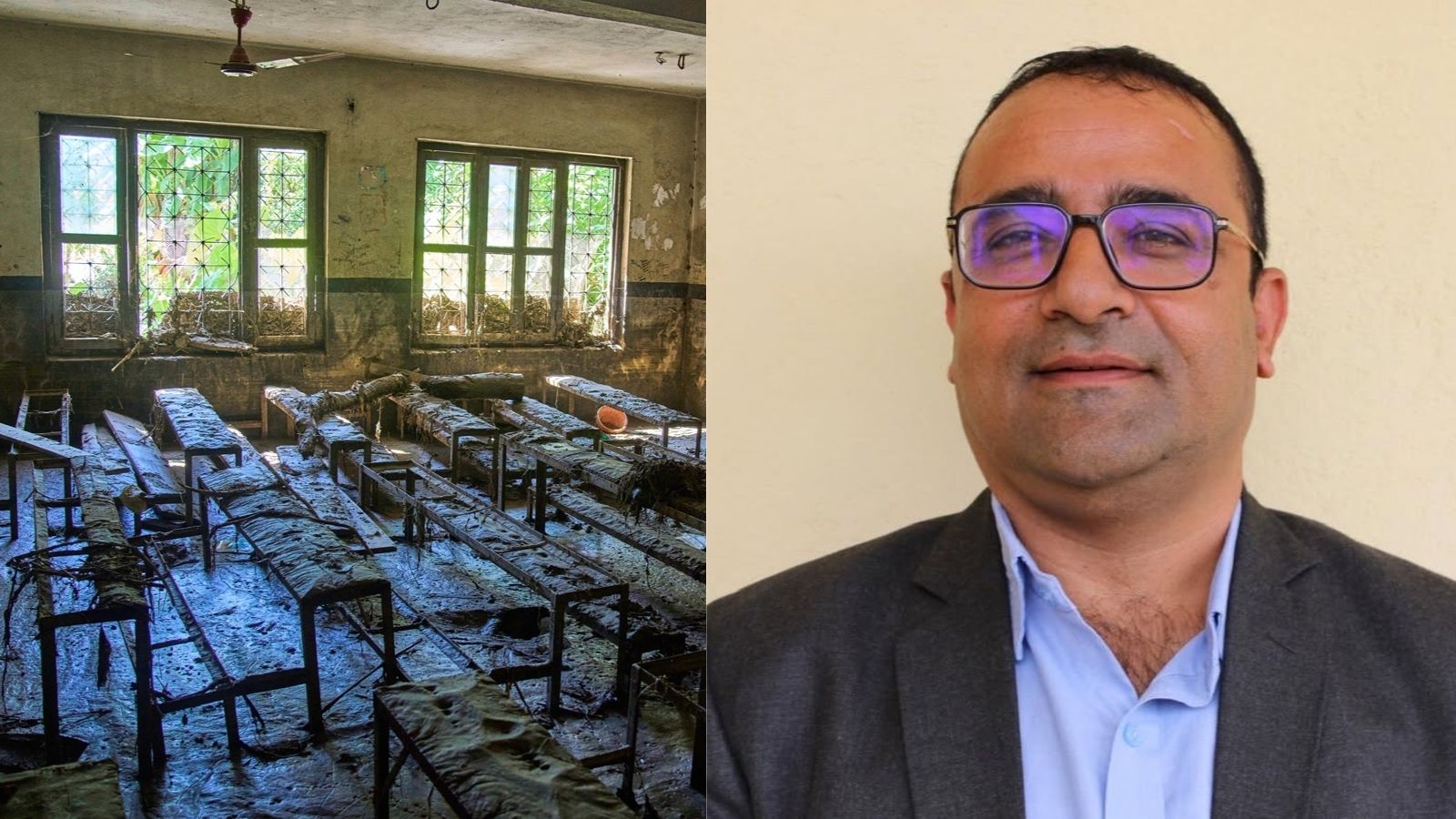
Across the table sat a man whose career had been spent navigating the labyrinthine corridors of international diplomacy. His name was Surendra Kumar, though to most of the world, he was just another voice behind a lectern, a retired diplomat analyzing a map soaked in ancient resentments. He looked at the glowing screen displaying the latest breaking alert from Washington and Tehran, rubbed his temples, and let out a dry, humorless sound. Learn more on a similar topic: this related article.
It was becoming like a comedy.
Not the kind that brings laughter in a theater, dark and sharp, but the exhausting kind where the actors keep forgetting their lines, the props are made of cardboard, and the audience sits in mounting horror because they realize the guns are loaded. More reporting by TIME explores related views on this issue.
Diplomacy requires a delicate grammar. It is a language built on hesitation, carefully calibrated ambiguity, and the exhausting preservation of face. When nations communicate through high-stakes chess moves interspersed with erratic public ultimatums, the grammar shatters. What remains is theater. Loud. Performative. Unpredictable.
Consider what happens next in a crisis of this magnitude.
Every move is broadcast in real time. A late-night post on a social media platform replaces a diplomatic cable. A sudden sanction is announced before ambassadors are even notified. The traditional buffers of statecraft—the quiet backchannels, the ambassadors summoned for measured reprimands, the months of drafting communiqués—have been stripped away, replaced by the impulsive rhythm of the news cycle.
Former diplomat Surendra Kumar looked at the shifting landscape of West Asia and saw a dangerous decoupling of action and consequence. When decisions from Washington and Tehran begin to resemble improv comedy routines played out on a global stage, the margin for error vanishes. A miscalculated remark or an impulsive retaliation does not invite a witty comeback. It invites fire.
The Weight of Unpredictability
Imagine standing on a bridge built of dry twigs, watching two heavyweights jump up and down to test its strength.
That is what watching US-Iran relations feels like from the perspective of the broader region. For nations caught in the geographic crossfire—the Gulf states, the smaller economies dependent on stable shipping lanes, the ordinary families stocking up on canned goods in anticipation of currency drops—the unpredictability is not a political strategy. It is an existential hazard.
During decades of active service, Kumar had watched crises flare and fade. He knew the choreography. There was a time when a crisis had a rhythm, an arc that allowed seasoned negotiators to find the friction points and cool them down. A red line meant something because it was drawn slowly, with witnesses.
Today, the red lines are sketched in vanishing ink.
One morning brings talk of backchannel negotiations mediated by Oman or Qatar. By afternoon, a fresh wave of economic penalties lands, accompanied by fiery rhetoric warning of total annihilation. The left hand of statecraft has no idea what the right hand is tweeting.
To the casual observer, this might look like strength. It looks like a government keeping its adversaries off balance. But consistency is the bedrock of deterrence. If an adversary cannot predict your response because you do not even know it yourself until you check your notifications, deterrence fails. It mutates into Russian roulette.
The Cost of the Punchline
Laughter is a defense mechanism. When the situation becomes too terrifying to process rationally, the human brain looks for a way to cope. Calling it a comedy is easier than admitting it is a catastrophe in slow motion.
Yet the comedy has victims who never signed up to be part of the audience.
Consider the cargo ships navigating the Strait of Hormuz. For the men and women working in the humid engine rooms of oil tankers, the geopolitical posturing translates directly into skyrocketing insurance premiums and the constant hum of anxiety. Every time a retaliatory strike is threatened or a naval drone is intercepted, the cost ripples outward. It reaches the grocery store shelves in Europe, the fuel pumps in Asia, and the heating bills of households thousands of miles away from the Persian Gulf.
The architects of these unpredictable decisions sit in soundproofed conference rooms, insulated by security details and political shields. They draft statements designed to play well on evening broadcasts. They measure success in retweets, cable news chyrons, and domestic political points.
Meanwhile, the people bearing the actual weight of these choices live in the shadow of escalation.
Kumar understood this disconnect intimately. He had spent decades listening to the polite fictions of international summits, knowing full well that behind every polished phrase spoken at a podium lay the lives of millions who would pay the price if the rhetoric ever crossed the threshold into reality.
The Erosion of Trust
Trust in international relations is like old glass. It takes generations to blow into a stable, functional shape, and only a second to shatter into fragments that can cut anyone who tries to pick them up.
When a superpower acts erratically, changing its stance with every administration or every shift in domestic polling data, its allies grow nervous and its enemies grow bold. The calculus of deterrence relies entirely on credibility. If Tehran believes that Washington lacks the strategic patience or internal political stability to sustain a long-term policy, the incentive to compromise disappears. Why negotiate with a partner whose promises might expire before the ink is dry?
Conversely, the internal pressures within Iran create their own loop of rigid unpredictability. Hardline factions leverage external threats to consolidate domestic control, closing off avenues for moderation. The result is a closed circuit of mutual provocation, where each side feels compelled to match the other’s escalation, driven not by cold-eyed geopolitical strategy, but by the fear of looking weak.
It is a tragedy dressed up as farce.
The actors take their bows amidst the smoke of burning embassies and fractured treaties, convinced of their own brilliance, while the stage crumbles beneath their feet.
The Silence After the Noise
Back in the quiet room, the red telephone remains silent. The television screen flashes with another breaking headline, urgent, colorful, and instantly forgettable.
Surendra Kumar closes his notebook. The analysis is done. The warnings have been issued, filed away in archives where future historians will read them and shake their heads at the obvious signs everyone chose to ignore.
The crisis in West Asia does not need another clever soundbite or another improvised threat. It requires the most radical, unfashionable thing in modern politics: consistency. It requires leaders who understand that statecraft is not a reality television show where erratic behavior keeps the audience hooked.
The curtain stays up. The audience waits. And somewhere in the dark, the lights flicker.