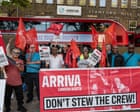
Capital expenditure cycles in public transport infrastructure consistently lag behind baseline meteorological shifts. When ambient urban temperatures breach forty degrees Celsius, enclosed vehicular workstations transform into acute physiological hazards. The resumption of industrial action by roughly fifteen hundred unionized drivers across North and East London highlights a structural failure in asset management: fleet climate control systems are treated as discretionary amenities rather than core operational requirements. Examining this dispute requires stripping away labor rhetoric to evaluate the thermodynamic constraints, cost functions, and capital allocation mechanisms governing modern municipal transit fleets.
The Thermodynamic Failure Profile of Urban Cabs
The core operational breakdown centers on the divergence between air-cooling and true air-conditioning architectures. Many legacy and transitional vehicles rely on air-cooling units that draw ambient outside air and pass it over cooling matrices rather than utilizing closed-circuit refrigeration cycles. During consecutive heatwaves, ambient urban temperatures frequently exceed thirty degrees Celsius, while localized thermal retention inside metal-and-glass transit chassis pushes interior cab environments past forty degrees.
Under these thermal loads, air-cooling mechanisms fail to maintain a differential greater than two to three degrees Celsius. This creates a severe performance bottleneck for the operator. Operating a heavy commercial vehicle in a confined space where metabolic heat cannot dissipate leads to accelerated cognitive fatigue, slowed reaction times, and acute dehydration. The physiological toll alters error rates, turning an environmental discomfort into a systemic safety liability for both operators and pedestrians.
The Asset Retrofit Dilemma and Capital Allocation
The dispute between Arriva North London and the Unite union is fundamentally a disagreement over capital expenditure timelines and risk distribution. The negotiated agreement aimed to retrofit a fleet of approximately 730 buses with upgraded climate control systems. However, localized resistance across several garages—leading to rejected ballots and renewed strikes—stems from temporal uncertainty.
Operators face a classic asset-upgrade optimization problem:
- Accelerating fleet-wide retrofits requires high capital outlays and operational downtime.
- Delaying retrofits minimizes immediate capital expenditure but increases exposure to workforce attrition, regulatory penalties, and service disruptions through strikes.
The friction points emerge because workers carry the immediate health risk of delayed capital deployment. When retrofitting schedules stretch across multiple budget years, workers bear the environmental cost of successive summer heatwaves. The division across garages—where five voted to accept terms while three rejected them—reflects localized variations in vehicle age, fleet assignment, and trust in management execution timelines.
The Operational Cost Function of Open-Door Thermodynamics
Maintaining a thermally stable environment inside an urban transit cab presents an intense engineering challenge. Buses operate in stop-and-go environments, opening entry and exit portals multiple times per kilometer. Every instance of door actuation dumps conditioned air and ingests high-energy ambient air from the street.
To counter this constant thermal influx, HVAC systems must be over-engineered to provide high-capacity, rapid thermal recovery. Fleet operators historically underwrite lower-specification cooling units to minimize baseline vehicle weight, reduce fuel consumption, and lower upfront unit acquisition costs. The hidden variable in this calculation is the total cost of unreliability: sudden driver absenteeism, temporary medical sign-offs, unscheduled vehicle coverage, and reputational damage from network cancellations.
Systemic Vulnerabilities in Transport Networks
The timing of these industrial stoppages exposes the fragility of interconnected transit networks. Strikes overlapping with planned engineering works or concurrent rail line closures multiply commuter delays, compounding economic friction across the metropolitan area. Transport operators function within contracted frameworks overseen by municipal authorities like Transport for London, where service delivery Key Performance Indicators dictate financial penalties for cancelled routes.
When operators fail to maintain safe cabin temperatures, they trigger a cascade of secondary failures:
- Statutory duty of care breaches under employment health and safety regulations.
- Operational paralysis driven by legally protected refusals to work in high-risk environments.
- Escalating friction between union structures and localized depot management teams.
Strategic Execution Protocol
Fleet operators must transition climate control from a variable comfort feature to a mandatory operational asset class. Asset replacement schedules must account for accelerated meteorological volatility rather than historical seasonal averages. Procurement models should tie vehicle manufacturing specifications directly to high-ambient performance standards, ensuring refrigeration compressors can maintain internal cabin thresholds regardless of external frequency of door openings. Management teams must publish binding, audited timelines for fleet-wide HVAC overhauls to eliminate the temporal ambiguity that drives workforce distrust and recurring industrial action.
1500 drivers strike over heatwave working conditions
This video provides an on-the-ground look at the picket lines and details the direct accounts of London bus drivers operating in extreme cabin temperatures.