Thirty dollars.
That was the price of a cup of bad coffee and a sandwich at an airport terminal, or a tank of gas before the gauge hit empty, or a cardboard box of yellowed paper tucked beneath a folding table in a damp basement where nobody wanted to bend down. Read more on a related topic: this related article.
Wait.
Look closer at that piece of paper before you walk past it. Further analysis by Glamour delves into related perspectives on this issue.
In the world of estate sales, thrift shops, and cluttered attics, value rarely announces itself with brass trumpets or velvet ropes. It hides in plain sight, smelling faintly of cedar, damp newsprint, and five centuries of human breath. When a headline tells you that a buyer spent thirty dollars on an unassuming drawing and later saw it linked to Albrecht Dürer with an estimated value of ten million dollars, the temptation is to treat the story like a lottery ticket. A fluke. A stroke of cosmic luck that happens to other people on sunny Saturdays while the rest of us scroll past.
I have spent years standing in dim rooms filled with other people’s forgotten lives—sorting through shoeboxes of old photographs, lifting warped frames off mildewed walls, feeling the dry rasp of rag paper beneath my fingertips—and I can tell you that luck is only half the story. The other half is attention. Quiet, stubborn, unhurried attention in a culture addicted to speed.
Here is a metaphor to keep in your pocket as we go: think of an estate sale as a coral reef after the tide goes out. Most people walk along the sand looking for shiny shells, tossing aside gray, porous stones that look like nothing at all. Only someone willing to kneel down, turn the stone over, and read the tiny grooves etched into its surface realizes they are holding architecture built over generations.
The Weight of a Thirty-Dollar Bet
To understand why a thirty-dollar sheet of paper can suddenly command a ten-million-dollar conversation, you have to step out of the modern price tag and into the quiet room where a life’s belongings are being dispersed.
Consider a hypothetical scenario—a composite of dozens of real estate liquidations I have witnessed over the years. Let us call our buyer Arthur, a retired bookbinder with ink-stained knuckles and a habit of arriving twenty minutes before the doors open, not because he is greedy, but because he cannot bear the thought of good paper being thrown into a recycling bin. A family has just cleared out a grandfather’s house. There are no museum curators present. There is no appraiser with a magnifying loupe and a briefcase. There is only a folding card table, a stack of plastic bins, and a tired liquidator who priced the box at thirty dollars simply to make the heavy cardboard disappear before noon.
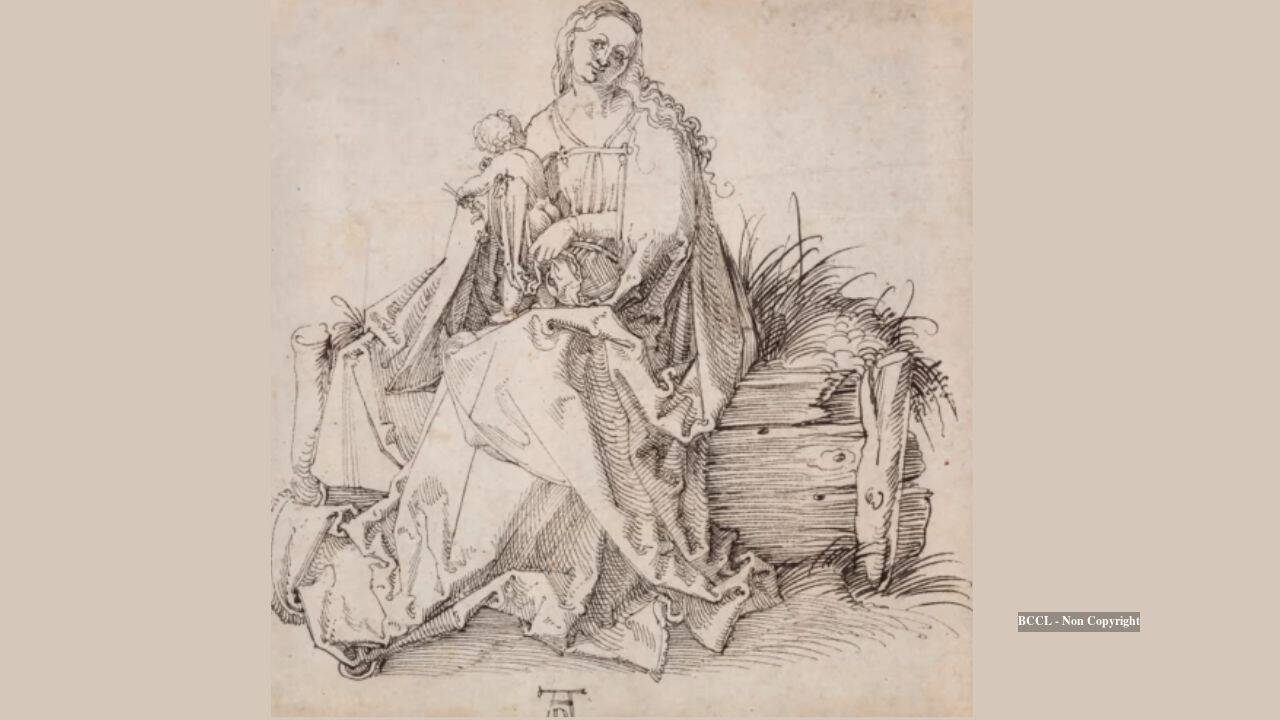
Arthur lifts the top layer of tissue paper. Beneath a stack of dog-eared gardening manuals and an old ledger sits a small drawing on laid paper. The ink has faded to the color of weak tea. The lines are fine, almost obsessive—cross-hatching so tight and disciplined it looks like woven silk under a raking light. In the corner sits a monogram, familiar yet strangely raw, lacking the slickness of a later commercial copy.
He pays the thirty dollars. His hands shake just a little as he slips the paper into a rigid folder.
Why did the seller ask for thirty dollars? Because without provenance—the documented chain of custody that proves where a work of art has lived over time—an old drawing is a riddle wrapped in risk. To a liquidator trying to clear a room in forty-eight hours, an unverified sketch might be a sixteenth-century masterwork, or it might be a clever nineteenth-century student exercise, or a reproduction printed long after the artist died. Pricing it at thirty dollars is not ignorance; it is survival. Time is the enemy at an estate sale, and certainty is expensive.
Why Dürer Still Haunts the Margins
Albrecht Dürer was not a modest man who painted in the shadows. Born in Nuremberg in 1471, he was one of the first European artists to treat himself as a self-conscious genius—a thinker, a mathematician, a traveler, a brand before the word existed. He signed his works with that famous, unmistakable AD monogram and guarded his reputation fiercely, even suing rivals who copied his prints without permission.
When people hear that a sketch is linked to Dürer, they often picture a grand oil painting hanging over a royal fireplace. Yet Dürer’s drawings on paper are where his mind actually breathes. In the late fifteenth and early sixteenth centuries, paper was still a precious commodity in northern Europe, made from pulped linen and hemp rags, prized for its tooth and durability. Dürer used it to test light, study drapery, map proportions, and capture fleeting observations of nature and human expression with a pen or silverpoint stylus.
A genuine drawing by Dürer does not merely show an object; it shows a mind thinking in real time. You can trace where his nib hesitated, where he reinforced a shadow with brisk parallel strokes, where he left the creamy paper untouched so light seems to radiate from within the page itself.
That is why attribution matters so deeply, and why it is so agonizingly slow. Linking a drawing to a Renaissance master is not like scanning a barcode at a grocery register. Scholars compare watermarks held up to light tables, analyze ink composition, examine paper fibers under magnification, match handwriting styles, and cross-reference known compositions from notebooks and workshop inventories. Even when a work shows extraordinary skill, art historians ask a harder question: did the master’s own hand touch this sheet, or did a gifted pupil in his Nuremberg workshop make it while watching over his shoulder?
Sometimes the line between "by Dürer" and "circle of Dürer" is the difference between a quiet museum acquisition and a headline-grabbing ten-million-dollar valuation.
The Invisible Stakes Behind the Glass
It is easy to get dizzy over the numbers. Ten million dollars sounds like a movie plot, a sudden leap from modest means into dizzying wealth.
I will admit something candidly: whenever I read stories like this, I feel a tug of both excitement and unease. Part of me cheers for the person who looked twice when everyone else walked past. Another part of me knows how quickly sudden value can turn a quiet life upside down.
Authentication is rarely a straight line. Experts disagree. Conservators worry about how a fragile sheet of five-hundred-year-old paper was stored in a humid basement or pressed against acidic cardboard that slowly eats away at the fibers. Insurance policies suddenly become urgent. Security becomes a real concern. And for the person holding the drawing, the emotional shift can be disorienting—yesterday it was a curious scrap of old paper you bought on a whim; today it carries the weight of cultural history and intense public scrutiny.
What is at stake is not just money. It is stewardship.
Every time a remarkable object surfaces in an unexpected place, it reminds us how fragile our shared memory is. Houses are emptied every day. Estates are divided. Boxes are hauled to the curb without a second glance. How many irreplaceable sketches, letters, or notebooks have vanished into dumpsters simply because no one paused to look past the dust?
How to Look Without Fooling Yourself
If this story makes you want to hit every estate sale and flea market this weekend with a flashlight and high hopes, pause for a second. Romance is wonderful, but discipline keeps you grounded.
Let us return to our hypothetical buyer, Arthur, sitting at his kitchen table three days after bringing that thirty-dollar drawing home. He does not rush to call a television crew or post a triumphant claim online. Instead, he does what seasoned collectors learn to do after their first mistake—and yes, I have made plenty of my own over the years, buying "rare" finds that turned out to be clever fakes or late reproductions, each one costing a little pride and teaching a lesson worth keeping.
Arthur starts with patience. He places the drawing flat on a clean surface away from direct sunlight and drafts. He takes high-resolution photographs in natural daylight without using a harsh flash. He reads books on Renaissance printmaking and drawing techniques rather than relying on a quick search engine match. When he finally reaches out to specialists, he listens more than he speaks, accepting that skepticism from an expert is not an insult—it is the price of truth.
Here is a practical way to think about evaluating any old piece of paper or artwork you stumble across:
- Look at the medium and support first. Is it hand-drawn ink or chalk on textured antique paper, or is it a printed reproduction with tiny mechanical dots or plate marks?
- Check for clues of age and handling. How does the paper age around the edges? Are there old mounting hinges, collector stamps on the back, or watermarks visible when held gently toward light?
- Separate enthusiasm from proof. Admiring a piece is free; claiming authorship requires evidence that survives scrutiny from people who have spent decades studying the era.
- Protect the object immediately. Keep old paper dry, flat, and away from heat, moisture, or cheap glue and tape, which can ruin a work faster than time itself.
Notice how none of those steps require a fortune. They require restraint. They ask you to slow down in a world that rewards snap judgments.
Why We Keep Chasing the Unseen
There is a reason a thirty-dollar drawing tied to Dürer hooks something deep in the human chest. It speaks to the quiet rebellion against feeling invisible.
Most days, our effort feels small. We show up, we pay attention to details nobody else notices, we care for things that seem minor, and we wonder if any of it leaves a mark. Then along comes a story where a forgotten sheet of paper—ignored in a box, priced like pocket change, rescued by someone willing to look closely—suddenly reveals centuries of craft and brilliance.
Whether a particular find ultimately holds the full weight of a ten-million-dollar valuation or settles into a more modest scholarly niche, the real gift of the story is what it does to our eyes. It makes us look up from our screens. It makes us linger by the wooden table in the corner of the room. It reminds us that extraordinary things often sit quietly waiting for someone patient enough to notice.
A single stroke of ink on a fragile leaf of paper, outliving empires, outliving fortunes, still holding the steady breath of the hand that drew it.