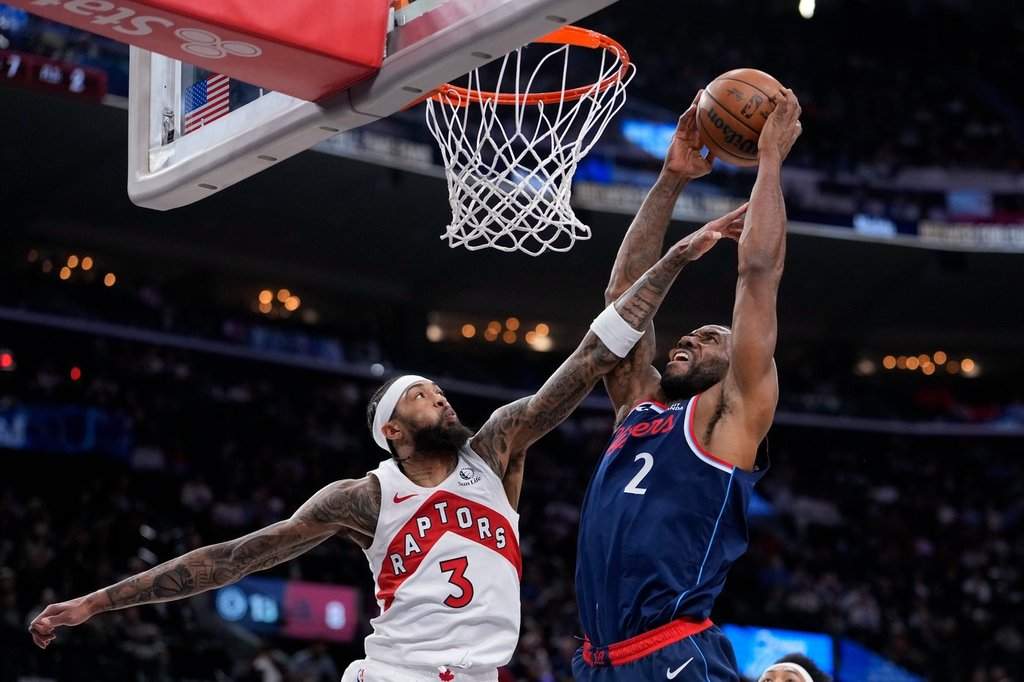
The collective sports media is setting itself up for another massive failure in analysis, predictably blinded by the cheap high of nostalgia. The news that the Toronto Raptors are reacquiring Kawhi Leonard from the Los Angeles Clippers for a massive haul—Brandon Ingram, Gradey Dick, unprotected first-round picks in 2031 and 2033, a 2027 pick swap, and seconds—has sparked the exact kind of short-sighted celebration we have come to expect from narrative-driven pundits. The consensus is already set: "The Klaw returns to finish the job," "Toronto is a top team in the East again," and "Masai Ujiri does it again."
It is completely wrong.
This is not 2018. The mechanics of the modern NBA cap, the trajectory of Toronto’s current roster, and the stark reality of aging archetypes make this trade an unmitigated disaster for the Raptors. Paying a 35-year-old forward a projected $126 million max extension over the next two seasons while mortgaging drafts into the next decade is front-office malpractice masquerading as ambition.
The Myth of the 2019 Blueprint
To understand why this move fails, you have to look closely at the math behind the 2019 championship run. When Toronto traded for Leonard the first time, they surrendered DeMar DeRozan, Jakob Poeltl, and a highly protected 2019 first-round pick. They did not mortgage their future; they cashed in a redundant asset for a top-three player in his absolute physical prime.
More importantly, that 2018-19 Raptors roster was a loaded, veteran-heavy ecosystem designed to support a high-maintenance superstar. It featured prime Kyle Lowry, prime Pascal Siakam, Marc Gasol, Serge Ibaka, and Danny Green. It was a turnkey championship machine that just needed a closer.
Look at what Toronto is trotting out now. This team is built around Scottie Barnes, RJ Barrett, Immanuel Quickley, and rookies. By inserting Leonard into this timeline, the Raptors are destroying a organic development curve. You are taking the ball out of the hands of your 24-year-old franchise cornerstone, Scottie Barnes, to feed a veteran who requires meticulous load management just to survive a 65-game season.
I have seen organizations blow everything on these types of legacy-chasing trades. The 2013 Brooklyn Nets gave up their entire future for aging stars and spent a decade recovering. The Clippers themselves just spent seven years burning through assets to build around Leonard, resulting in exactly one Western Conference Finals appearance and a string of first-round exits. The fact that Los Angeles owner Steve Ballmer—a man who willingly pays astronomical luxury tax bills—refused to offer Leonard this extension should be a glaring red flag to everyone in Canada. If the richest owner in sports thinks an asset is too toxic to extend, you do not double down and give up unprotected picks to get him.
The Toxic Reality of the Two-Year Max Extension
The financial structure of this deal is where the logic completely unravels. The Raptors are finalizing a two-year max extension that will pay Leonard $60.6 million next season and $65.5 million the year after. Under the strict rules of the current collective bargaining agreement, locking up 35% of your cap space into a player with chronic knee degeneration is catastrophic.
Let us look at the precise basketball mechanics. Leonard had a spectacular 2025-26 regular season, averaging 27.9 points on elite shooting splits. But relying on that production to continue into his age-36 and age-37 seasons is a statistical anomaly. History tells us exactly how wing defenders with heavy injury histories age. They do not fade gracefully; they fall off a cliff.
Imagine a scenario where Leonard misses 30 games next season—a highly probable outcome given that he has reached the 65-game mark just twice since 2019. The Raptors will find themselves trapped in the middle of the Eastern Conference standings, not bad enough to secure a top lottery pick, but completely incapable of competing with the elite tiers of the conference.
Even worse, look at the asset cost. Sending unprotected first-round picks in 2031 and 2033 to Los Angeles is an astronomical gamble. By the time those picks convey, Leonard will be over 40 years old and long retired. Scottie Barnes will be entering his mid-30s. If this short-term window fails to yield a championship—and let us be brutally honest, it will not—the Raptors will be handing top-five draft picks to the Clippers while their own franchise sits in structural ruin.
Dismantling the Consensus
The mainstream analysis surrounding this trade centers on a few flawed premises that need to be dismantled immediately.
- Flawed Premise 1: "Toronto needed a proven closer to elevate their young core."
- The Reality: Elevating a young core requires giving them high-leverage possessions in tight games. Shoving Leonard into the crunch-time offense means Scottie Barnes and Immanuel Quickley become glorified spectators. You do not develop a championship identity by outsourcing your clutch production to a short-term rental.
- Flawed Premise 2: "Kawhi’s defense makes Toronto an elite stopping unit."
- The Reality: The version of Leonard who locked down prime perimeter stars in 2019 no longer exists. While he remains an incredibly smart, heavy-handed defender, he preserves his energy for the offensive end during the regular season. He cannot carry a defense for 35 minutes a night anymore without breaking down entirely.
- Flawed Premise 3: "Brandon Ingram was a bad fit anyway, so the trade is a net positive."
- The Reality: Ingram may have had his limitations, but his timeline aligned far better with the roster, and his contract did not come with the existential risk of a $126 million post-35 commitment. Losing Gradey Dick also strips the roster of cheap, scalable perimeter gravity that this team desperately needs.
The Uncomfortable Truth
The real reason this trade happened is not basketball synergy; it is a desperate attempt by the front office to recapture a feeling. The 2019 title is the greatest moment in franchise history, but trying to recreate it through nostalgia is a symptom of structural stagnation.
The Raptors are trading tangible, long-term building blocks for the ghost of an era that ended seven years ago. The Clippers were desperate to enter a reboot mode and escape the looming financial penalties of the salary cap's second apron. Toronto willingly threw them a lifeline, taking on all the risk, absorbing an immovable contract, and giving up unprotected draft collateral that will haunt the franchise well into the next decade.
This is not a masterstroke. It is a terrifying gamble on a 35-year-old body that has consistently failed to hold up under the rigors of the postseason. When the initial wave of nostalgia wears off, and the reality of load management, restricted cap space, and empty draft cabinets sets in, Toronto will realize they didn't reacquire a savior. They bought the decline.