History happens fast. Sometimes, it leaves you gasping for air.
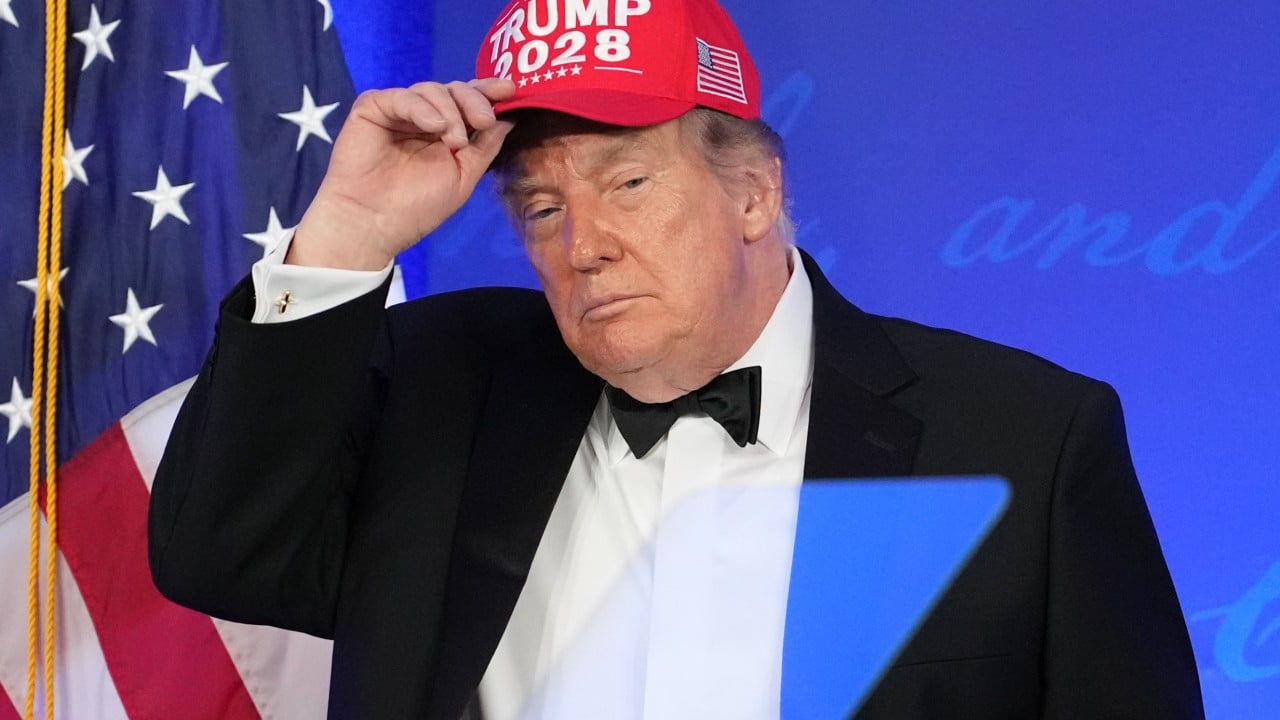
Three months after a bullet grazed his ear in Butler, Pennsylvania, Donald Trump stood before a scaled-back crowd at the Alfred E. Smith Memorial Foundation Dinner in New York City. The atmosphere wasn't your typical high-gloss political gala. Security was tighter. The room felt smaller. The tension was palpable. Yet, true to his branding, Trump delivered a speech that leaned heavily on humor, self-deprecation, and sharp political jabs.
If you missed the deeper significance of that October night, you missed a masterclass in modern political survival. Everyone talks about the assassination attempts, but nobody talks about the psychological grit required to walk back into a traditional New York ballroom and crack jokes about your own near-death experience.
Let's break down what actually happened at that gala, why the venue looked different, and what it tells us about the current political climate.
The Reality of a Scaled-Back Al Smith Dinner
Tradition matters in elite New York circles. The Al Smith Dinner usually packs a grand ballroom with thousands of movers, shakers, bishops, donors, and journalists in black tie. It is an annual ritual where presidential candidates trade barbs, raise millions for Catholic charities, and pretend to like each other for a few hours.
Things changed in late 2024. Organizers adjusted the scale. Security protocols shifted dramatically following the July security failure in Pennsylvania and a second thwarted threat in September at his Florida golf club.
The room shrank. The guest list tightened.
When Trump took the dais, he didn't shy away from the elephant in the room. He leaned straight into it. He joked about the Secret Service, the media, and his own miraculous survival. It takes a specific kind of internal wiring to stand on a stage in Manhattan—a city that votes overwhelmingly against you—and own the room after staring down a sniper's barrel just ninety days prior.
Critics called it tone-deaf. Supporters called it fearless.
Honestly, it was vintage Trump. He treats public humiliation and public danger the exact same way: by doubling down.
Humor as Armor
Politics is brutal. Modern campaigning is worse.
When you look at how candidates handle trauma, most crawl into a shell or rely strictly on vetted, emotional talking points designed to draw sympathy. Trump went the opposite direction. He used stand-up comedy structure.
He mocked the Democratic absence—Kamala Harris famously skipped the physical dinner to campaign in battleground states, opting instead for a pre-recorded video message. Trump didn't waste the opening.
"If you really wanted to have me keep speaking, you should have just gone to Pennsylvania," he quipped to the crowd.
Silence for a microsecond. Then gasps. Then laughter.
That is how you control a hostile room. You take your worst trauma and turn it into a punchline before your opponents can weaponize it against you. It strips the fear away.
The Subtext Behind the Laughter
Beneath the jokes about inflation, New York politicians, and media bias, the October gala served a strategic purpose. It proved durability.
In politics, perception is reality. If a candidate looks weak, hesitant, or scared to campaign in blue strongholds, donors panic and momentum dies. By showing up in Manhattan, shaking hands, and standing at a podium without bulletproof glass enclosing the stage, Trump sent an immediate, non-verbal signal to the electorate.
He was still standing. The show was going on.
You have to look at the timeline. July 13 changed the trajectory of the entire election cycle. By October, the initial shock had worn off, but the physical and mental toll remained. Most people would take a month off after dodging an assassin. Trump kept rallying, kept doing interviews, and kept showing up at high-profile traditional events like the Al Smith Dinner.
What We Can Learn About Modern Campaign Resilience
If you study how high-stakes leaders handle crises, a clear pattern emerges. Preparation beats panic. Control the narrative or the narrative controls you.
- Own your vulnerabilities immediately: Do not let opponents define your tragedies or your mistakes. Bring them up first.
- Never abandon high-risk environments: Avoiding tough crowds signals weakness to undecided voters who respect raw nerve.
- Keep the message simple: When chaos surrounds you, focus your communication on everyday pain points like grocery prices and economic security.
The media coverage at the time focused heavily on the optics of a scaled-back guest list and the absence of a sitting vice president in the room. They missed the core takeaway. The event wasn't about charity roast jokes or polite bipartisan applause. It was a stress test for a candidate who had already survived the unthinkable.
When the stakes are high, execution matters more than comfort. Trump understood the assignment that night in New York. He didn't ask for pity. He demanded attention.
And as usual, he got it.