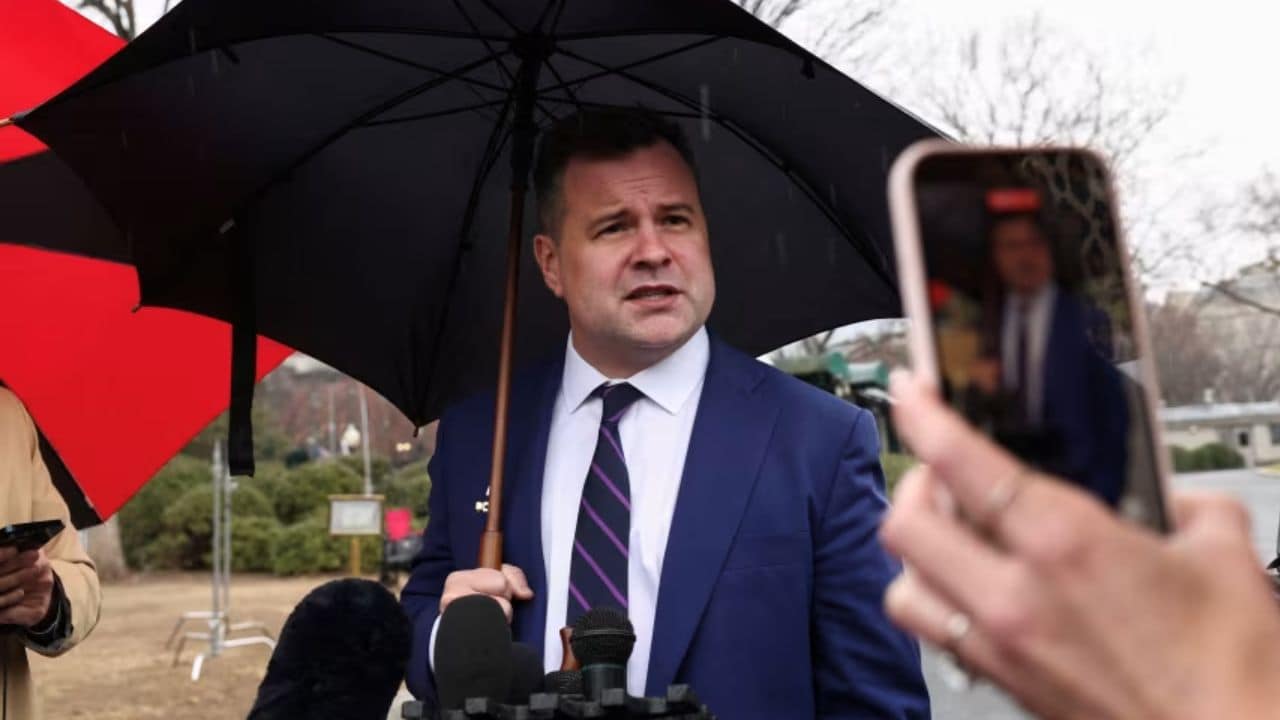
Donald Trump just dropped a political bombshell that has Washington reeling. He named Bill Pulte, the current director of the Federal Housing Finance Agency (FHFA), as the new acting Director of National Intelligence (DNI). Pulte is stepping in to replace Tulsi Gabbard, who suddenly resigned after her husband's recent cancer diagnosis.
If you are trying to make sense of this move, you aren't alone. On paper, it looks bizarre. Moving a guy from housing finance to running the nation's sprawling spy network seems like a stretch. Critics are already screaming about his lack of traditional national security experience. Recently making headlines in this space: Why the Panic Over Mail Voting Rules Completely Misses the Point.
But if you look closely at how this administration operates, the appointment makes perfect sense. This isn't a random choice. It is a highly strategic play that signals exactly what the White House wants from its intelligence agencies moving forward.
The Crossover Nobody Saw Coming
Pulte is only 38 years old. He's the heir to a massive home construction fortune, though he no longer sits on the company's board. He entered the administration in March 2025 when the Senate confirmed him to lead the FHFA. Since then, he has expanded his footprint by chairing mortgage giants Fannie Mae and Freddie Mac, overseeing over $10 trillion in assets. More insights on this are explored by TIME.
Trump praised Pulte on Truth Social, noting he has "deep experience managing the most sensitive matters in America." Trump also confirmed that Pulte won't be leaving his housing post. He's doing double duty. He will manage the mortgage markets and the nation's deepest secrets simultaneously.
This dual role is incredibly unusual. Historically, FHFA directors keep a very low profile. They focus on interest rates, loan pricing, and market liquidity. Pulte didn't do that. He turned his office into a megaphone, regularly attacking the president's perceived enemies.
Weaponization or Reform
The real story here isn't about mortgages. It is about how Pulte used his power at the FHFA. During his tenure, he aggressively pushed for mortgage fraud investigations against high-profile critics of the administration.
For instance, Pulte leveled serious mortgage fraud allegations against Federal Reserve Governor Lisa Cook, who flatly denied the claims. He also frequently targeted Federal Reserve Chair Jerome Powell for not cutting interest rates fast enough to match Trump's economic goals.
This track record explains why Democrats are furious about his new assignment. Senator Mark Warner, the top Democrat on the Senate Intelligence Committee, argued that the appointment "speaks volumes" about what the president expects from the intelligence community. Warner stated that instead of picking a traditional national security professional, Trump chose someone who has shown an eagerness to use government authority for political retribution. Senate Minority Leader Chuck Schumer went even further, calling Pulte a "partisan thug" who lacks the basic qualifications to keep the country safe.
A Massive Restructuring Already Underway
Pulte isn't inheriting a stable, quiet agency. Tulsi Gabbard spent her time as DNI executing a radical overhaul known as the "ODNI 2.0" initiative.
Over the last year, the Office of the Director of National Intelligence slashed or reassigned roughly 40% of its staff. Multiple offices and analytical functions were consolidated. The administration argued this was necessary to eliminate bureaucratic bloat and streamline operations. Critics countered that it hollowed out the institutional knowledge of the intelligence community, intentionally shifting power away from centralized oversight and back toward individual, standalone agencies.
Gabbard's tenure was chaotic for other reasons too. Reports indicate she was frequently sidelined during major foreign policy crises, such as the administration's aggressive posturing against Venezuela and Iran. Trump had reportedly been asking cabinet members whether he should replace her as early as April. Her formal departure date is set for June 30, meaning Pulte will officially take the reins this summer.
The Battle on Capitol Hill
Because Trump named Pulte as an acting director, he can take over the job immediately without waiting for a Senate vote. But if the administration wants to make his appointment permanent, he faces a brutal confirmation battle.
Even Republicans are showing signs of discomfort. Senate Majority Leader John Thune didn't mince words when asked about the move. He told reporters that the country doesn't need a weaponized DNI, emphasizing that the position requires professionals. Thune warned that Pulte would face a "lengthy road ahead of him" if he seeks permanent confirmation.
Remember, Pulte was confirmed to his housing post in 2025 by a relatively tight 56-43 vote. While three Democrats crossed the aisle to support him then, a national security confirmation is a completely different beast.
What This Means for the Intelligence Community
If you want to understand the immediate impact of this shakeup, watch how Pulte handles his dual responsibilities. Balancing the stabilization of the housing market with daily top-secret briefings on global threats is practically impossible over the long term.
Expect Pulte to focus heavily on internal investigations within the intelligence agencies. His history at the FHFA suggests he will prioritize hunting down leakers and targeting bureaucrats deemed disloyal to the executive branch.
For everyday citizens, this transition matters because a distracted or highly politicized intelligence community can create blind spots in national defense. The immediate next step to watch is whether Trump formally sends Pulte's nomination to the Senate for a permanent role, or if he leaves him in an acting capacity indefinitely to bypass a hostile confirmation hearing altogether. Keep a close eye on the Senate Intelligence Committee's public statements over the next two weeks for the definitive signal on which path the White House will choose.


