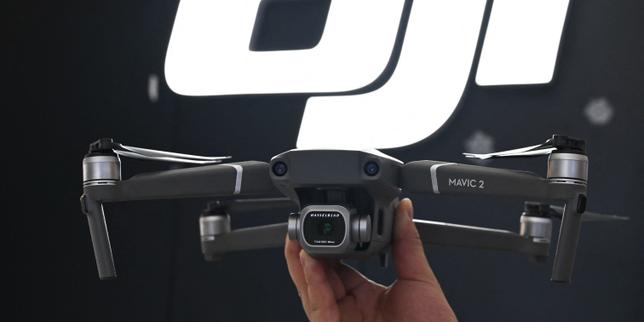
Everybody in Washington loves a blunt instrument. Slap a heavy tariff on a foreign adversary, wave the flag, and wait for domestic manufacturing to magically sprout from the concrete like daisies. That is the lazy consensus driving the obsession with blanketing Chinese imports in punitive duties. The narrative sounds neat on a cable news graphic: hit Beijing with a punishing 100 percent tax on unmanned aerial vehicles, protect domestic supply chains, and secure the skies.
It is a fairy tale. Learn more on a connected subject: this related article.
I have watched companies burn millions trying to onshore low-margin hardware assembly while ignoring the actual battlefield. Tariffs do not build factories. They build bureaucratic loopholes, inflate costs for domestic commercial operators, and gift the high-value software ecosystems to the very entities lawmakers swear they are starving. If you think slapping a steep import tax on commercial quadcopters solves national security, you misunderstand the mechanics of modern supply chains entirely.
The Hardware Commodity Fallacy
Let us define what a modern drone actually is. It is not an aerospace marvel built by riveted aluminum and union labor. It is a flying circuit board wrapped in injection-molded plastic, running open-source flight controller firmware, powered by lithium-polymer cells. Additional journalism by Financial Times highlights related views on this issue.
When politicians talk about dominating manufacturing, they picture a massive assembly line turning out airframes. That is yesterday's war. The hardware is a commodity. It is cheap to stamp out, easy to replicate, and impossible to protect long-term via border taxes.
When you impose a 100 percent levy on imported platforms, you do not force a renaissance of domestic hardware engineering. You simply double the cost for the roof inspector, the search-and-rescue team, and the agricultural surveyor who rely on affordable, reliable off-the-shelf tools to do their jobs. You tax the domestic end-user while leaving the structural root cause completely untouched.
China does not win the drone war because its plastic is cheaper. It wins because its component clusters, sensor integration pipelines, and component ecosystems are deeply entrenched. A tariff treats a systemic ecosystem dependency like a simple pricing dispute.
The Software Trap Nobody Wants to Talk About
Here is the dirty secret the protectionists leave out of their press releases. You can ban the physical airframe or price it out of the market with aggressive trade barriers, but data does not care about customs checkpoints.
The real value of these systems lives in the telemetry, the computer vision models, the mapping software, and the cloud infrastructure processing the video feeds. If a domestic enterprise flies a quadcopter—regardless of where the plastic shell was bolted together—where does the data go? How are the flight logs parsed? Which server farm updates the waypoint navigation?
Imagine a scenario where every single physical frame is stamped Made in America, yet the underlying flight libraries, sensor fusion algorithms, and ground control station apps rely on foreign digital infrastructure or overseas update servers. You have achieved nothing. You have successfully paid double for the hardware while keeping the digital umbilical cord firmly attached to the East.
Tariffs protect the shell and surrender the brain. It is the economic equivalent of locking your front door while leaving the windows wide open and the Wi-Fi password taped to the glass.
The Bureaucratic Shell Game
Trade barriers invite circumvention. Economics hates a vacuum, and capital always finds the path of least resistance.
The moment you penalize direct shipments from Shenzhen, the supply chain simply shifts geography. Subassemblies cross borders through secondary nations. Unfinished kits are routed through Southeast Asia or Mexico, where minor final-stage modifications magically grant them a new country of origin certificate.
I have seen supply chain executives spend more time engineering legal fictions for customs compliance than they ever spent improving product safety or battery efficiency. The tariff creates an entire parasitic industry of trade lawyers, shell companies, and documentation middlemen. It adds friction without adding value. It rewards regulatory arbitrage over engineering excellence.
Meanwhile, domestic startups hoping for a protective moat find themselves trapped in a different kind of nightmare. They cannot source specialized microcontrollers or high-density batteries domestically because those supply chains do not exist on American soil. They need to import the exact raw inputs that the broader tariff regime penalizes. You cannot build a competitive local industry by choking off the very materials it requires to assemble its prototypes.
The Real Cost of Protectionism
Let us look at the casualty list of this policy: the small business owner.
Big defense contractors do not care about commercial drone tariffs. They operate in cost-plus procurement universes where every dollar spent is a dollar multiplied by a guaranteed profit margin. They build bespoke, million-dollar systems for government agencies and bill the taxpayer.
The collateral damage falls squarely on the civilian market. Think of the small-scale construction firm mapping a subdivision, the local police department trying to map a crash site on a tight municipal budget, or the cinematic production crew capturing aerial shots. These operators run on thin margins. When you double the acquisition cost of their primary tool, you do not spark an American manufacturing boom. You cripple domestic productivity.
You force businesses to sweat old assets, delay technological upgrades, or turn to unvetted, insecure gray-market alternatives that bypass regulatory oversight entirely. By pricing out safe, mainstream commercial gear, you drive the market underground into the exact risk profiles you claim to be mitigating.
What Winning Actually Looks Like
If the goal is genuine technological sovereignty, the playbook needs to be completely rewritten. Stop treating this as a trade war to be fought with customs duties and start treating it as an industrial capacity race to be won through engineering and capital deployment.
First, invest aggressively in domestic component manufacturing, particularly in semiconductor fabrication, advanced battery chemistry, and secure micro-electro-mechanical systems. You cannot manufacture advanced hardware without a localized ecosystem for chips and power cells. Tariffs without foundational subsidies are just a tax on your own population.
Second, shift the regulatory focus from hardware origin to software verification. Establish zero-trust architectures for all commercial aerial platforms operating in sensitive airspace. Audit the codebases, mandate local data storage, and restrict cloud telemetry pipelines. If a device cannot pass rigorous digital hygiene standards, ban its operation—regardless of whether it was built in Ohio or Guangdong. Security is a function of cryptographic verification, not customs stamps.
Third, streamline the procurement pipelines for dual-use tech. The current federal acquisition process is so glacial and risk-averse that by the time a domestic startup clears bureaucratic clearance, their technology is obsolete. Innovators do not need tariff walls; they need procurement velocity. They need government contracts awarded on performance and speed, not compliance checklists and political lobbying power.
The obsession with border taxes is a comforting illusion. It gives politicians a simple villain to punch and a simple lever to pull, projecting strength while changing nothing of consequence underneath the hood.
The sky belongs to whoever builds the smarter system, not whoever builds the highest wall. Stop taxing the tools of the modern economy and start building the infrastructure of the future.