Global diplomacy rarely produces genuine shockwaves, but Ursula von der Leyen managed it effortlessly. When the European Commission president stood up and floated a concept previously reserved for European aspirants—inviting Canada to become the very first associate member of the bloc—Washington heard alarm bells ringing. Donald Trump did not just object. He exploded.
To understand why the White House reacted with fury, you have to look past the political theatre. For decades, North American trade lived in a predictable, heavily integrated bubble. When that bubble started bursting under aggressive protectionist policies and relentless tariff threats, Ottawa started looking for exit doors. Enter Brussels. The prospect of Canada anchoring itself closer to the European Union threatens to upend decades of American economic dominance in the Western Hemisphere. Trump called the proposal laughable. Behind closed doors, his trade advisers knew it was anything but funny.
Breaking Down the European Union Offer to Canada
European leaders didn't pull this idea out of thin air. The relationship between Ottawa and Brussels has been evolving since the Comprehensive Economic and Trade Agreement opened doors years ago. But von der Leyen wanted to push past basic tariff reductions. She proposed an alliance for the future.
What did that actually entail? Intelligent manufacturing partnerships, joint technology pacts, defense industrial integration, and joint stewardship of the Arctic. Critical minerals, battery supply chains, artificial intelligence governance, and cyber security protocols formed the core of the pitch. European officials framed it as a mutual strengthening exercise. They insisted it was not built against anyone else. Nobody in Washington believed that line for a second.
When you tie Canadian critical mineral reserves and Arctic positioning directly into European defense and tech frameworks, you fundamentally alter North American supply chains. Canada supplies raw materials that fuel American manufacturing. If those resources flow eastward under preferential strategic agreements, American industries face an immediate pinch. That realization sent shockwaves through the American political establishment.
The White House Response and Tariff Threats
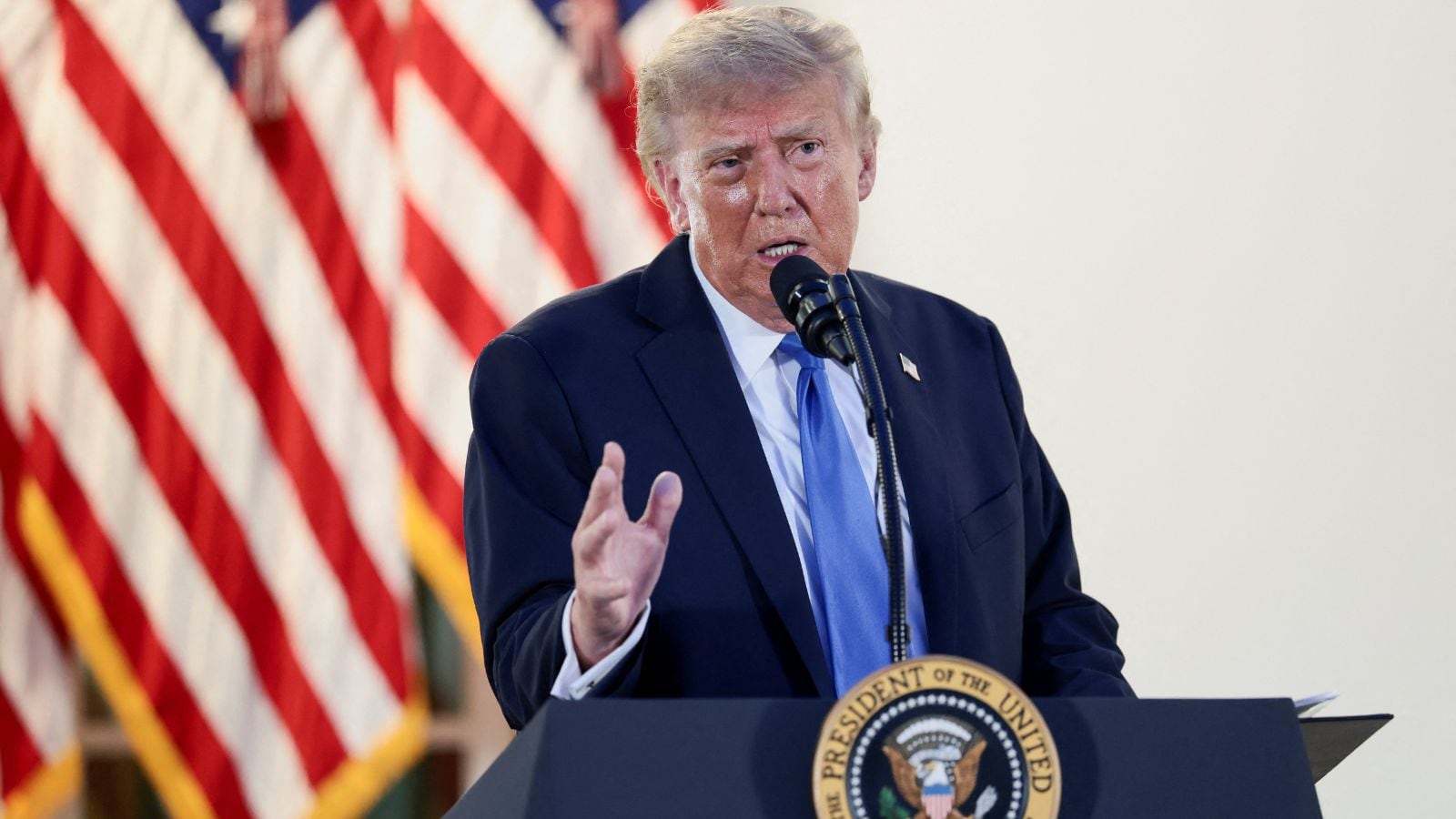
Donald Trump wasted zero time responding. During campaign-style rallies and official press briefings, the American president dismissed the EU overture with characteristic bluntness. He called the membership concept laughable and labeled Canada a terrible trade partner, resurrecting old grievances about trade deficits and border security.
Then came the threat. Trump made it clear that if the European Union proceeded with what he deemed a hostile act, he would retaliate. Heavy tariffs on European exports or an outright halt to transatlantic trade were put squarely on the table. He leaned into classic hardball tactics. He reminded European leaders that American military protection and consumer markets carry an invisible price tag.
You cannot overstate the weight of those threats. The European Union trades billions of dollars worth of goods, automobiles, machinery, and pharmaceuticals with the United States every single day. European economies are already grappling with sluggish growth, energy transition pains, and internal political friction. A sudden wall of American tariffs would devastate key industrial sectors in Germany, France, and beyond. Trump knew exactly which buttons to push to make European capitals sweat.
Why Canada Needed an Escape Hatch
Ottawa did not stumble into European arms by accident. Years of punishing steel and aluminum tariffs, combined with relentless talk from Washington about annexation and economic subjugation, poisoned traditional cross-border goodwill. Prime Minister Mark Carney and Canadian officials watched as traditional rules-based trade gave way to raw transactional coercion.
When your largest trading partner starts treating you like an economic punching bag, you diversify. It is basic survival logic. The European Union represents Canada's second-largest global trading partner, accounting for roughly $178 billion in bilateral economic activity. By leaning into European markets, Canada sought to insulate its economy from the whims of a volatile southern neighbor.
Canadian leadership framed the initiative as a bold assertion of national sovereignty. Domestic voters, weary of endless trade wars and economic anxiety, largely supported the pivot. For a middle power caught between a superpower neighbor turning inward and a fractured global order, finding new economic anchors is not optional. It is essential for survival.
The Diplomatic Retreat and European Cold Feet
Geopolitical ambition rarely survives contact with hard economic reality. Within weeks of the initial announcement, the grand vision of Canadian associate membership began to fray as several European leaders quietly backtracked. European leaders realized they were staring down the barrel of a devastating trade war with Donald Trump at a time when European unity was already stretched thin.
Several European capitals quietly pushed back behind closed doors. Diplomats began backtracking on the specific terminology. The phrase associate member started disappearing from joint draft statements, replaced by vaguer language about enhanced strategic partnerships and strengthened cooperation. European leaders are pragmatic above all else. They wanted to signal solidarity with Ottawa without giving Donald Trump the exact pretext he needed to launch a transatlantic tariff war.
This retreat exposed the limits of middle power diplomacy. While Europe genuinely wants secure access to Canadian critical minerals and Arctic trade routes, European leaders are not willing to sacrifice their own export-driven economies to bail out Canadian trade policy. The underlying tension remains unresolved, but the immediate crisis of a formal EU membership track has been successfully defused.
The Long-Term Fallout for North American Trade
Even if the formal associate membership label is watered down, the damage to traditional North American alignment is permanent. The mere fact that Canada seriously entertained deep integration with Europe signals a psychological shift in Ottawa. The era of unquestioned continental integration is over.
American businesses are already counting the costs. Supply chains built over decades on the assumption of friction-free borders now face chronic political uncertainty. Companies dealing in steel, aluminum, automotive components, and energy must constantly game out worst-case scenarios where sudden tariff spikes redraw the map overnight.
Tariffs are not just policy tools. They are taxes paid by domestic consumers and businesses, driving up inflation and distorting efficient markets. When political egos dictate trade flows, everyone loses efficiency.
If you run a business or manage investments exposed to cross-border trade, stop assuming things will return to normal. Normal is gone. Diversification is no longer a boardroom buzzword; it is the baseline requirement for staying solvent in a fractured world. Keep a close eye on bilateral trade agreements outside North America, monitor critical mineral pacts, and build redundancy into your supply lines before the next political storm hits.

