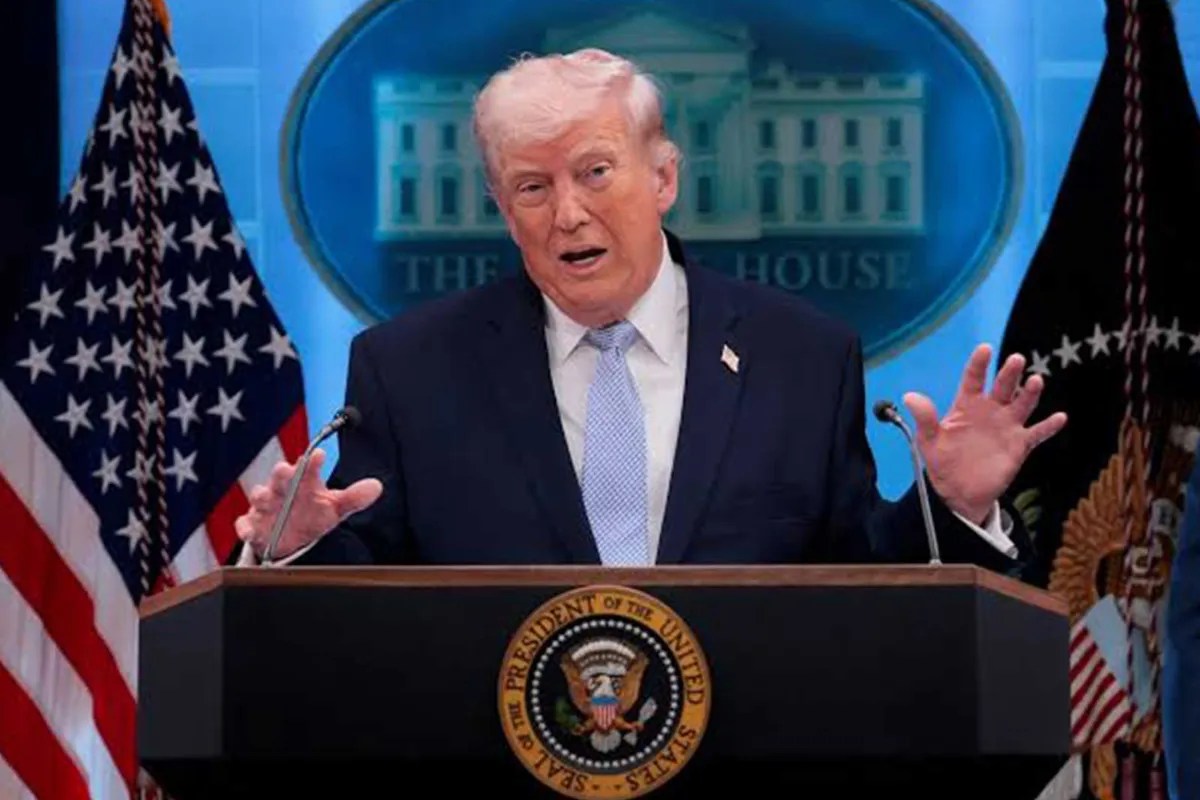
The mainstream political press is chasing its own tail again. They see Donald Trump’s latest declaration—proclaiming "no more deals with Iran" and labeling its leadership as "sick people"—as nothing more than a standard flashpoint of aggressive foreign policy. They paint it as a ideological crusade or a reckless emotional outburst.
They are entirely missing the mechanics of global leverage.
International relations are not a high school debate. They are an aggressive, non-linear market where rhetoric acts as a pricing mechanism. When a leader publicly shuts the door on a deal, the superficial consensus screams "escalation." The reality? It is a calculated liquidity squeeze on geopolitical options. By declaring the current regime entirely unworkable, the objective is not to avoid a deal forever. The objective is to artificially devalue the other side's premium until they are forced to sell their leverage at a steep discount.
But there is a massive flaw in this playbook that traditional analysts completely overlook.
The Illusion of the Absolute No
Every surface-level political pundit asks the same flawed question: What happens when diplomacy fails?
They assume a declaration like "no more deals" is a permanent state of affairs. I have spent decades analyzing macro-risk and corporate restructuring. When an activist investor walks away from a toxic board, they do not do it because they hate making money. They do it to crash the stock of the existing management.
Trump's rhetoric operates on the exact same framework. It is a classic distressed-asset play.
- The Baseline Fallacy: Mainstream media treats foreign policy like a static contract. They think a treaty is the goal.
- The Valuation Metric: In reality, the goal is degrading the opponent's domestic stability until their negotiating leverage hits zero.
- The Risk Factor: The danger isn't that this stance leads to war. The danger is that it creates a vacuum that decentralized actors fill.
When you tell a cornered adversary that they have zero path to normalization, you remove their incentive to behave like a rational state. You do not domesticate them; you force them to diversify their portfolio of chaos.
Why Maximum Pressure Creates a Black Market Premium
Let us look at the hard numbers of economic isolation. The standard consensus is that hyper-sanctions and rhetorical warfare starve a regime into submission. It sounds logical on a whiteboard.
It fails miserably in practice.
When you completely cut an economy off from legitimate global banking networks, you do not kill the trade flows. You merely shift the margins to the underworld. I have watched supply chains adapt to sudden regulatory blocks overnight. The volume rarely drops to zero; the premium just skyrockets.
+----------------------------------------+
|       THE SANCTIONS SQUEEZE CYCLE      |
+----------------------------------------+
| Legitimate Trade Restriced             |
|   ---> Sovereign Risk Rises            |
|   ---> Shadow Banking Infrastructure   |
|   ---> Entrenched Elite Monopolies     |
+----------------------------------------+
| Outcome: Dictatorships grow tighter    |
| control over the scarce resources.     |
+----------------------------------------+
When legitimate companies pull out of a sanctioned territory, who steps in? State-backed entities from rival superpowers who do not clear transactions in US dollars. By forcing a total embargo, you inadvertently accelerate the development of alternative financial rails. You are not isolating the target; you are subsidizing the creation of an anti-dollar network.
Dismantling the "Sick People" Premise
Calling adversarial leaders "sick" or irrational is a calculated rhetorical tactic designed for domestic consumption, but analyzing foreign policy through a psychological lens is amateur hour.
Governments do not act based on psychological health. They act based on survival optimization.
The Iranian state apparatus is not acting out of madness. They are managing a complex web of internal factionalism, regional proxy commitments, and systemic economic deficits. If you treat your opponent as a caricature of madness, your strategic models will output garbage. You cannot predict the moves of an actor if your primary assumption is that they lack a logical framework. Every provocative move they make—from enrichment thresholds to maritime posturing—is a calculated data point meant to test Western risk tolerance.
The Hidden Cost of Walking Away
Every contrarian stance requires admitting its own downside. The primary vulnerability of refusing to negotiate is that you lose visibility.
Diplomacy is not about liking your counterparty. It is a cheap intelligence-gathering mechanism. When you have active channels, you have data. You know who answers the phone. You know which factions are ascendant and which are losing ground.
When you shut down the communication loop entirely:
- Information Asymmetry Rises: Your intelligence agencies are forced to rely purely on signals and satellite data rather than human intent.
- Accidental Escalation Risks Explode: Without a direct redline phone, a simple miscalculation by a low-level naval commander in the Strait of Hormuz can trigger a regional conflict that neither capital actually wanted.
- Allied Fragmentation Accelerates: Middle-tier powers who rely on regional stability will stop waiting for Washington's direction. They will begin cutting their own back-channel security deals behind your back.
Shift Your Framework
Stop asking whether a deal is good or bad. Start looking at the structural alternatives.
If the goal is to permanently alter the behavior of a hostile nation, the strategy cannot rely on a series of public rejections. It requires creating a structural reality where cooperation yields higher survival utility for the regime than provocation.
As long as the Western strategy oscillates between desperate accommodation and absolute, theatrical refusal, the underlying structural instability will continue to compound. The real players are not watching the press conferences. They are watching the capital flows, the illicit shipping transponders, and the regional proxy balance sheets. Everything else is just noise designed to keep the commentators talking while the real leverage shifts elsewhere.