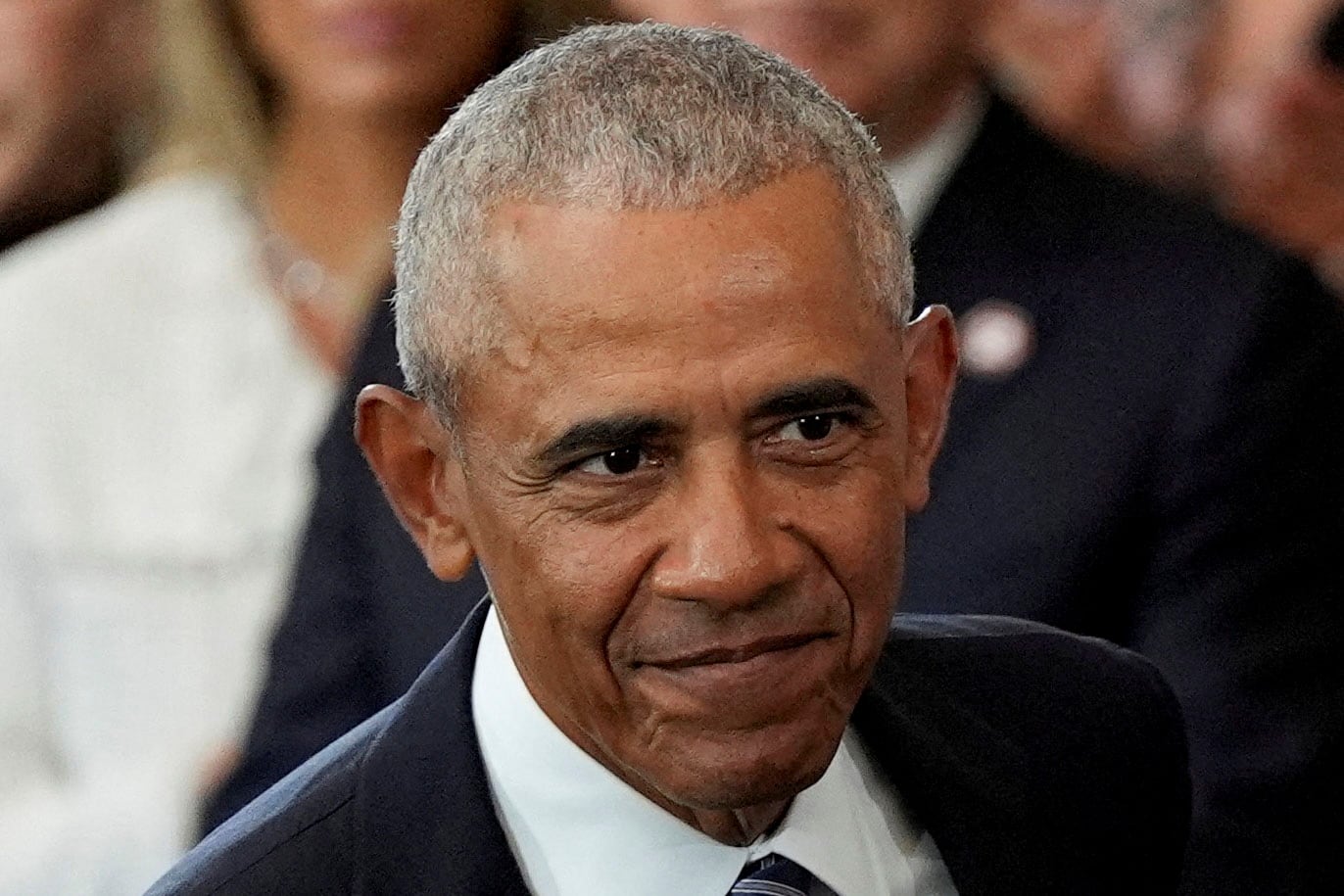
Donald Trump just signed a deal with Iran. If you feel a sudden sense of déjà vu, you aren't alone. Years after slamming Barack Obama's 2015 Joint Comprehensive Plan of Action (JCPOA) as the worst deal in history, Trump has penned his own agreement with Tehran alongside Iranian President Masoud Pezeshkian.
Predictably, Vice President JD Vance and Washington surrogates are out in force claiming this new agreement goes much further than Obama ever did. Critics say Trump just handed Iran front-loaded economic relief while getting far fewer hard guarantees. Don't forget to check out our recent post on this related article.
The real question isn't who made the better deal. The real issue is that these two agreements are built on completely different planets. One was a dense, multilateral bureaucratic masterpiece designed to contain a nuclear threat over decades. The other is a lightning-fast, two-page bilateral ceasefire designed to stop an active war, kick-start oil flows, and kick the massive technical can down the road.
If you want to understand how the dynamic in the Middle East actually changed this week, you have to look past the political spin and dissect how these two approaches actually function. If you want more about the history of this, NPR offers an in-depth summary.
A Massive Technical Treaty Versus a Two Page Roadmap
Let's start with the sheer physical scope of what was signed. The Obama administration's JCPOA was an exhausting 159-page document. It featured five highly technical annexes detailing exactly how many centrifuges Iran could spin, where they could spin them, and the exact gram-counts of allowed material. It took years of agonizing negotiations involving the world's major powers, including China, Russia, France, Germany, and the UK.
Trump's new memorandum of understanding (MoU), physically signed in Versailles, is less than two pages long. It contains just 14 bullet points.
It isn't a final nuclear treaty. It is a roadmap.
This short document essentially establishes a 60-day ceasefire to the military hostilities that erupted between the U.S., Israel, and Iran earlier this year. It reopens the vital Strait of Hormuz to stop a global energy crisis and creates a ticking 60-day clock for diplomats to try and figure out the actual nuclear details.
The Battle Over Uranium Stockpiles
The core of the political fight comes down to what happens to Iran's nuclear material. Back in 2015, Obama's team faced an Iran that had built a massive nuclear infrastructure but hadn't yet enriched uranium to near-weapons grade. The JCPOA forced Iran to cap its enrichment at a low 3.67% for 15 years and shrink its total stockpile down to a symbolic amount.
Today, the situation is vastly different and much more dangerous. Since Trump pulled out of the original deal in 2018, Iran didn't just sit on its hands. They spun advanced centrifuges and aggressively pushed their uranium enrichment to 60% purity. That's a hair's breadth away from the 90% needed for a nuclear bomb.
The Trump administration argues that they've already degraded Iran's nuclear infrastructure through recent military operations. Their pitch is direct: "We broke your toys, now we're going to make sure you destroy the leftovers."
The new MoU notes that both sides agree to resolve the "disposition of stockpiled enriched material." It hints at an agreement to downblend that near-bomb-grade uranium on-site under International Atomic Energy Agency (IAEA) supervision. But the document lacks numbers. There are no centrifuge caps, no facility restrictions, and no explicit mandates to ship the material out of the country. All of that has to be fought over during the next two months.
Cash Up Front Versus Phased Sanctions Relief
How the money flows is where these two strategies wildly diverge.
Obama faced intense criticism for unfreezing billions in Iranian assets and returning $1.3 billion in older frozen funds with interest. But under the JCPOA, that economic relief didn't happen overnight. It was phased in gradually, tied directly to the IAEA verifying that Iran had physically dismantled its centrifuges and poured concrete into its nuclear reactors.
Trump's strategy flips the timeline completely. It front-loads the economic benefits for Tehran. The new agreement grants immediate U.S. waivers for Iran to export its oil and petroleum products. It also promises to fully unlock restricted Iranian funds once implementation begins, and vaguely references a massive $300 billion economic development and reconstruction fund backed by the U.S. and regional allies.
Iran hawks are already furious, arguing that Trump is giving away his primary leverage before Iran actually destroys a single ounce of enriched uranium. The administration's gamble is that immediate economic oxygen will induce a battered Iranian regime to sign a permanent, highly restrictive deal before the 60-day clock runs out.
Missing Missiles and Shifting Sunsets
When Obama signed the JCPOA, he deliberately kept it focused strictly on the nuclear file. He knew that trying to force Iran to give up its ballistic missiles or stop funding proxy groups in the region would tank the entire deal. The right took him to task for that omission for years.
Ironically, Trump's new MoU doesn't mention ballistic missiles either. Trump casually dismissed the omission to reporters, stating it's fine for Iran to hold missiles proportional to its neighbors.
The biggest structural shift is the lack of sunset clauses. The 2015 deal had strict 10- and 15-year expiration dates on certain nuclear restrictions, which critics slammed as a countdown clock to an Iranian bomb. Because Trump's new document is an open-ended framework for negotiations, it features no sunset clauses. Trump wants permanent restrictions that force Iran to enrich only for non-military purposes forever. Whether a sovereign nation like Iran will ever sign away that right permanently remains highly doubtful.
What Needs to Happen Next
The signing of this MoU stops the immediate threat of a wider war, but the real heavy lifting starts now. To protect your global market assumptions and track where this deal is actually headed, watch these specific indicators over the next month:
- Monitor the IAEA inspectors: Watch for whether inspector teams get immediate, unhindered access to the Natanz and Fordow enrichment facilities to verify the current state of the 60% uranium stockpiles. If Iran delays these visits, the 60-day ceasefire will fall apart rapidly.
- Track the Strait of Hormuz transit data: Commercial shipping volume and maritime insurance rates through the strait need to stabilize immediately. Reopening this corridor is the primary economic win for the West.
- Watch the bilateral diplomatic tracks: Because this is a direct deal between Washington and Tehran, third-party signatories of the old deal like Russia and China are wildcards. Watch how Beijing handles its own oil purchases from Iran under the new U.S. waivers.


