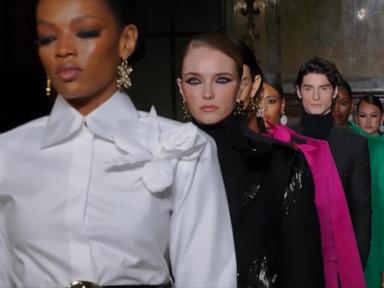
The air inside the press room smelled of burnt coffee, warm lithium batteries, and low-level panic.
Outside, under the cavernous tents of New York Fashion Week, hundreds of thousands of dollars of silk, wool, and heavy velvet were currently sweeping across a polished concrete floor. Inside, buried deep in the bowels of a temporary media bullpen, Elena stared at a screen that felt like it was burning holes straight through her retinas.
She had twelve seconds.
Not a minute. Not an hour. Twelve seconds from the moment a photographer outside hit the wireless transmitter on a Canon body to the precise second Elena's index finger had to click export, upload, and dispatch the image to a global wire service.
To the outside world, looking at sleek galleries on glowing smartphones over morning espresso, fashion week imagery appears like magic. It is instantaneous. It is effortless. A model turns; a coat flares; a collective aesthetic shift happens in real-time. But magic is rarely born of spells. Usually, it is born of exhaustion, wet towels used to cool overheating laptops, and a person sitting in the dark, questioning every life choice that led them to a folding chair in Manhattan at three in the morning.
Consider what happens before the shutter clicks.
The runway is a hostile environment for a camera sensor. Designers spend fortunes engineering a specific mood, which usually translates to plunging the venue into total darkness save for a single, blinding, violet-tinted spotlight that pulses to a techno beat. To a human eye, it is moody. To a digital sensor, it is a nightmare. Highlights blow out into pure, unforgiving white. Shadows crush into impenetrable black. The color temperature shifts from warm amber to sickly fluorescent green in the span of a single heartbeat.
Elena’s fingers moved across her mechanical keyboard with the rhythm of a telegraph operator sending a distress signal.
Crop. Straighten. Lift shadows by half a stop. Pull back the magenta. Watch the skin tones. Don't let the white silk look gray.
She wasn't just editing photos; she was rewriting reality under duress. If she made the coat too bright, the designer's atelier would email her before the model even reached the end of the catwalk to complain that the custom dye job looked washed out. If she left the shadows too deep, the style editors in Milan and Paris would assume the photo was botched and skip over it for the morning broadsheets.
Every single image was a high-stakes negotiation between art and optics.
Across the long folding table, Marco, another senior editor whose eyes were rimmed with the pink exhaustion of a three-day bender, muttered a curse under his breath. His Wi-Fi had dropped. Just as a major house debuted a collection that the entire industry had been waiting six months to see.
That is the invisible terror of the trade. The world sees the gloss. The editors see the spinning wheel of death on a thumbnail load.
"Hotspot," Elena murmured, sliding her phone across the laminate table without taking her eyes off a velvet tuxedo jacket that was refusing to hold its texture under the compressed JPEG standards of a rapid upload.
Marco didn't thank her; there was no time for pleasantries. He grabbed the phone, plugged it in, and resumed his war against the clock.
People often wonder why these images need to move so fast. Why twenty seconds matters when a collection took six months to sew. The answer lies in the fragile, fleeting currency of modern attention. In the ecosystem of style, the first image to hit a feed dictates the narrative. The second image is commentary. The third is history. If an editor takes five minutes to meticulously grade a photo, someone else has already published a rougher, faster shot, capturing the eye of every buyer from Tokyo to Toronto. Speed is the only king left standing.
Elena felt a sharp cramp in her right shoulder, a physical reminder of six straight hours spent hunched over a color-calibrated screen. Her back ached. Her coffee had gone cold hours ago, forming a sad, dark ring at the bottom of a paper cup.
Yet, beneath the physical misery, there was a strange, intoxicating electricity.
When a collection is truly great—when a designer manages to capture the restless, anxious spirit of the culture and pin it down in wool and thread—you feel it even through the compression artifacts. You see it in the way a model’s shoulders drop just a fraction of an inch when she realizes the garment she is wearing is a masterpiece. You see it in the defiant tilt of a chin.
Elena caught one such frame. It was a simple black dress, but the cut defied gravity, falling in lines that felt both ancient and futuristic. The lighting caught the hem just as the model pivoted, creating a razor-sharp edge of light against the surrounding gloom.
For a microsecond, Elena stopped typing. She just looked at the image.
Then, the muscle memory took over again.
Export.
Upload.
Queue the next frame.
By six in the morning, the tents outside would begin to empty of their midnight crowds. The frantic chatter of publicists, stylists, and influencers would fade into the low, steady rumble of morning traffic rolling up Eleventh Avenue. Elena would pack her laptop into its battered sleeve, step out into the crisp autumn air of New York, and walk toward the subway with her eyes stinging from lack of sleep.
She wouldn't look at the internet. She wouldn't check to see where her photos had landed, or whose Instagram story featured her rushed crop job. She didn't need to.
She had already lived through the birth of the look. And as the morning light hit the glass towers of the city, turning the concrete the exact shade of steel gray she had spent all night correcting on her screen, she knew that somewhere out there, the world was finally waking up to what she had seen first.