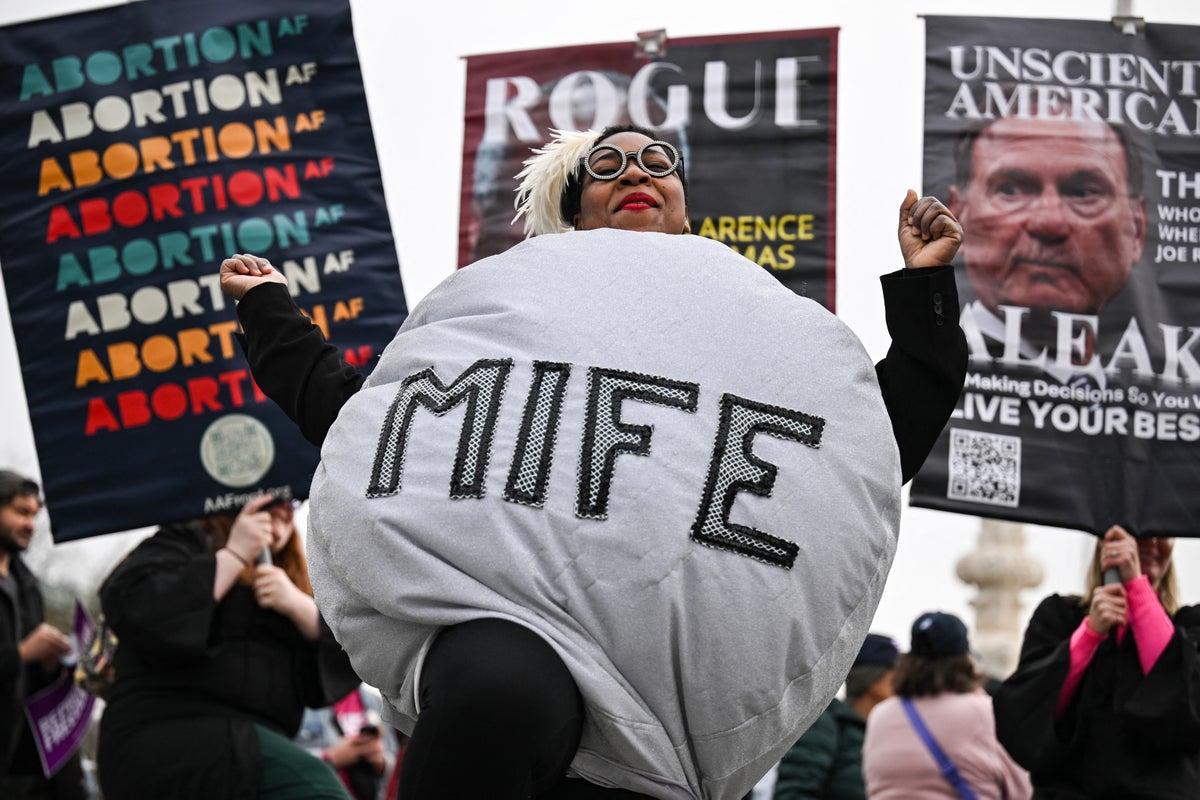
A blister pack sits on a kitchen table. It is tiny, unassuming, and flat. Inside it rests a single white tablet, no larger than an aspirin. For a quarter of a century, millions of women have looked at this exact piece of pressed powder and found a quiet, deeply personal resolution.
Mifepristone.
The name rolls off the tongue with a sterile, clinical coldness, but the reality it carries is entirely human. Since the Food and Drug Administration approved it in the autumn of 2000, it has been the quiet anchor of reproductive healthcare in America. It is a medical certainty. It is safer than Tylenol, more thoroughly vetted than penicillin, and used in more than half of all abortions nationwide. It is a historical fixture.
Until now.
The news broke not with a sudden medical catastrophe, but with the scratching of pens in Washington. Robert F. Kennedy Jr.’s Department of Health and Human Services, alongside a newly aligned FDA, announced a sweeping review to determine if this twenty-five-year-old medication is actually safe. Decades of peer-reviewed data, real-world applications, and generational trust were suddenly placed in a administrative metaphorical vice.
The air in the medical community grew cold. This is not a routine safety check. This is an earthquake masquerading as bureaucracy.
The Ghost in the Examining Room
To understand what this means, step out of the legislative halls and into a small, fluorescent-lit clinic in Ohio.
Let us call the woman sitting on the paper-covered table Sarah. She is twenty-four, working two jobs, and exhausted. Sarah represents a hypothetical composite of the thousands of women who face this choice every week, but her stakes are entirely real. Her decision to terminate an early pregnancy was not made lightly. It was born of late-night calculations, tears over a bank statement, and a fierce desire to protect her future.
The doctor hands Sarah that small white pill.
In that moment, Sarah is not thinking about federal policy, judicial appointments, or political appointments. She is thinking about safety. She trusts that the medicine in her hand will do exactly what it is designed to do without putting her life at risk. She trusts it because doctors trust it.
Now, imagine that same room a few months from now. The doctor hesitates. The regulatory framework is shifting. The administration is signaling that what was safe yesterday might be deemed a public health threat tomorrow, regardless of what the science says.
The trust evaporates. Terror takes its place.
When we talk about reviewing a drug that has been on the market for more than two decades, we are not just auditing a chemical compound. We are auditing the peace of mind of every person who might need it. We are introducing a ghost into the examining room—the specter of federal doubt.
The Numbers They Want to Rewrite
The human heart responds to stories, but the intellect demands data. Let us look at the cold, hard ledger of reality.
Mifepristone blocks progesterone, the hormone necessary for a pregnancy to continue. It is typically followed by a second medication, misoprostol, to empty the uterus. This two-drug regimen has a safety track record that is practically unrivaled in modern pharmacology.
Consider the data gathered over twenty-five years:
- The serious complication rate fluctuates around a microscopic fraction of one percent.
- Major medical organizations, including the American Medical Association and the American College of Obstetricians and Gynecologists, have repeatedly affirmed its safety profile.
- Study after study involving millions of patients has shown that taking mifepristone carries less statistical risk than getting your wisdom teeth pulled or taking a common antibiotic.
These are not opinions. They are the accumulated weight of a quarter-century of clinical evidence.
Yet, the new directive treats this massive mountain of evidence as if it were a sketchy, unverified rumor. The administration suggests that perhaps the original approval was rushed, or that decades of subsequent monitoring somehow missed a hidden, systemic danger.
The logic strains under its own weight. If a medication used by over five million Americans over twenty-five years possessed a fatal flaw, we would not need a politically appointed committee to find it. The emergency rooms would have told us long ago.
The Mechanics of a Regulatory Slow Walk
How do you dismantle a medical right without passing a single law? You do it through the slow, agonizing process of regulatory strangulation.
The new review does not need to ban mifepristone overnight to achieve its goals. The strategy is far more subtle. It begins with casting doubt. When the highest health officials in the country declare that a drug requires a rigorous new safety investigation, they send a shudder through the entire medical supply chain.
Distributors hesitate to stock it. Liability insurance companies raise their premiums for clinics that prescribe it. Doctors, terrified of losing their licenses or facing criminal prosecution under a shifting legal landscape, begin to look for alternatives or stop offering the service altogether.
The physical pill remains legal, but it becomes functionally unattainable.
This is the invisible tax of political medicine. It creates a chilling effect that freezes access long before a final verdict is ever handed down. It transforms a standard medical procedure into a legal minefield for providers and a psychological nightmare for patients.
A Quiet Shift in the Laboratory
Science has always been a messy, human endeavor, but it relies on a sacred code: the data must lead the policy, not the other way around.
When politics enters the laboratory, the instruments stop working correctly. The questions change. Instead of asking "Is this drug safe based on the evidence?", the question becomes "How can we interpret this evidence to justify a predetermined outcome?"
This is the most terrifying aspect of the current FDA review. It threatens to break the very mechanism that keeps our medicine cabinet safe. If the approvals of a quarter-century ago can be unraveled based on political ideology, then no medication is truly safe from scrutiny.
What happens when a future administration decides that a certain vaccine, a specific type of contraception, or a life-saving cancer therapy aligns poorly with their cultural narrative? The precedent being set right now suggests that any long-standing medical consensus can be dissolved with the stroke of a pen.
We are watching the erosion of institutional trust in real time. Once that trust is gone, it cannot be easily rebuilt. It takes decades to convince the public that an agency operates on pure, unadulterated science. It takes only a few months of politically motivated reviews to shatter that illusion entirely.
The Weight of the Unknown
For those who have lived through the pre-2000 era, this moment feels like a cruel regression.
They remember when reproductive healthcare was defined by scarcity, whispers, and dangerous back-alley alternatives. The arrival of medication abortion changed the geometry of the entire conversation. It allowed women to manage their health privately, safely, and early in the privacy of their own homes. It stripped away a layer of public shame and vulnerability.
Now, that vulnerability is being reintroduced.
The current conversation is often framed around legalities, state lines, and federal jurisdictions. But the true cost is measured in sleepless nights. It is measured in the panic of a college student who opens her laptop to find that the medication she thought was a fallback is now wrapped in a fog of federal warnings. It is measured in the frustration of a rural doctor who knows exactly how to treat her patient but is handcuffed by an administration playing to its political base.
The white pill remains on the kitchen table, for now.
But the light hitting it has changed. The twenty-five-year certainty that once surrounded it has been replaced by a long, flickering shadow. A woman reaches out, her fingers hovering over the foil packaging, wondering if the medicine inside is still protected by the laws of science, or if it has already been surrendered to the laws of men.