The kitchen in Maria's house smells of burnt coffee and damp wool. Outside, the Ohio mist clings to the power lines, turning the morning into a gray smear that refuses to lift. She is staring at a stack of unopened mail, her thumb tracing the edge of a past-due electric bill. Across the table, her husband is scrolling on a cracked smartphone, his face illuminated by the harsh, blue glare of yet another alert about the upcoming midterms.
They do not talk about polling averages. They do not talk about structural majorities or redistricting maps. They talk about the cost of eggs. They talk about the silence in the room when their eldest son decided community college was too expensive to bother with. Meanwhile, you can find related developments here: Geopolitical Friction Points and the Mechanics of Diplomatic Recovery in South Asia.
In Washington, millions of dollars are being poured into predictive models. Analysts pore over spreadsheets, charting voter registration trends and historical midterm fatigue. They talk about a mobilization machine powered by half a billion dollars in war chests, a staggering accumulation of capital designed to move millions of voters toward a specific outcome. But numbers on a ledger do not capture the heavy, sullen weight of exhaustion that sits in rooms like Maria's.
To understand what is coming, we have to look past the financial totals. We have to look at the human friction that turns ordinary citizens into an unstoppable electoral force. To see the complete picture, we recommend the detailed report by Associated Press.
History tells us a predictable story about midterm elections. The party in the White House almost always loses ground. It is an unwritten law of American politics, driven by frustration, disappointment, and the natural desire for a check on executive power. But this cycle carries a different temperature. It is hotter. It is sharper. It is personal.
Consider what happens when a community feels forgotten by the architecture of prosperity. For decades, the promise was simple: work hard, play by the rules, and the future will take care of itself. That contract frayed. Inflation acted as a silent tax, eating away at paychecks before they even cleared the bank. Every trip to the grocery store became a small humiliation, a series of quick calculations at the register to see what could be left behind.
When people feel that kind of systemic pressure, their relationship with politics changes. Voting stops being a civic duty performed out of polite habit. It becomes an act of self-defense.
This is where the massive financial investments of political campaigns find their fuel. It is easy to look at a half-billion-dollar war chest and imagine smoke-filled rooms and high-priced consultants cutting television ads. That is only the surface. The real work of that money is synchronization. It is the sophisticated machinery of data collection, micro-targeting, and relentless field operations designed to find people who have checked out of the system and remind them that their anger is shared.
Yet, numbers alone do not win elections. Resonance does.
Political movements succeed not because they offer the most polished platform, but because they provide a mirror. When a voter looks at a candidate and sees someone who speaks their language, who shares their grievances, and who points an accusing finger at the same targets, something shifts. Doubt dissolves. Hesitation vanishes.
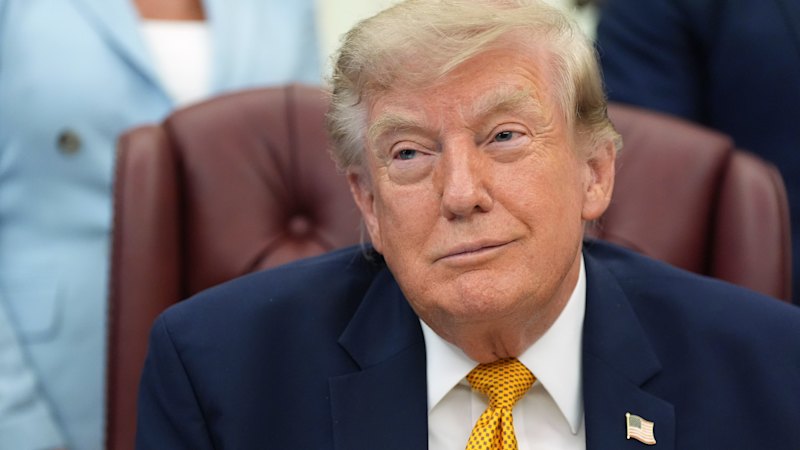
Donald Trump has always understood this visceral connection better than his rivals or his critics. He does not speak in the measured, sanitized cadences of institutional politics. He speaks in shorthand, capturing the raw, unpolished frustration of people who feel left behind by cultural and economic shifts. When he talks about decline, his listeners do not need a footnote. They see it on Main Street. They see the boarded-up storefronts where manufacturing plants used to stand. They see it in the drug epidemic that hollowed out their high school friend groups.
The upcoming midterms are not merely a referendum on a current administration. They are a referendum on a lifestyle, a cultural identity, and a profound anxiety about the direction of the country.
Walk down the main street of any small town in the Rust Belt or the rural interior, and you will feel the palpable tension. It is a place where people feel scrutinized by coastal elites who view them with a mixture of pity and contempt. They have heard themselves described as backward, as voting against their own interests, as casualties of misinformation.
That condescension is a powerful mobilizer. It builds a protective wall around a community, making them fiercely loyal to the figure who stands up to the cultural establishment on their behalf. When the political apparatus focuses its half-billion-dollar energy on these voters, it is not convincing them of something new. It is validating what they have believed all along.
The conventional wisdom often assumes that elections are won in the center, by appealing to the mythical undecided voter who weighs policy positions with clinical detachment. But contemporary politics is no longer about persuasion. It is about turnout. It is about depth of feeling.
The voter who is slightly uneasy about inflation will stay home. The voter who believes their entire way of life is under existential threat will stand in the rain for three hours to cast a ballot.
This brings us back to Maria. She is not an ideologue. Ten years ago, she didn't pay much attention to midterms, viewing them as low-stakes administrative elections best left to the political junkies. But her perspective shifted when her property taxes doubled and her local hospital closed its maternity ward, forcing pregnant women to drive forty miles for basic care.
For Maria, politics is no longer an abstraction happening on a television screen in Washington. It is the immediate reality of her daily survival. When a political campaign knocks on her door or floods her phone with targeted appeals, they are speaking directly to that acute vulnerability. They are offering an explanation for her pain and a mechanism to strike back.
Multiply Maria by tens of millions.
That is the hidden engine behind the staggering financial investments reshaping the political map. The money does not create the anger; it channels it. It builds the pipeline that funnels generalized discontent into a specific, organized, devastatingly effective political outcome.
As the midterm cycle accelerates, the gap between the political establishment's understanding of the electorate and the ground-level reality continues to widen. Pundits debate policy nuances while voters grapple with basic security. Analysts count campaign contributions while citizens calculate whether they can afford next month's heating bill.
This disconnect is dangerous for anyone who expects predictable outcomes. When an entire segment of the population feels that the system has failed them, they do not look for reform. They look for disruption. They want someone who will kick the table over, regardless of the fine china on top.
The half-billion-dollar war chest is simply the amplifier for this profound, nationwide sentiment. It is the fuel for a fire that has been smoldering for years, fed by economic insecurity, cultural displacement, and a deep-seated distrust of institutional authority.
The sun finally breaks through the Ohio mist, casting a pale, cold light across Maria's kitchen table. She folds the past-due bill, tucks it neatly into a drawer, and picks up her coffee mug. Her mind is made up long before the first ballot is cast, driven by a quiet certainty that no policy paper or televised debate can alter.
The machinery of democracy is grinding forward, fueled by resources beyond imagination, yet anchored entirely in the quiet desperation of ordinary lives. And in that collision between massive capital and raw human emotion lies the true momentum of the political landscape.