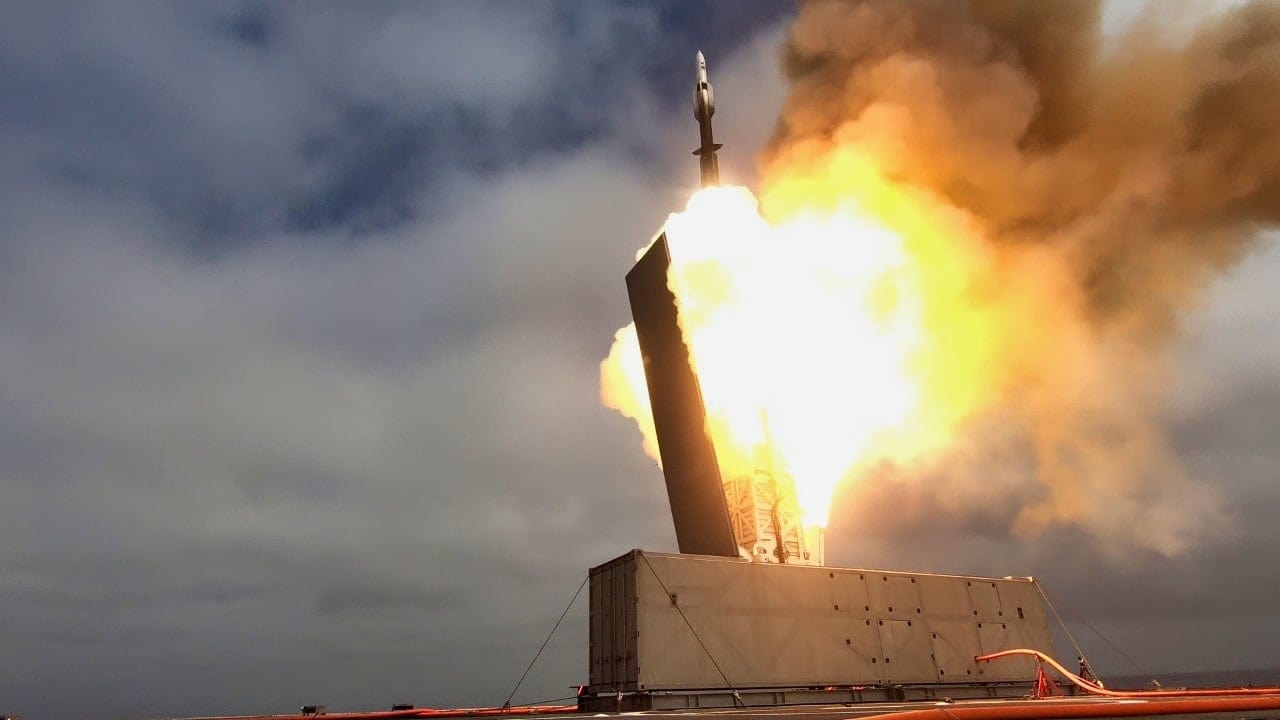
The kinetic interception of an unmanned aerial vehicle (UAV) over eastern Latvia by French Rafale fighter jets exposes a critical structural misalignment between legacy North Atlantic Treaty Organization (NATO) air defense doctrine and the operational realities of electronic warfare in the Baltic theater. While conventional media frames the event as a localized symptom of geopolitical spillover, a cold, systems-level analysis reveals that the incident is a direct consequence of a deliberate Russian electromagnetic strategy designed to exploit defensive bottlenecks along NATO’s eastern flank.
To comprehend the operational mechanics behind the June 8, 2026 interception near Berzgale, analysts must look past the immediate geopolitical narrative and isolate the structural vectors that drive modern airspace violations. These vectors operate across three distinct domains: electronic warfare drift, economic asymmetry, and domestic institutional resilience.
The Mechanics of Electronic Warfare Drift
The entry of foreign UAVs into sovereign NATO airspace is largely a function of Russia’s aggressive deployment of high-power electromagnetic jamming and spoofing arrays along its Western Military District. These systems create localized regional denials of Global Navigation Satellite Systems (GNSS), affecting commercial aviation and tactical unmanned operations alike.
When Ukrainian long-range strike drones or Russian reconnaissance assets navigate via GPS, GLONASS, or civilian-grade inertial guidance systems, high-power radio frequency (RF) interference forces these platforms into automated fail-safe states. The structural progression of this phenomenon involves three phases:
- Signal Deprivation: The airborne asset loses lock on critical navigation constellations due to deliberate noise injection from ground-based Russian electronic warfare complexes.
- Inertial Degradation: Denied real-time positioning updates, the UAV defaults to Dead Reckoning or low-tier Inertial Navigation Systems (INS). Over extended flight paths, accumulation errors introduce a spatial drift vector.
- Flight Path Deviation: The drift vector, compounded by crosswinds and uncorrected aerodynamic variables, shifts the platform's trajectory into sovereign allied airspace.
This operational reality explains why the Latvian National Armed Forces explicitly cited Russian electromagnetic warfare as the causal mechanism behind the flight path deviation, rather than a deliberate kinetic strike targeted at Riga. A similar breakdown occurred in May 2026, when a stray drone compromised Estonian airspace, requiring an alliance interception, followed closely by air raid alerts in Lithuania. The pattern is systematic, not incidental.
The Economic Asymmetry of Kinetic Interception
The deployment of a French Rafale multirole fighter jet from Šiauliai Air Base in Lithuania to neutralize a low-cost UAV illustrates a profound cost-imposition imbalance. This economic asymmetry threatens the long-term sustainability of the NATO Baltic Air Policing mission under its current rules of engagement.
The cost function of this intercept strategy can be modeled by comparing the marginal cost of the threat asset against the marginal cost of the defensive countermeasure:
$$C_{defense} = C_{flight_hour} + C_{munition} + C_{readiness_depreciation}$$
In this equation, $C_{defense}$ routinely exceeds $C_{threat}$ by several orders of magnitude.
- The Threat Asset ($C_{threat}$): A typical long-range reconnaissance or one-way attack UAV costs between $20,000 and $50,000.
- The Defensive Countermeasure ($C_{defense}$): Operating a modern European fighter jet costs approximately $20,000 to $35,000 per flight hour. When factored alongside the deployment of an advanced air-to-air missile, which commands a unit price ranging from $500,000 to $1.5 million, the economic math becomes highly unfavorable for the alliance.
This cost-imposition strategy allows adversaries to deplete allied munition stockpiles and induce structural fatigue on front-line airframes without risking high-value military assets.
The proposed European "drone wall"—a networked frontier of ground-based electronic jamming nodes, passive radar arrays, and kinetic counter-UAV interceptors—aims to decouple air defense from expensive manned fighter aviation. However, this infrastructure remains a capital-intensive project years away from full operational capability. Until deployed, NATO relies on the blunt instrument of fourth- and fifth-generation fighter aircraft to police low-altitude, low-observable threats.
Institutional Fragility and Democratic Friction
Beyond the physical parameters of airspace control, the frequency of these UAV incursions introduces acute domestic political vulnerabilities within front-line states. This institutional friction represents a second-order effect that traditional military analysis often overlooks.
The resignation of the Latvian Prime Minister and the subsequent collapse of the governing coalition in May 2026, following multiple unintercepted drone breaches, underscores how tactical border incursions can yield strategic political disruption. The operational breakdown operates on a clear cause-and-effect timeline:
[Frequent UAV Border Incursions]
               │
               ▼
[Perceived Failure of Territorial Air Defense]
               │
               ▼
[Erosion of Domestic Public Confidence]
               │
               ▼
[Political Friction & Cabinet Resignations]
               │
               ▼
[Coalition Collapse & Governance Gaps]
By exploiting the gap between public expectations of absolute security and the technical limitations of low-altitude radar coverage, electromagnetic drift incidents act as involuntary vectors of political destabilization. Manned fighter jets can police high-altitude corridors effectively, but protecting a 250-mile land border against low-flying, small-RCS (Radar Cross Section) targets requires dense, localized surface-to-air integration.
Operational Constraints and Border Defense Integration
To mitigate the defensive bottlenecks exposed by the Berzgale interception, regional military commands are adjusting their tactical postures. Relying exclusively on allied air policing assets stationed in neighboring states introduces a time-distance lag that is incompatible with rapid low-altitude incursions.
The immediate operational response involves decentralizing air defense assets. The Latvian military’s tactical shift toward deploying mobile, rugged-terrain interceptor units equipped with specialized counter-UAV systems represents a necessary transition toward localized denial. These units, designed to operate within a tight six-mile radius along the Russian and Belarusian borders, shift the defensive economic calculus back toward parity by substituting expensive air-to-air missiles with low-cost kinetic and electronic intercept mechanisms.
However, the efficacy of these tactical adjustments faces clear structural limitations:
- Sensor Density Barriers: Low-altitude tracking requires an exceptionally dense network of ground-based active and passive sensors to overcome terrain masking and the curvature of the earth.
- Command and Control Bottlenecks: The time elapsed between a low-altitude border breach, threat classification, and the authorization of kinetic force creates a narrow operational window.
- Rules of Engagement Constraints: Differentiating a jammed, drifting friendly asset from an active, hostile payload inside a compressed timeframe requires real-time cryptographic and telemetry verification across multiple national command structures.
The strategic play for NATO's eastern flank is not the expansion of manned fighter sorties, but the rapid integration of standardized, short-range air defense (SHORAD) systems capable of automated threat classification. Manned aviation must be reserved for high-altitude, peer-level air breathing threats, while border infrastructure must transition toward a dense, automated, tiered architecture of electronic denial and low-cost kinetic interception. Anything less permits the adversary to continue dictating the economic and political terms of the conflict along the alliance frontier.