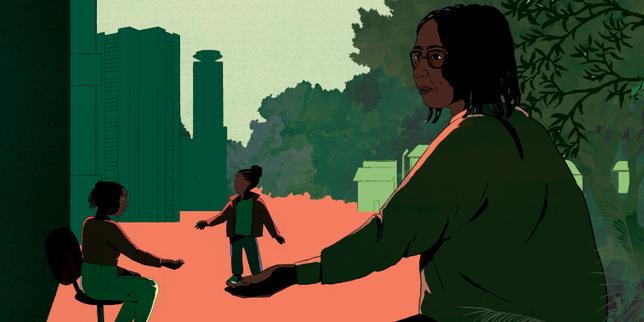
The kitchen air smells of woodsmoke, wet earth, and boiling maize. Outside, the dust of the Rift Valley settles over iron sheet roofs, turning the late afternoon light into a bruised amber. Inside, a young mother stares at a basin of water, her shoulders locked tight. Her infant son sleeps in the next room, swaddled so snugly his breathing sounds like a distant drumbeat.
She loves him. She is exhausted. And she is terrified. For another perspective, consider: this related article.
In the doorway stands her mother-in-law, arms crossed, face carved from patience and uncompromising authority. The older woman has raised eight children through droughts, economic shifts, and the quiet endurance that rural and peri-urban Kenya demands. To her, this young mother is fragile, inexperienced, and prone to modern foolishness. To the young mother, every look, every unrequested correction, feels like an indictment.
Welcome to the delicate, high-stakes collision of generations across modern Kenya. Here, family support is not merely a nice-to-have social perk. It is the invisible infrastructure of survival. Yet, it frequently arrives wrapped in an oppressive shadow that threatens to swallow a mother’s autonomy whole. Similar analysis on this trend has been provided by The Spruce.
The Safety Net That Suffocates
Let us be entirely clear about the math of survival. Raising a child alone in contemporary Kenya, whether navigating the concrete labyrinth of Nairobi or the rolling agricultural expanse of Kiambu, is a grueling athletic feat. Daycare is a luxury reserved for the upper brackets of income. Extended family is not just a support system; it is the entire village required by the old proverb.
Grandparents step in with open arms. They cook, they clean, they carry the baby on their backs for hours while aching joints protest. They offer a reservoir of ancestral wisdom passed down through decades.
Consider what happens next: the sun sets, and the advice turns into a directive.
You are holding him too much.
Why are you letting him cry like that?
In our days, we did not use those diapers.
Every well-meaning intervention carries an unspoken verdict. You are failing. For many young Kenyan mothers caught between the traditional expectations of communal child-rearing and the surging tide of individual autonomy, grandmotherly help transforms from a life raft into a cage. The support is crucial. The psychological cost is staggering.
The Anatomy of Pressure
To understand this tension, we must step back and look at the cultural architecture of family life in East Africa. For generations, child-rearing was never viewed as an isolated nuclear project. It was a collective asset. A child belonged to the community, and discipline or guidance was everyone's mandate.
When young women migrated from rural ancestral lands to urban centers like Nairobi, Nakuru, or Eldoret for work or university, a fracture occurred. They adopted new ideas about child psychology, immunization schedules, and emotional bonding. They read blogs on their smartphones. They learned about gentle parenting.
Then they visited home, or the mother-in-law moved into the spare room.
The clash is monumental. It is an intellectual and cultural war fought in the quiet spaces of the nursery. The older generation relies on empirical survival—what kept babies alive through malaria outbreaks and poverty thirty years ago. The younger generation relies on modern information—what optimizes brain development and emotional security today.
When these worldviews collide, diplomacy fractures. Mothers describe a terrifying sense of erasure. They feel like glorified babysitters in their own homes, stripped of decision-making power over their own flesh and blood. One young mother in Kasarani whispered a sentiment shared by many: "I wanted to scream when she took him from my arms. But I couldn't. Because if I speak, I am disrespectful. If I stay silent, I lose my mind."
The Fear of Ingratitude
Guilt is the heavy anchor dragging down this entire dynamic.
In Kenyan society, respect for elders is paramount. To question a grandmother's method is often treated as a moral failing, an act of supreme arrogance. After all, these are the women who labored in the fields, sold vegetables at roadside markets, and sold their own livestock to pay school fees. How dare a twenty-four-year-old accountant or teacher complain that her mother-in-law folds baby clothes the wrong way?
This creates a toxic silence. Mothers swallow their anxiety because expressing distress feels like treason. They fear being labeled ungrateful, modern, spoiled, or Westernized. So, they internalize the stress. Postpartum anxiety surges in the dark. Sleep deprivation compounds the emotional friction until minor disagreements over feeding routines erupt into massive household crises.
We must acknowledge that the grandmothers are suffering too. They carry their own historical trauma, economic anxieties, and physical wear-and-tear. They step in because they genuinely fear for the baby's safety in a world that feels increasingly fast-paced and unpredictable. They remember infant mortality rates that haunted their own youth. Their overbearing nature is frequently misdirected fear—a fierce, territorial love that lacks a modern vocabulary for emotional boundaries.
Redrawing the Boundaries
Change is creeping into the conversation, slow as morning fog.
In urban coffee shops and closed WhatsApp support groups, young Kenyan women are finally naming the phenomenon. They are learning to say thank you while holding their ground. They are discovering that setting a boundary does not make them bad daughters; it makes them sustainable mothers.
It looks like a quiet conversation over morning tea. It looks like thanking a mother-in-law for her help while gently explaining that the pediatrician recommended a different feeding schedule. It looks like carving out sacred hours where the mother handles her child alone, reclaiming her confidence through trial and error.
We do not need to villainize the grandmothers, nor should we romanticize the impossible isolation of the nuclear family ideal imported from the West. The African village model of child-rearing is powerful, resilient, and necessary. But it must evolve. It must make room for the agency of the mother standing at the center of it all.
The sun dips below the horizon, plunging the Rift Valley into sudden, cool darkness. Inside the house, the baby stirs. The young mother takes a deep breath, squares her shoulders, and walks down the hallway. This time, when she enters the room, she does not shrink. She smiles at her mother-in-law, takes her son into her own arms, and steps firmly into her own power.