Cities draw people in with the promise of economic survival. You pack your bags, leave a rural area where traditional livelihoods are drying up, and head toward the nearest skyline. The assumption is straightforward: density creates opportunity, wages climb in urban cores, and moving closer to the center of commerce lifts you out of poverty.
Reality rarely cooperates with that simple theory.
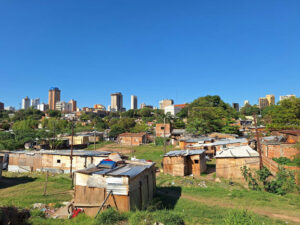
Across the globe, rapid urbanization often concentrates poverty rather than curing it. You end up with skyscrapers casting long shadows over sprawling informal settlements lacking clean water, reliable electricity, or secure tenure. Cities are engines of wealth generation, but they are also machines of extreme inequality. If you look closely at how modern urban centers function, you notice a harsh truth. Moving to a city changes where you are poor, but it does not guarantee a way out.
The Dual Nature of the Concrete Jungle
Urbanization pulls millions of people out of agrarian subsistence every single year. Economists call this agglomeration economies. When businesses cluster together, they share infrastructure, pool specialized labor pools, and spark innovations that drive up productivity. A worker in a dense urban labor market usually earns more than an identical worker in a remote village.
Yet, that productivity premium hides a massive divide.
The economic gains generated by a metropolis do not automatically trickle down to everyone who walks its streets. Land becomes scarce and brutally expensive. Housing markets respond to high demand by pricing out anyone without capital. If your entry-level wages cannot keep pace with the cost of rent, transportation, and food, density stops being an asset. It becomes a trap.
Think about how labor markets actually operate in fast-growing cities across developing regions. A massive influx of job seekers floods the informal economy. People sell loose cigarettes on street corners, drive unregulated motorcycles, or sort through municipal landfills for recyclable scraps. These activities keep families alive day-to-day, but they offer zero safety nets, no wage protections, and no upward mobility. You are working constantly, yet remaining entirely vulnerable to a single medical emergency or police sweep.
Why Informal Settlements Persist
Municipal governments often treat slums as eyesores to be cleared rather than complex economic ecosystems that need fixing. When cities bulldoze informal settlements without providing viable alternatives, they do not eradicate poverty. They simply displace it to the urban periphery, making commutes longer and destroying local social networks that low-income families rely on for survival.
Consider the spatial trap. If affordable housing only exists two hours away from the urban center where the actual jobs are, your daily transit costs consume a massive chunk of your earnings. You spend half your waking day crammed into overcrowded buses or trains. That physical distance cuts you off from formal banking, quality healthcare, and reliable schooling for your children.
Urban poverty is spatial. Where you live dictates your access to opportunity. When cities expand without intentional planning for affordable housing and public transit, they build segregation directly into their geography.
How Cities Can Actually Reduce Poverty
Cities possess enormous fiscal capacity to change these outcomes, provided local leaders abandon outdated growth models. Real poverty reduction requires shifting focus from shiny downtown commercial districts to the basic infrastructure of neighborhoods where working-class people actually live.
Secure Land Tenure Changes Everything
When families possess legal titles to their homes or long-term land occupancy rights, their behavior shifts overnight. People stop investing meager savings in temporary corrugated iron sheets. They invest in permanent foundations, indoor plumbing, and small businesses run out of their front rooms. Property rights unlock credit, giving marginalized residents collateral to build sustainable futures.
Inclusive Transit Networks Subsidize the Poor
Transportation is a hidden tax on the urban poor. When municipal governments subsidize mass transit lines connecting peripheral low-income housing to core employment hubs, they effectively hand a raise to every low-wage worker in the city. Cutting commute times by an hour a day changes a family's trajectory.
Universal Basic Services Over Beautification Projects
Building high-end waterfront parks does nothing for a neighborhood dealing with open drainage channels and contaminated water supplies. Prioritizing piped water, sanitation grids, electrification, and community health clinics in informal settlements yields massive returns in human capital. Healthy children stay in school. Adults miss fewer days of work due to preventable waterborne illnesses.
The Human Cost of Getting Policy Wrong
Ignoring these structural realities has a steep price. When cities fail to integrate low-income residents into the formal fabric of the economy, social friction spikes. Crime rises not because of inherent moral failure, but because desperation becomes rational when formal survival pathways are blocked off.
You cannot police your way out of urban destitution. You cannot zone away informal labor by banning street vendors or demolishing roadside stalls. Municipalities that try to sweep poverty out of sight find that it simply resurfaces in more volatile, entrenched forms.
Fixing urban poverty demands a complete rethink of how we value city dwellers at the economic margins. They are not obstacles to modernization. They are the engine grease of the urban machine. Without their labor in construction, hospitality, sanitation, and retail, cities would grind to an immediate halt.
Treating them as permanent fixtures of urban decay is a policy choice, not an economic law. Until city planners design urban spaces for the people who clean the offices, cook the meals, and build the towers, urbanization will remain a machine that generates immense wealth for the few while locking the many into permanent survival mode.