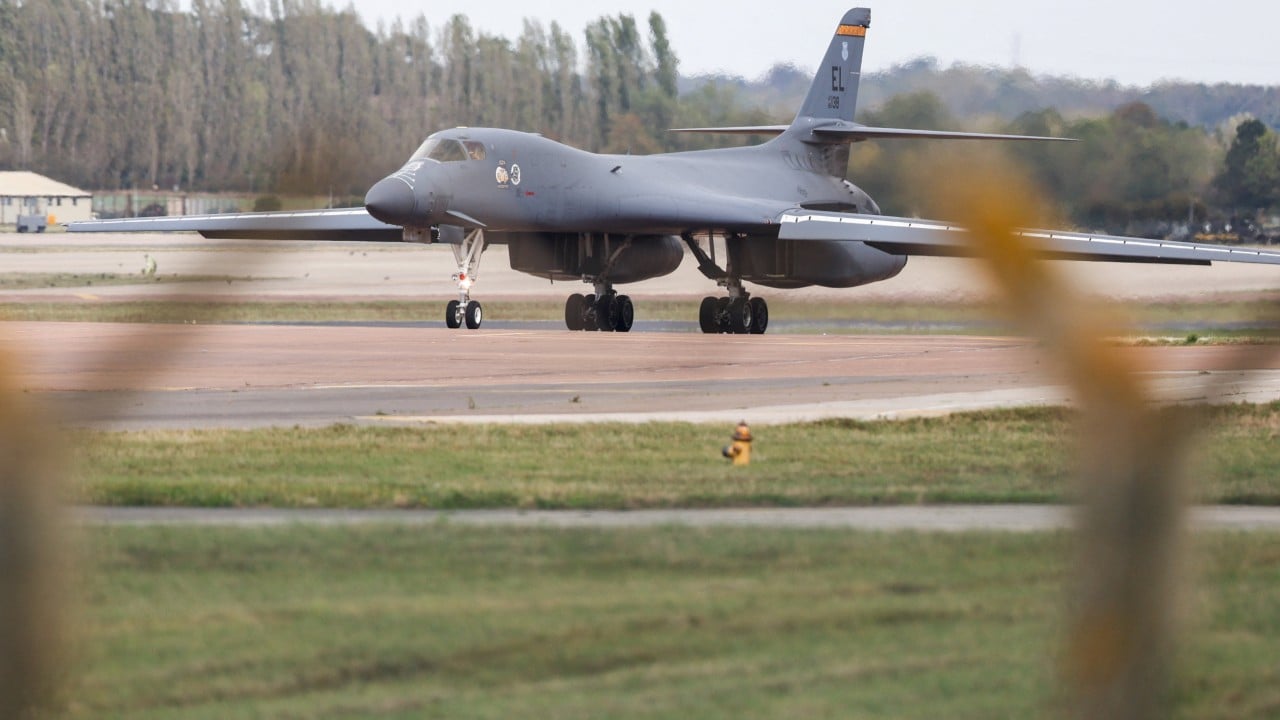
When strategic military assets pack up and leave overnight, people notice. The decision by the United States Air Force to remove all heavy bombers from a major British airbase didn't happen in a vacuum. It followed a troubling security incident involving a suspected drone and terror threat that rattled military planners on both sides of the Atlantic. RAF Fairford in Gloucestershire, long a vital forward staging post for American long-range strike aircraft, suddenly found itself at the center of an urgent threat assessment.
If you've been following global defense posture shifts, you know that keeping B-1B Lancers or B-52 Stratofortresses parked overseas is a high-stakes calculation. These aren't just airplanes. They are symbols of nuclear deterrence and rapid global strike capability. When hostile actors probe your perimeter, you don't just shrug it off. You move the chess pieces. You might also find this connected coverage useful: The Night Brazil Held Its Breath And Nobody Won.
Let's break down what actually went down, why military commanders made the call to clear the tarmac, and what this means for European security moving forward.
The Security Breach That Forced a Rapid Pivot
Security at military installations isn't casual. When a suspected hostile actor or drone penetrates restricted airspace near nuclear-capable or strategic assets, standard operating procedures kick in immediately. Details surrounding the exact nature of the Fairford incident remain tightly guarded by defense officials, but the ripple effects were instantaneous. As highlighted in detailed coverage by BBC News, the implications are worth noting.
Military bases in the UK have faced heightened threat levels for years. Intelligence agencies constantly monitor chatter regarding potential attacks against Western military personnel and installations. When a specific red flag pops up near a base hosting strategic bombers, the risk calculus changes in seconds.
You can't afford to leave multi-million-dollar strategic assets sitting like ducks on an exposed ramp. The United States European Command and the Royal Air Force had to act. Moving the bombers wasn't a sign of weakness. It was a textbook move of operational security and risk mitigation.
Why RAF Fairford Matters So Much
You can't talk about transatlantic air power without talking about Fairford. It's the only European airfield fully equipped to handle heavy US strategic bombers. Whenever tensions flare in Eastern Europe or the Middle East, Fairford serves as the launchpad for Bomber Task Force missions.
These deployments send a clear message to adversaries. They show that Washington can project power anywhere on earth within hours, backed by close cooperation with British allies. But that very importance makes the base a high-value target.
Adversaries know that disrupting operations at Fairford disrupts the entire European defense architecture. That makes base defense a nightmare for commanders. Protecting a massive airfield against low-cost, high-tech drone incursions is one of the toughest challenges facing modern militaries.
The Growing Threat of Asymmetric Warfare on Airbases
Traditional airbase defense used to mean thick fences, armed guards, and watchtowers. Today, that playbook is completely obsolete. Commercial off-the-shelf drones, cyber espionage, and localized sabotage threats have turned every major military installation into a frontline position.
When a suspected terror plot targets a facility like Fairford, it exposes the vulnerabilities of sprawling legacy airbases. You have massive expanses of open land, aircraft parked in the open for maintenance, and civilian flight paths nearby. Securing every square inch against a determined, agile adversary is practically impossible.
Defense contractors are rushing to deploy counter-drone tech, acoustic sensors, and electronic jamming systems. Yet, the tech race favors the attacker right now. It's cheap to launch a drone; it's expensive to defend an entire military base against one.
How This Shifts Transatlantic Defense Strategy
The sudden evacuation of bombers from British soil forces a hard look at how the US projects power. Relying heavily on a single forward operating base in the UK is a single point of failure.
Expect to see a shift toward more agile combat employment. Instead of parking a dozen heavy bombers in one spot for months, the Air Force prefers to scatter aircraft across multiple smaller airfields. This makes targeting much harder for any adversary.
If an enemy doesn't know where the bombers are landing tomorrow, they can't plan a coordinated attack today. Dispersal is the new concentration.
What Happens Next for European Security
The bombers will return eventually. Deterrence requires presence, and you can't deter anyone by hiding your aircraft in Kansas. But when they do come back, security protocols will look vastly different. Expect stricter airspace closures, heavier local police presence, and aggressive deployment of counter-unmanned aerial systems.
The incident at Fairford serves as a brutal wake-up call. The frontline isn't thousands of miles away in a distant warzone anymore. It's right outside the perimeter fence of every military base in Western Europe.
If you want to keep strategic assets safe, adaptability isn't optional. It's the only way to survive.


