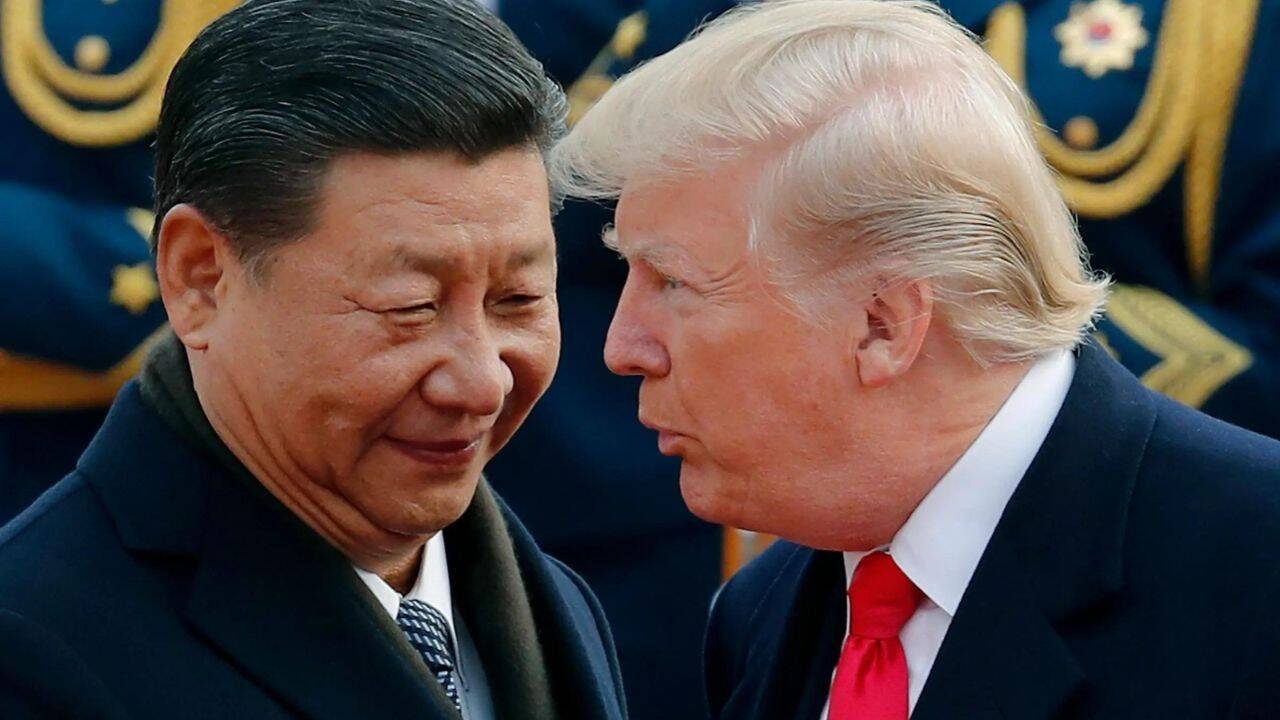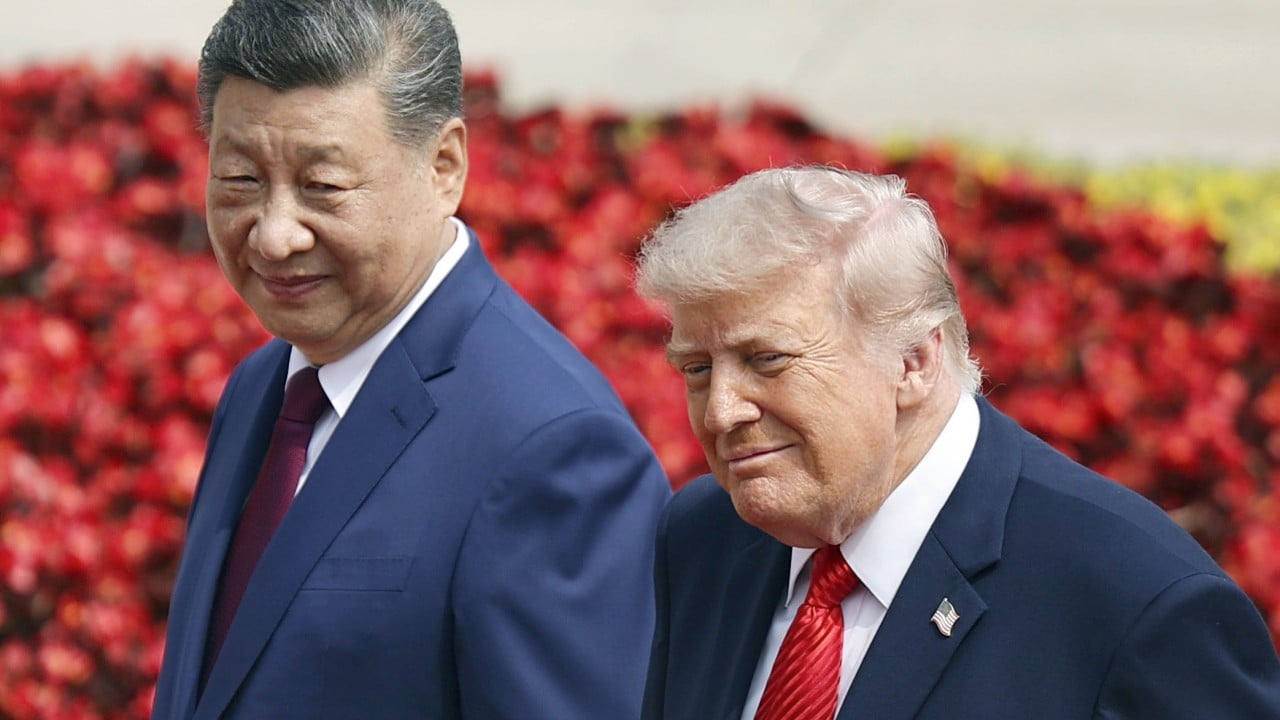
Every financial news outlet on the planet just tripped over itself to report the exact same boilerplate story. Executives gathered. Hands were shaken. Statements about "constructive dialogue" were drafted by PR teams making seven figures to say nothing at all.
And everyone bought it.
The mainstream consensus is predictable: because the US-China Board of Trade convened days before a Trump-Xi summit, a diplomatic thaw is on the horizon. Supply chains will stabilize. Tariffs will soften. Corporate America can breathe a sigh of relief and go back to business as usual.
That narrative isn't just lazy. It is dangerously wrong.
If you are a CEO, a supply chain director, or an institutional investor basing your capital allocation on the optics of a pre-summit board meeting, you are walking straight into a buzzsaw. This gathering is not a signal of impending peace. It is a calculated, high-stakes stalling tactic designed to manage market volatility while both superpowers finalize their decoupling architectures.
The Illusion of the Pre-Summit Thaw
Let's look at the mechanics of how bilateral trade councils actually operate in the modern era. When business leaders meet right before a head-of-state summit, the financial press treats it like a leading indicator. They assume executives hold the levers of geopolitical power and are whispering sweet reason into the ears of presidents.
Twenty years ago, that was true. During the early 2000s, following China’s accession to the World Trade Organization, multinational corporations were the primary architects of US-China policy. Wall Street and Silicon Valley wrote the script, and Washington signed off on it.
Those days are dead and buried.
Today, corporate trade boards do not dictate national security policy; they are instruments of it. When Washington and Beijing allow a high-profile business council to meet days before a Trump-Xi sit-down, they are deploying a pressure-release valve. The goal is simple: soothe equity markets, project an image of rational governance to domestic voters, and buy time.
I have sat in boardrooms where Fortune 500 executives burned millions of dollars on government relations consultants because they mistook diplomatic theater for policy shifts. They saw a joint communique, paused their factory relocations out of Guangdong, and got blindsided six months later when new export controls wiped out their Q3 margins overnight.
Do not confuse a photo op with a treaty.
Why the "De-Risking" Consensus Is Still Too Optimistic
Even the supposed realists in the business press get the nuance wrong. They love the word "de-risking"—the idea that companies can surgically remove sensitive components from China while keeping the rest of their consumer-facing operations intact.
Here is the brutal truth nobody in those pre-summit meetings wants to admit: you cannot partially decouple from an economy built on civil-military fusion.
In the United States, there is still a lingering belief that commercial enterprise and state security exist in separate silos. You sell sneakers or cloud software in Shanghai; you build defense tech in Virginia. In Beijing, that distinction does not exist. Under China’s national intelligence and data security laws, every private enterprise is legally obligated to assist the state apparatus when called upon.
Simultaneously, Washington has weaponized the dollar, semiconductor lithography, and outbound investment screening. Look at the trajectory of the Bureau of Industry and Security (BIS) Entity List over the last several years. The restrictions aren't narrowing; they are metastasizing into biotech, electric vehicles, foundational chips, and artificial intelligence.
When the US-China Board of Trade meets, what are they actually discussing? They aren't negotiating the repeal of Section 301 tariffs. They aren't rolling back the CHIPS and Science Act. They are haggling over crumbs—minor agricultural quotas, visa processing times for executives, and narrow carve-outs for legacy technology that neither side cares about anymore.
Dismantling the Wrong Questions
If you search for analysis on this summit, you will see the same tired questions dominating the conversation. Let's tear them apart.
Will a Trump-Xi deal eliminate the new wave of tariffs?
No. Tariffs are no longer a bargaining chip used to extract trade concessions; they are a permanent structural feature of the global economy. For Washington, tariffs serve a dual purpose: generating non-tax revenue to offset massive federal deficits and creating an artificial price floor to protect domestic re-industrialization. Even if a handshake deal pauses a specific tranche of duties, the baseline tariff wall is going up, not down. Counting on a rollback is pure fantasy.
Can American companies still win the Chinese consumer market?
Only if they are willing to accept permanent margin compression and eventual obsolescence. Look at what happened to foreign automakers in China. For decades, German and American brands dominated the mainland. Today, domestic champions like BYD have eaten their lunch, driven by state-backed supply chain dominance and aggressive vertical integration. The Chinese consumer is pivoting toward domestic brands out of both economic pragmatism and rising nationalism. Foreign brands are increasingly treated as temporary placeholders until local competitors master the technology.
Does the Board of Trade meeting mean supply chains are safe for the next four years?
Safe? They are sitting on a geopolitical fault line. Imagine a scenario where a minor naval collision occurs in the South China Sea or a new set of financial sanctions is triggered over third-party trade with Russia. Every single goodwill gesture produced by a trade board evaporates in less than four hours. Supply chain safety does not come from diplomatic councils; it comes from physical redundancy across multiple jurisdictions.
The Real Purpose of the Pre-Summit Theater
So, if the meeting won't stop decoupling, why hold it at all? Because both leaders need a controlled environment to manage escalation.
For the American administration, staging a business dialogue before a Trump-Xi meeting projects strength. It allows the White House to tell domestic manufacturers, "We are holding their feet to the fire and demanding market access," while simultaneously reassuring Wall Street that the administration isn't trying to trigger an immediate global depression. It is a classic negotiation anchor: appear willing to talk while preparing the next round of economic artillery.
For Xi Jinping, the calculus is equally cold. China is dealing with severe structural headwinds: a prolonged real estate contraction, local government debt overhang, youth unemployment, and deflationary pressure. Beijing desperately needs foreign direct investment (FDI) to stop bleeding out. Hosting American business titans—or having them convene with Chinese counterparts—gives Beijing a propaganda win. It allows state media to broadcast a clear message to global capital: China is open for business, and American CEOs are begging to stay.
Both sides get the domestic headlines they want. Neither side gives an inch on core strategic interests.
The Heavy Hitters Know the Score
You don't have to take my word for it. Look at how the sharpest minds in geopolitical macroeconomics and trade law view this dynamic, rather than listening to corporate lobbyists whose paychecks depend on perpetual optimism.
Trade economists like Michael Pettis have spent years demonstrating that the US-China trade imbalance isn't a policy glitch that a board meeting can fix—it is the inevitable mathematical result of China’s high-savings, investment-led growth model colliding with America’s consumption-driven economy. Until Beijing fundamentally restructures its domestic wealth distribution—a move that would threaten the political power of local party elites—trade friction is guaranteed.
Similarly, look at the strategic assessments from institutions like the Center for Strategic and International Studies (CSIS) or the Rhodium Group. Their data on foreign investment flows and export controls proves that institutional capital is already voting with its feet. Greenfield investment into China has plummeted from its historical peaks, while capital expenditure in Mexico, Vietnam, India, and the American Midwest has surged.
The smart money isn't reading the press releases from the Board of Trade. The smart money is tracking customs data, shipping container routes, and semiconductor equipment orders.
The Downside of My Contrarian Stance
Let’s be brutally honest about the risks of betting entirely against a diplomatic thaw. Every contrarian thesis has a blind spot, and ignoring it is how you blow up your portfolio.
If you execute an aggressive, immediate exit from China based on the premise that trade talks are pure theater, you face two massive penalties:
- The Cost of Premature Relocation: Building manufacturing capacity in Southeast Asia, India, or Latin America is brutal. Infrastructure is often inadequate, local labor productivity takes years to match Chinese efficiency, and—ironically—most of your tier-two and tier-three suppliers in Vietnam or Mexico are still importing their raw materials and sub-assemblies directly from China. Moving too fast destroys your near-term unit economics.
- The Tactical Rally Trap: Markets are addicted to hopium. When Trump and Xi shake hands, or when a trade board announces a minor working group, algorithmic traders will bid up exposed equities. If you are shorting China-exposed industrials or sitting entirely in cash, you will get crushed by short-term relief rallies driven by headlines rather than fundamentals.
Acknowledging these downsides doesn't invalidate the thesis; it dictates the execution. You don't panic-sell tomorrow morning. You use the artificial calm created by these diplomatic meetings to exit on your own terms, rather than waiting for a crisis to force your hand at fire-sale prices.
Actionable Moves While Everyone Else Is Distracted
While your competitors are celebrating a phantom breakthrough, use this window of diplomatic calm to execute four concrete shifts.
1. Audit Your Tier-Three Suppliers Immediately
Most companies think they have diversified because their final assembly happens in Monterrey or Ho Chi Minh City. That is an illusion. Force your procurement team to map your supply chain down to the raw materials and basic components. If your "non-Chinese" supplier relies on Chinese chemical precursors, rare earth magnets, or printed circuit boards, you are still completely exposed to bilateral chokepoints.
2. Ring-Fence Your China Operations
Stop treating your Chinese subsidiary as an integrated node in your global enterprise. Treat it as a standalone, self-funding island. Localize its management, localize its supply chain, localize its data architecture, and localize its balance sheet. Ensure that if an executive order severs digital or financial links between your headquarters and your Shanghai office tomorrow morning, neither entity collapses.
3. Price Geopolitical Risk Into Your Cost of Capital
Stop underwriting investments in trade-exposed sectors using historical discount rates. If a capital project relies on frictionless trans-Pacific trade to hit its internal rate of return, add a massive risk premium to the model. If the deal doesn't make financial sense assuming a permanent 25% to 60% tariff regime, kill the project now.
4. Use Diplomatic Rallies to Rebalance
Every time a trade board meets or a summit produces a flattering headline, exposed stocks get a temporary bump. Treat those rallies as liquidity events. Trim your exposure to companies that derive more than 20% of their revenue from mainland China without an irreplaceable technological moat. Reallocate that capital into domestic infrastructure, defense tech, automation, and regional nearshoring enablers.
The US-China Board of Trade meeting is a nicely choreographed distraction for people who read headlines instead of balance sheets. The summit will come and go, the cameras will pack up, and the structural collision between the world's two largest economies will resume right on schedule.
Stop waiting for politicians and lobbyists to save your supply chain, and start building a business that survives when the talking stops.