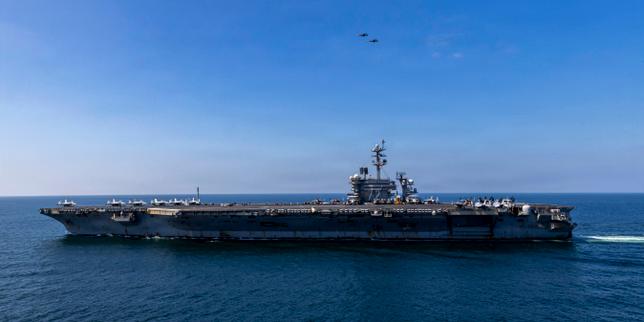
When roughly 5,000 sailors and Marines left San Diego on November 21, 2025, they expected a standard Pacific deployment. Instead, world events altered the math entirely. Redirected toward the Middle East as tensions and open conflict with Iran escalated, the nuclear-powered aircraft carrier USS Abraham Lincoln has shattered modern naval endurance records by spending more than 250 consecutive days at sea without a proper port call.
That is not just a logistical milestone. It is a human crisis unfolding in real-time.
While leadership in Washington debates military posture, the reality inside the hull of a Nimitz-class carrier tells a much darker story. Families, lawmakers, and whistleblowing spouses are speaking out because the crew has hit a brick wall of exhaustion, supply shortages, and profound psychological distress.
Living Conditions Inside a Floating Pressure Cooker
If you have never spent months inside a massive floating steel box, the day-to-day environment is difficult to picture. Add relentless combat operations against a backdrop of war, and margins for error disappear.
Reports and family accounts emerging from recent briefings paint a grim portrait of life aboard the Lincoln. We are talking about broken toilets, mold-infested shower blocks, and weeks where hot water or operational laundry facilities simply did not exist. When basic hygiene becomes a daily struggle, morale plummets fast.
Food security has also turned into a sore point. Crew members and their families have flagged severe rationing and food shortages. Stories of meals boiling down to meager portions of rice and tortillas show just how strained the supply chain has become after months away from a proper naval station. Soap, toothpaste, and deodorant have run low at various points, turning routine personal care into an administrative headache.
These aren't minor inconveniences. They are grinding stressors that compound over hundreds of days of continuous combat alert.
The Mental Health Toll and the Breaking Point
The hardest part to swallow is the psychological toll on the young men and women keeping the ship operational. Extended deployments without shore leave destroy mental resilience.
Recent accounts shared by families indicate that the isolation and continuous operational pressure have pushed some sailors to terrifying extremes, with reports of crew members attempting to jump overboard. In one widely shared account, a sailor on watch managed to pull a peer back from the edge just in time. Other families have highlighted cases where exhausted service members faced burnout so profound they feared the consequences of asking for help.
Naturally, official channels push back against the panic. Defense officials and Navy spokespeople have insisted that the vessel maintains functional air conditioning, clean water, and access to mental health professionals like chaplains and resilience counselors. They argue that the crew remains fundamentally resilient.
Yet, congressional pressure is mounting. Lawmakers like Senator Richard Blumenthal and Representative Mike Levin have demanded strict accountability from the Department of Defense, pointing out that defending the country should not require service members to endure squalid conditions, broken plumbing, and starvation-level rations.
What This Means for the Future of Naval Deployments
The situation aboard the Lincoln exposes a wider systemic vulnerability within modern military planning. The U.S. Navy is running its surface fleet ragged. When a carrier group gets trapped in an indefinite rotation because regional conflicts demand a constant heavy presence, the human element pays the ultimate price.
Equipment can be serviced, upgraded, or replaced. Human minds and bodies have strict biological limits. Pushing a crew past the 250-day mark without a reset sets a dangerous precedent that risks long-term retention and institutional trust.
Families are no longer willing to stay silent, and congressional oversight is shifting from passive observation to active investigation. The Navy must reevaluate how it handles extended crisis responses before the cost of keeping a carrier on station outweighs its strategic value. Bring them home, fix the rotation cycles, and start prioritizing the health of the sailors over arbitrary deployment lengths.