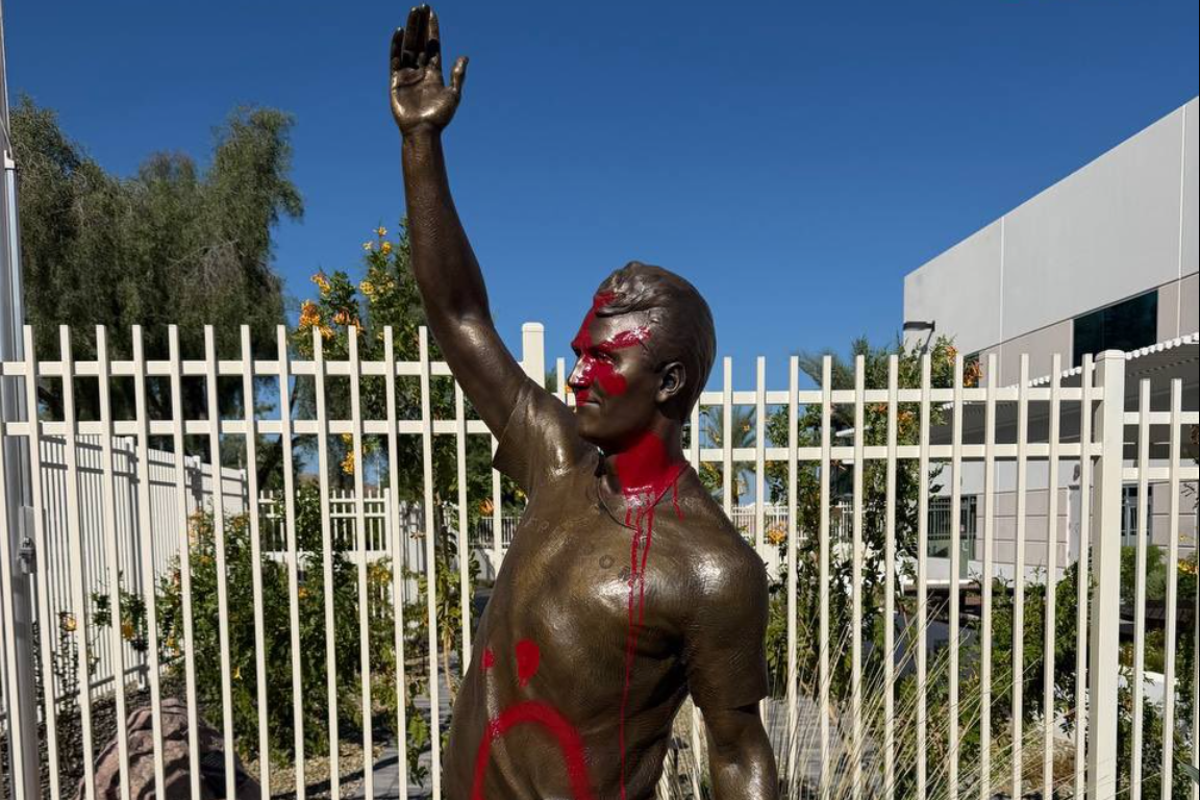
Every time a bronze likeness gets splashed with red paint or toppled into the dirt, the mainstream media treats it like a catastrophic blow to a political faction. It is not. It is a marketing gift wrapped in petty vandalism.
When the freshly unveiled Charlie Kirk statue outside the Turning Point USA headquarters took a direct hit from paint and hammer blows within twenty-four hours of its debut, the headlines rushed to frame it as a symbol of escalating political fracture. That is the lazy consensus. That is the narrative designed to harvest clicks from outrage addicts on both sides of the aisle. The reality is far more clinical, far more cynical, and entirely predictable to anyone who understands modern attention economics.
Vandalism in the political arena does not destroy the opposition. It monetizes them.
I have spent over a decade watching culture-war nonprofits and political action committees weaponize every single hostile act directed at their brand. When an opponent takes a sledgehammer to a monument, they are not striking a blow against ideology. They are serving as unpaid, highly motivated field producers for a multi-million-dollar fundraising apparatus. Within four hours of that statue getting defaced, digital direct-response teams at Turning Point USA were already drafting the donor emails. The spray-painted pedestal became the hero image on landing pages across the country. Small-dollar donations spiked by factors that no conventional banner ad could ever buy.
Let us look at the mechanics of contemporary iconoclasm. The people throwing the paint think they are participating in direct action. They think they are altering the physical public square. What they are actually doing is purchasing billboard space in national news feeds for zero dollars.
Think about the incentive structure here. If a monument stands in pristine silence for five years, it becomes invisible. Passersby stop looking. The local pigeon population adopts it as furniture. It fades into the architectural wallpaper of suburban Phoenix or wherever else these administrative headquarters set up shop. But add a layer of graffiti, a chipped nose, and a shaky cell phone video captured by an outraged staffer, and suddenly you have prime-time cable real estate. You have viral momentum. You have millions of impressions that bypass every algorithm filter designed to suppress political content.
The lazy consensus tells us that these violent outbursts signal the death of civil discourse. Civil discourse died twenty years ago; we are just sorting through the estate sale now. What these incidents actually signal is a profound lack of tactical sophistication among radical activists. They are playing checkers against an opponent who owns the board, the pieces, and the television network broadcasting the tournament.
Consider the ROI of a can of spray paint. Total cost: six dollars. Return on investment for the target organization: roughly half a million dollars in sympathetic donations, a week of uninterrupted media dominance, and a fresh batch of galvanized volunteers who now feel personally besieged. If you were a cynical chief financial officer looking to juice your year-end fundraising numbers, you could not invent a more efficient catalyst than an angry twenty-something with a grudge and a bucket of enamel.
We need to stop pretending that destroying symbols carries any weight in a digitalized society. A physical statue is made of bronze and stone, but modern political power is made of data, email lists, and algorithmic velocity. You cannot smash a database with a hammer. You cannot cancel a funding stream by tipping over a bust. Every time the opposition attacks the physical manifestation of a movement, they validate every single talking point that movement uses to recruit. They prove the thesis: They hate us, they want to erase us, and we are the last line of defense.
It is an elementary trap. Yet every single election cycle, the bait is laid and the bait is taken.
The smart play—the play that nobody with a megaphone has the discipline to execute—is complete, chilling indifference. If you want to starve a polarizing political figure or organization of oxygen, you do not throw paint on their monument. You walk past it. You treat it with the devastating weapon of absolute irrelevance. You let the bronze sit in the sun, gathering dust, ignored by a public that has moved on to something more interesting.
Indifference kills movements. Outrage feeds them. Until the fringes of our political culture realize that fighting symbols is just another form of brand promotion, the monuments will keep getting smashed, the cameras will keep rolling, and the bank accounts of the organizations they despise will keep growing.
Put down the hammer. You are just making them richer.