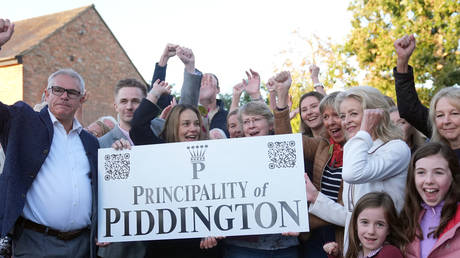
When a small English community makes headlines by threatening to secede from the United Kingdom over a government housing proposal, the initial reaction usually swings between absolute ridicule and quiet fascination. It sounds like the plot of a low-budget Ealing comedy. An eccentric parish council locking the gates, drafting imaginary passports, and declaring independence because Whitehall plans to house a handful of asylum seekers down the lane.
Yet beneath the absurdity lies a much darker, thoroughly modern symptom of political decay.
The story began with a familiar bureaucratic friction point. A rural locality, often defined by tight-knit social networks, aging demographics, and a deep-seated distrust of central planning, found itself designated as a site for government-approved asylum accommodation. Instead of engaging in the tedious, grinding work of local government consultation, public hearings, and judicial reviews, the protest took a theatrical turn. Talk of breaking away from the union captured the news cycle, transforming a standard planning dispute into a viral referendum on national identity, borders, and the breakdown of trust between the provinces and Westminster.
To understand why a community reaches for the absurd weapon of mock secession, you have to look at how local grievances are handled in contemporary Britain. For decades, residents across the country have watched public services dwindle. Rural policing is practically non-existent. GP surgeries require dawn phone battles just to secure an appointment. Local bus routes vanish on a monthly basis. When central government departments drop a contentious infrastructure or housing project onto a rural map without proportional investment in local infrastructure, residents do not feel managed. They feel occupied.
The threat of leaving the UK is, of course, legally impossible. Parishes do not possess sovereignty. They cannot issue currency, establish border controls, or unilaterally alter constitutional boundaries. Everyone involved in the stunt knows this, from the loudest placard-waver on the village green to the civil servants sipping lukewarm tea in Whitehall.
So why do it?
Because hyperbole is the only language left that cuts through the noise. In an attention economy governed by algorithms and rolling news cycles, polite letters to your Member of Parliament go straight to the recycling bin. A radical, legally absurd declaration of independence guarantees cameras, column inches, and emergency ministerial attention. It is a distress flare fired by communities that feel entirely abandoned by the traditional machinery of representation.
The deeper issue here is not about a single patch of countryside or a specific administrative decision. It is about the widening chasm between metropolitan policy-makers and provincial realities. When urban centers design immigration and housing policies without accounting for the fragile carrying capacity of rural infrastructure, friction is inevitable. When local populations realize that their objections during standard consultation periods are routinely overruled by planning inspectors sitting fifty miles away, democratic fatigue sets in.
Despair breeds radical gestures. When people believe the system is rigged against them, they stop playing by its rules, even if their alternative is entirely fictional.
Satire is a useful shield, but it also masks a corrosive reality. By turning a serious debate about resource allocation, legal frameworks, and community consent into a viral curiosity, both sides managed to avoid the hard questions. The government avoids answering why rural infrastructure is chronically underfunded. The protesters avoid confronting the logistical realities of a global migration crisis that cannot simply be wished away by drawing a chalk line around a village pond.
Ultimately, the village will not leave the United Kingdom. The paperwork will clear, the contracts will be signed, and the caravans or modular homes will arrive. The flags raised in defiance will eventually come down, tucked away in garden sheds alongside rusted lawnmowers and forgotten election signs.
The underlying rot, however, remains untouched. When citizens treat the concept of national unity as a negotiable bargaining chip just to get the attention of their own government, the crisis has already moved past the point of rhetoric. The stunt worked, but the victory is hollow, leaving behind a landscape where nobody trusts the state and the state no longer listens to the land.